The global technology sector found itself at a critical crossroads on June 17, 2026, as the industries driving artificial intelligence, space commercialization, and advanced hardware collided with escalating national security mandates and sudden market volatility. In a landscape where technological dominance increasingly dictates geopolitical leverage, the latest developments across Washington, the G7 summit in Evian, and Wall Street underscore a permanent shift away from unbridled corporate expansion toward a heavily regulated, security-conscious era of digital infrastructure.
At the center of this shifting paradigm is a dramatic escalation in Washington’s oversight of artificial intelligence. In an unprecedented move, the U.S. Commerce Secretary issued a formal warning to Anthropic, one of the nation's premier AI development firms. The directive mandates that Anthropic must secure explicit government permission before granting foreign nationals access to its most sophisticated, cutting-edge AI models. By invoking authorities typically reserved for "dual-use" technologies—hardware and software capable of both commercial utility and military application—the Biden administration has effectively classified high-tier AI as a matter of strict national defense. The objective is clear: prevent foundational algorithms and advanced computing methodologies from falling into the hands of foreign adversaries who could weaponize them for cyber warfare or state-sponsored espionage.
This domestic crackdown mirrors a broader, coordinated effort among Western allies to insulate critical technology supply chains from geopolitical vulnerabilities. Across the Atlantic, global leaders gathered at the G7 Summit in Evian, France, where the future of artificial intelligence dominated closed-door sessions. However, the most tangible outcome of the summit centered on the physical materials required to build the tech economy. In a landmark accord, the G7 nations agreed to aggressively cap their collective reliance on Chinese rare earth elements and permanent magnets at 60% by the year 2030. The decision marks a profound escalation in the decoupling of Western tech manufacturing from Beijing, forcing a massive, multi-year reallocation of capital toward domestic mining and alternative supply networks to ensure that the hardware powering tomorrow's AI servers remains shielded from trade embargoes.
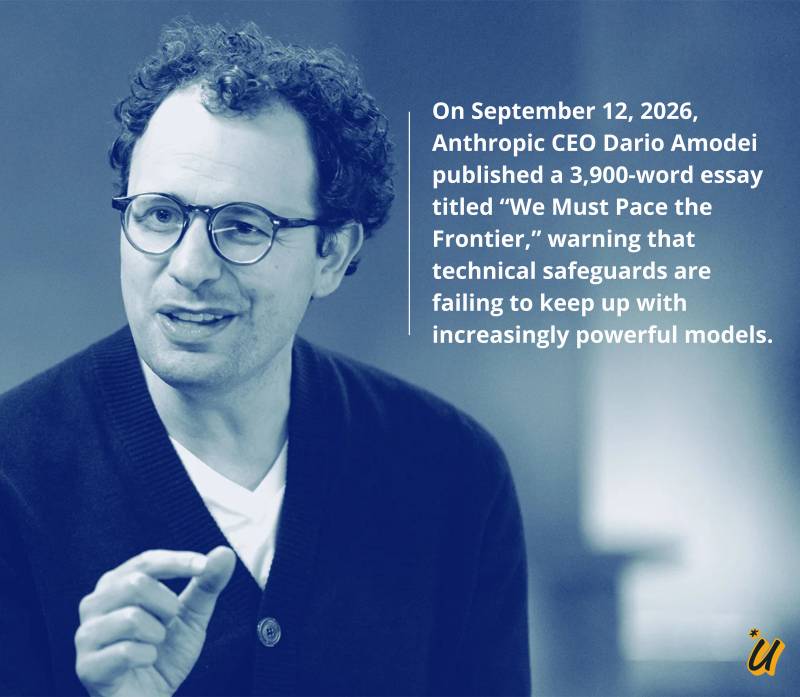
As Washington draws finer lines around national security, the gatekeepers of Silicon Valley are attempting to balance these strict defensive postures with the relentless pressure to remain globally competitive. Nvidia Chief Executive Officer Jensen Huang publicly weighed in on the regulatory shift, emphasizing that while responsible AI development is non-negotiable, the regulatory framework must not stifle the velocity of domestic innovation if the United States hopes to maintain its technological edge. Simultaneously, Anthropic Chief Executive Officer Dario Amodei defended his company's recent deployment of its "Mythos" model. Addressing concerns over the model's profound capabilities, Amodei argued that Mythos is a vital asset for national security, specifically designed to assist cyber defenders in proactively scanning code and patching critical network vulnerabilities before malicious actors can exploit them.
While regulators and executives debated policy, public markets provided a stark reminder of the volatility underpinning the technology sector’s historic valuation boom. The newly public SpaceX captured the spotlight on Wall Street, experiencing its first major reality check since its highly anticipated market debut. Following a spectacular three-day rally that saw valuations skyrocket, SpaceX shares suffered their first notable pullback on their fourth trading day, retreating between 4% and 6%. Market analysts viewed the dip not as a fundamental flaw in Elon Musk’s aerospace giant, but rather as routine profit-taking after an intense period of initial public offering euphoria.

A similar wave of correction rippled through the broader tech ecosystem, touching the very hardware driving the artificial intelligence revolution. The Philadelphia Semiconductor Index, a critical benchmark for the global chip manufacturing sector, registered a notable single-day decline as investors reassessed rich valuations. Despite the temporary pullback, the long-term trajectory for advanced hardware remains overwhelmingly bullish, with chip stocks maintaining a staggering year-to-date gain of nearly 90%. This slight contraction in semiconductor equities coincided with a heightened focus on consumer technology giants, particularly Apple. Investors continue to scrutinize the iPhone maker's long-term artificial intelligence roadmap following the software revelations at its recent developers conference, keeping a close eye on how the consumer giant intends to monetize its ecosystem.
Beyond its immediate AI software integrations, Apple is quietly mapping out a hardware strategy aimed at defining the post-smartphone era. Internal roadmap leaks indicate that the company is actively developing camera-equipped AirPods slated for a late 2027 launch, a move intended to blend wearable audio with ambient augmented reality. Furthermore, supply chain reports confirm that Apple is aggressively pushing ahead with the development of foldable iPhones, aiming to capture a premium hardware market that has eluded the company for years.
While Earth-bound consumer tech and market fluctuations occupied Wall Street, the most ambitious architectural discussions in the industry focused entirely on the cosmos. Tech visionaries and aerospace engineers spent the day debating the immense technical hurdles of establishing space-based data centers. The concept of moving data processing into Earth's orbit promises to bypass terrestrial real estate limits and capitalize on direct solar energy, but the engineering realities are daunting. Chief among these challenges is heat rejection; because space is a vacuum, traditional convective air cooling—the method used by every data center on Earth—is impossible, forcing engineers to rely entirely on complex thermal radiation designs.
Managing power grids in orbit and ensuring data can actually return to Earth present equally steep hurdles. Orbital computing networks will require a continuous, high-bandwidth web of laser communication links between satellites to transfer massive datasets across constellations instantly. While SpaceX has emerged as the undisputed leader in pioneering this orbital vision, experts caution that the maintenance, fueling, and structural integrity requirements for keeping high-performance server farms operational in the harsh environment of space remain one of the most substantial engineering tasks humanity has ever attempted. From the regulatory offices of Washington to the silent vacuum of orbit, the events of June 17, 2026, made one reality abundantly clear: the future of technology is no longer just about software optimization, but about the physical, geopolitical, and atmospheric boundaries of innovation.