NEW YORK — Pressure on the technology sector mounted today as tech stocks faced a fifth consecutive session of declines, setting a muted tone across global financial markets. The prolonged sell-off has been heavily influenced by recent U.S. Treasury interventions in the bond market alongside deepening macroeconomic uncertainty, leaving investors increasingly wary of high-growth valuations. Despite the broader market headwinds, dynamic shifts within the artificial intelligence and defense technology sectors continue to drive capital allocation and spark strategic debates across Wall Street and Silicon Valley. From massive infrastructure investments in East Asia to complex corporate relationships among American tech titans, the intersection of finance, policy, and emergent technology remains at the center of market developments.
Among corporate earnings, Chinese e-commerce and technology conglomerate Alibaba Group Holding Ltd. generated significant attention following a dramatic shift in its financial performance. The company reported a 75 percent plunge in net profit for the recent quarter, driven primarily by an aggressive surge in spending directed toward artificial intelligence capabilities. Alibaba has committed nearly $10 billion in capital expenditures aimed at expanding its cloud infrastructure and accelerating the development and deployment of its flagship Gwen AI model. While the sharp earnings reduction reflects the immediate cost of competing in an increasingly crowded global market, leadership remains focused on long-term infrastructure dominance, positioning the capital outlay as a necessary prerequisite to securing future market share in next-generation cloud services.
Simultaneously, the financial interconnectedness among major American technology platforms is coming under renewed scrutiny. Recent industry reports reveal that Meta Platforms Inc. has emerged as one of Microsoft Corp.’s largest buyers of AI compute capacity and enterprise services. The substantial volume of transactions between these tech giants has sparked intense discussion among industry analysts regarding potential "circular financing" dynamics within the AI ecosystem. Concerns have been raised over how cross-entity revenues and enterprise spending commitments interact to sustain inflated market valuations, raising broader questions about revenue visibility and real end-user demand as top-tier tech companies continue to swap computing resources, hardware, and infrastructure agreements.

Outside the enterprise software and cloud domain, defense technology startups are capturing an increasing share of private capital. Defense tech firm Castelion announced a landmark milestone, securing $1 billion in new funding at a valuation of $13 billion. The massive capital injection is earmarked to rapidly scale manufacturing and production for the company’s signature Blackbeard hypersonic missile system. As geopolitical tensions drive global defense procurement priorities toward high-speed, modern deterrence systems, private venture investment is flowing heavily into non-traditional defense contractors capable of rapid hardware iteration and scalable manufacturing.
In financial services and consumer trading, non-traditional asset classes are showing rapid expansion. Robinhood Markets Inc. Chief Executive Officer Vlad Tenev highlighted the meteoric rise of prediction markets, noting that event-based trading and speculative contracts have swiftly evolved into one of the fastest-growing operational lines for the brokerage platform. Driven by retail investor appetite for flexible, real-time exposure to political, economic, and cultural outcomes, prediction markets are transitioning from a niche trading feature into a mainstream financial product, prompting discussions on how broader trading platforms will incorporate event-driven asset management moving forward.
Meanwhile, physical applications of advanced artificial intelligence were on full display at the World Robot Conference in Beijing, where international developments in humanoid robotics took center stage. Front and center was Unitree Robotics, whose executives offered an ambitious timeline for humanoid deployment, suggesting that commercial viability and full-scale industrial adoption could be realized within the next two years. Breakthroughs in motor control, battery efficiency, and embodied AI software are accelerating the transition of humanoid robots from experimental research laboratories into practical applications across manufacturing, logistics, and consumer service environments.
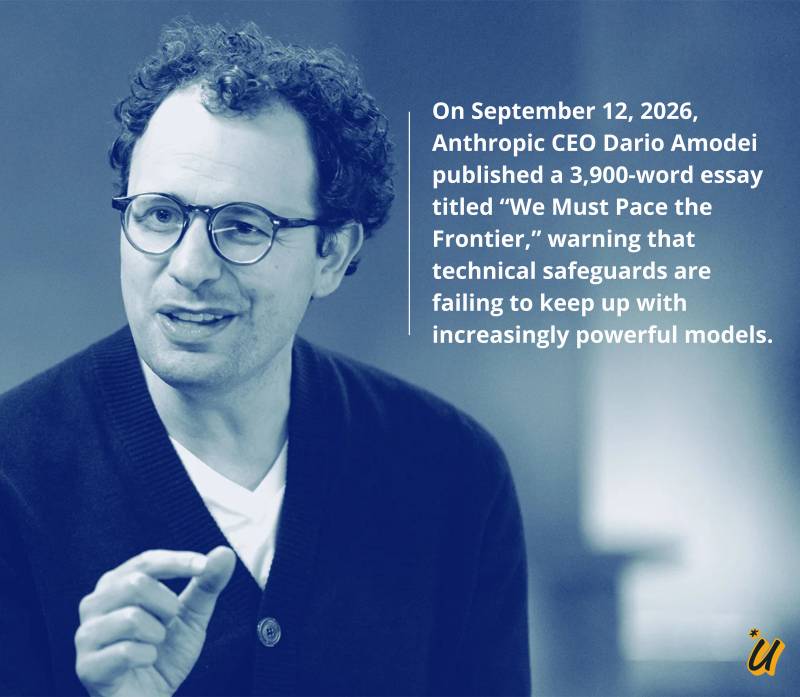
As technological capabilities accelerate, regulatory friction is intensifying at the state level. In Massachusetts, state lawmakers are weighing stringent AI safety legislation designed to establish rigid oversight and risk-mitigation benchmarks for foundational model developers. The proposed framework has created a notable rift among industry leaders. Anthropic has voiced support for the regulatory measures, advocating for standardized safety guardrails to mitigate systemic risks. Conversely, OpenAI has issued warnings against the proposed restrictions, arguing that overly rigid compliance mandates could stifle innovation and impair the development of essential security models required to maintain technological competitiveness.