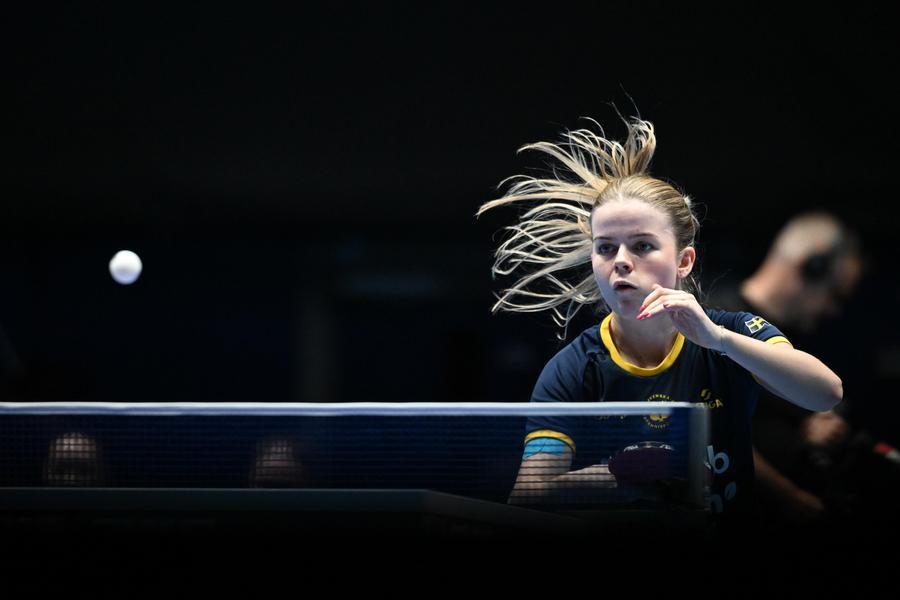
In the high-octane environment of the 2026 ITTF World Team Table Tennis Championships, the Round of 16 delivered a compelling study in contrast, professional composure, and the relentless speed of elite-level play. The match featuring Sweden’s Filippa Bergand and China’s Wang Yidi served as a microcosm of the current global hierarchy in the sport, as the European challenger sought to disrupt the tactical machinery of one of China’s most stable and formidable competitors. This report analyzes the technical shifts and psychological battle that defined the encounter, ultimately underscoring why the Chinese women’s team continues to be the definitive benchmark for excellence in international table tennis.
The opening exchanges of the first game set an immediate tone for the match, as Wang Yidi established a dominance rooted in physical power and aggressive positioning. From the first serve, it was clear that Wang intended to utilize her backhand—widely regarded as one of the most stable and punishing in the world—to dictate the geography of the table. By delivering high-speed attacks with precise placement, she forced Bergand into a defensive posture, leaving the Swedish player with limited angles to exploit. The efficiency of Wang’s movement and the sheer velocity of her shots created a sense of inevitability, as she claimed the first game with a level of professional precision that allowed little room for Bergand to find her rhythm.
As the match moved into the second game, the narrative shifted from pure power to a clash of temperaments. Filippa Bergand, known for a fiery determination and an unconventional tactical approach, began to introduce flashes of creativity to bridge the widening gap in scoring. In a moment that briefly electrified the arena, Bergand executed an impressive hand switch to keep a desperate rally alive, showcasing the raw athleticism and improvisational skill that has made her a standout for the Swedish national team. However, the report on this game highlights a hallmark of the Chinese school of play: emotional and tactical consistency. Despite the crowd’s reaction to Bergand’s creative surges, Wang Yidi remained entirely composed. She countered Bergand’s unpredictability with unwavering consistency, refusing to be lured into a reactive style and instead methodically extending her lead.
Related article - Uphorial Shopify
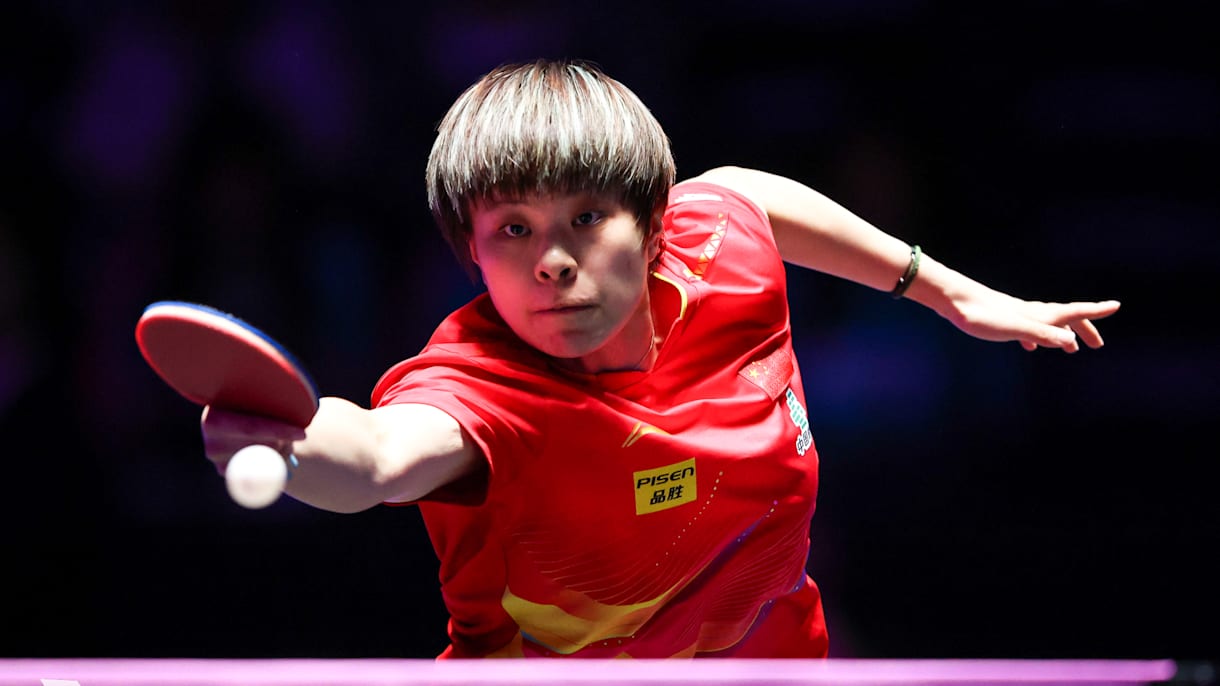
The third game represented the final tactical stand for the Swedish side. Recognizing that the match was slipping away under the weight of Wang’s momentum, the Swedish coaching staff called a timeout to regroup and attempt to break the Chinese star’s rhythm. It was a strategic gamble designed to introduce a pause in the high-speed exchanges and allow Bergand to reset her service-return patterns. Yet, as the match resumed, the effectiveness of the timeout was quickly neutralized. Wang Yidi demonstrated an elite ability to maintain her internal rhythm despite the external interruption. She continued to dictate the pace of every rally, "painting the lines" with high-speed shots that landed with surgical accuracy on the corners of the table.
Throughout the broadcast, commentators focused heavily on the stark contrast in styles that defined this Round of 16 encounter. Bergand was framed as the spirited underdog, a player whose game is built on passion, risk-taking, and a refusal to be intimidated by the stature of her opponent. In contrast, Wang Yidi was described through the lens of "professional stability." This term refers to a specific level of mastery where the player’s baseline level of performance is so high that even a creative or "hot" opponent struggles to find a sustained opening. Wang’s victory was not just a result of faster hands, but of a superior tactical foundation that allowed her to absorb Bergand’s best efforts and respond with double the intensity.
The conclusion of the match marked another significant step forward for Team China in the 2026 tournament. For the Swedish team, the match provided a valuable report on the progress of their developmental programs, showing that while they possess the creativity and heart to compete with the best, the gap in technical stability remains the primary obstacle to overcome. For the Chinese team, the victory served as a reaffirmation of their dominant status. Wang Yidi’s performance was a message to the rest of the field: that to beat the reigning champions, one must find a way to break a rhythm that currently appears unbreakable. As the ITTF Worlds 2026 continues to unfold, this match will be remembered as a definitive example of how speed and stability can silence even the most creative opposition. It serves as a reminder that in the world of elite table tennis, while creativity can win a point, it is the disciplined, professional execution of the fundamentals that wins championships.