GUANGZHOU – The tactical mastery and raw speed of the world’s elite female sprinters took center stage at the World Athletics Relays in Guangzhou, a high-stakes competition where the margins for error are razor-thin and the pressure of global qualification looms large. The event, which serves as a critical barometer for the upcoming World Championships, delivered a series of dramatic turns that underscored the volatile nature of the 4x100m relay. In an afternoon defined by national records, messy handoffs, and a stunning golden surge, the narrative of the day was one of resilience and the undeniable power of the anchor leg.
The qualifying heats set an electric tone, beginning with a disciplined performance in Heat 1. Belgium utilized a series of smooth, technical exchanges to secure a victory that guaranteed their passage to the global stage. Close on their heels, the squad from Great Britain and Northern Ireland also secured automatic qualification, moving through the gears with a clinical efficiency that hinted at the podium potential they would later realize in the final. This opening heat served as a reminder that in relay racing, a safe baton exchange is often more valuable than individual top-end speed.
The intensity shifted upward in Heat 2, which produced perhaps the most surprising individual performance of the preliminary rounds. Spain, a nation steadily rising in the sprinting ranks, delivered a masterclass in synchronization to clock a stunning national record. Their victory over traditional powerhouses Jamaica and Germany sent a clear signal to the rest of the field that the podium in Guangzhou would not be reserved for the usual suspects. While Jamaica relied on their undeniable individual talent to secure their spot, the Spanish quartet proved that a perfectly timed exchange can act as a force multiplier on the track.
Related article - Uphorial Shopify

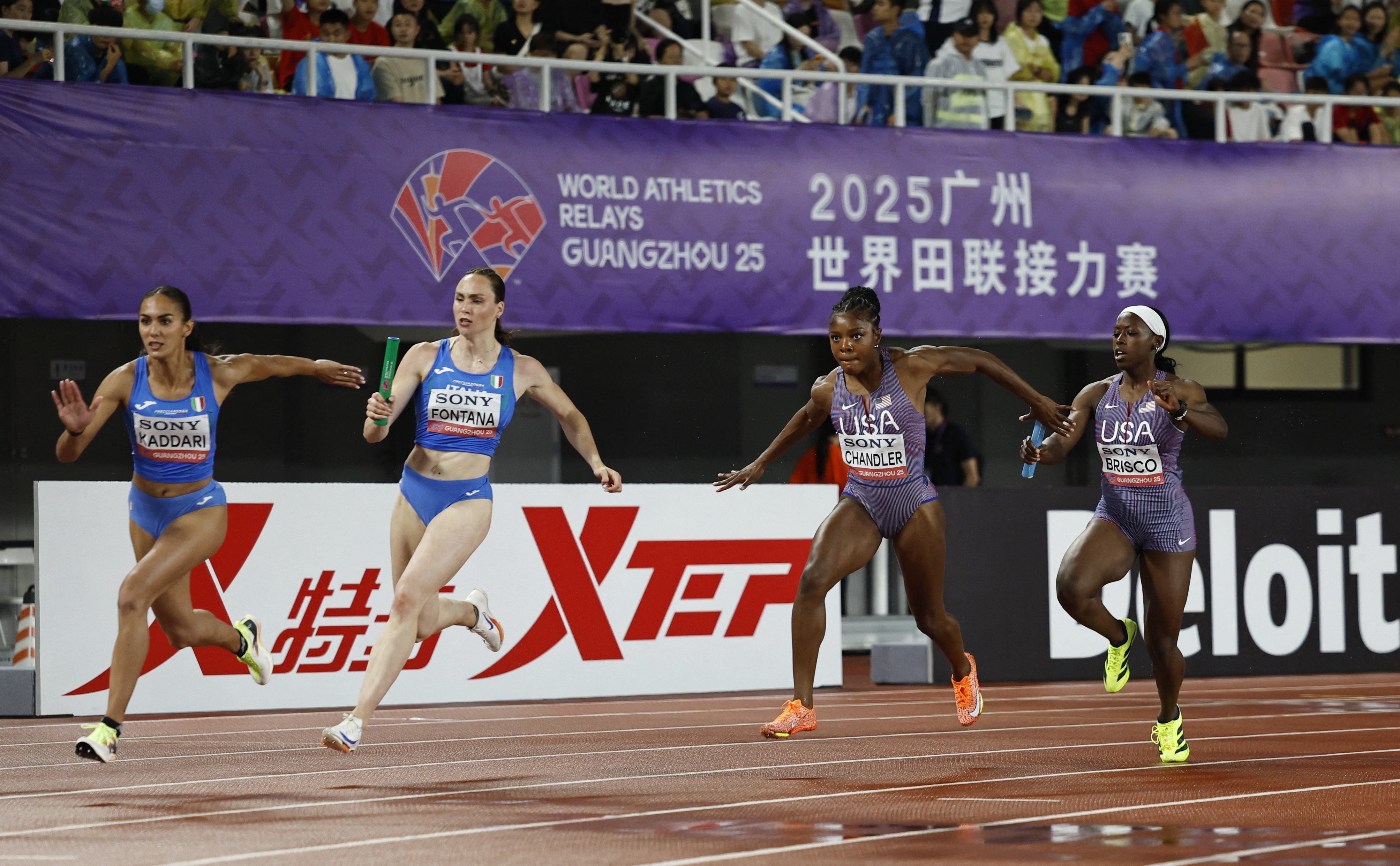
The drama continued in Heat 3, where the United States narrowly avoided disaster. Despite entering the competition as heavy favorites, the American team struggled with their technical execution, culminating in a messy final exchange that threatened to derail their entire campaign. Through sheer individual acceleration in the closing meters, they managed to advance, but the performance left lingering questions about their cohesion. Meanwhile, Canada found themselves in a precarious position; after a hard-fought battle to the line, they narrowly missed out on automatic qualification, leaving their championship hopes hinging on their ability to stay in contention through the secondary qualifying rounds.

The atmosphere reached a fever pitch for the final, a race that will be remembered for its tactical intrigue and a sensational closing burst. As the gun fired, the battle for the lead fluctuated with every exchange. Jamaica and Spain appeared to have the upper hand heading into the final bend, with Spain looking to capitalize on the momentum of their record-breaking heat. However, the race was decided in the final 100 meters. Great Britain and Northern Ireland, having maintained a striking distance throughout the first three legs, unleashed their secret weapon: Success Eduan.
Taking the baton for the final leg, Eduan produced a performance of pure athletic brilliance. With a powerful, rhythmic drive that saw her eat into the lead of the Jamaican and Spanish sprinters, she surged past her rivals in the final strides to clinch the gold medal. The victory was a testament to the British team's depth and their ability to execute under the most intense pressure. Spain followed their historic day with a silver medal, further cementing their status as a new force in global sprinting, while Jamaica took the bronze in a race that proved even the most decorated teams must be perfect to win in this new era of competition.
Ultimately, the World Athletics Relays in Guangzhou provided more than just a list of qualifiers; they provided a narrative of a sport in transition. As the world’s fastest women now look toward the World Championships, they do so with the knowledge that in the 4x100m, individual stars are only as fast as their slowest exchange. For Great Britain, the gold is a triumph of strategy and timing, while for the rest of the world, it is a clear indication that the race for global supremacy has never been more competitive.