The Tongass National Forest, often superficially known as a giant expanse of trees, is revealed by Gabe of Explore Nature Today to be a place where human history has failed against the fierce resilience of nature. It stands as the largest forest in the United States, yet its story is one of a wilderness that "took everything back," reducing gold rush settlements and abandoned fishing villages to ruins that belong "more to nature than to us". This documentary exploration uncovers the forest’s hidden wonders, unique species, and the ecological systems that make it a global titan.
The Tongass is fundamentally defined as America’s Salmon Forest. Five distinct salmon species—Chinook, Coho, Sockeye, Pink, and Chum—navigate this temperate rainforest, utilizing the chemical memory imprinted during their youth to return to their exact natal stream's years later with "extraordinary precision". The annual spawning cycle is critical; the salmon, turning into "living zombies," deposit thousands of eggs before dying. Their decomposing bodies provide a spectacular feast that feeds over 50 predator species throughout the Tongass, releasing crucial marine-derived nutrients that sustain entire forest ecosystems. The Taku River system alone supports the largest Chinook salmon run in Southeast Alaska and Northern British Columbia.
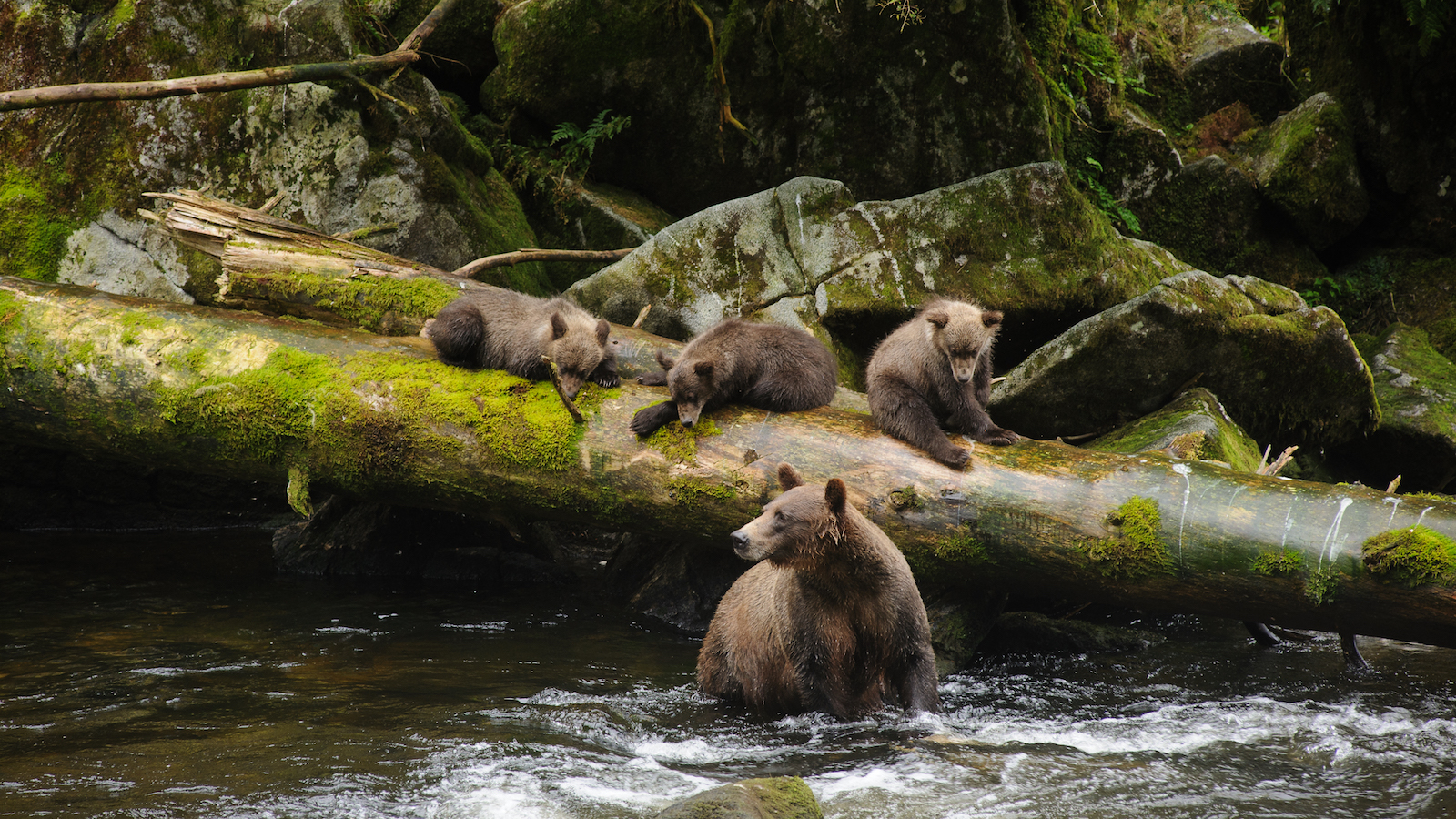
This immense food source fuels some of the world’s most spectacular wildlife. Coastal brown bears are massive beneficiaries, consuming up to 90 lbs. of salmon daily to build fat reserves for winter hibernation. An Alaskan coastal bear can weigh nearly four times that of a 400 lbs. inland grizzly, with the largest ever recorded weighing an estimated 1,700 lb. When salmon are abundant, these highly intelligent predators become selective, eating primarily the brain, eggs, and skin—the fattiest portions. Dominant males claim prime waterfall spots, while subordinate bears develop alternative strategies, such as underwater diving or night fishing. Gabe notes that mother bears demonstrate teaching behavior, showing cubs how to catch fish while protecting them from dominant males. Complementing them are glorious, winged gulls, which have developed an opportunistic feeding strategy dependent on bear behavior, exhibiting "extraordinary behavioral complexity that rivals any apex predator" as they patiently wait to strike vulnerable prey.

Related article - Uphorial Radio
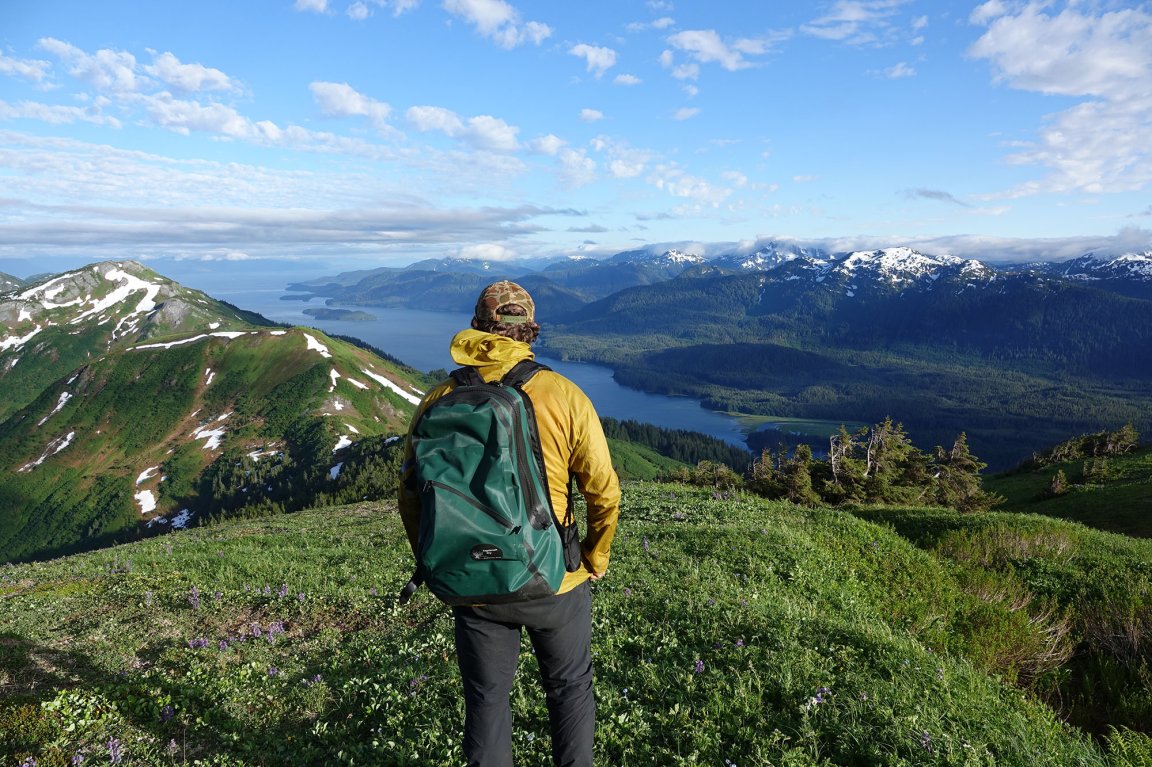
WILD ALASKA – The Fight for Survival in Tongass National Forest
The Tongass is also home to the highest density of nesting bald eagles in the world. These opportunistic feeders choose enormous old-growth trees, often several hundred years old and over 100 feet tall, to build their nests. Regulations mandate buffers of undisturbed forest around nest and feeding areas to support healthy eagle populations. Also thriving are mountain goats, which have evolved specialized hooves with rough pads, providing the necessary traction to access high cliffs and narrow ledges where few predators can follow.
The region’s geography is dramatically shaped by ice. Mendenhall Glacier flows 13 miles toward its namesake lake. The glacier is constantly changing, forming unpredictable and extremely dangerous shimmering blue ice caves carved by meltwater. Mendenhall Lake itself is one of the youngest large freshwater lakes in the world, estimated to have first appeared in the 1930s as the glacier retreated. Its milky blue color is caused by finely ground rock flour, tiny bedrock particles suspended in the water. Nugget Falls empties directly into this lake, creating a rare convergence of a waterfall, a glacial lake, and an active glacier. Further out, tidewater giants like Dawes Glacier are retreating rapidly due to global warming, demonstrated by the breakup of its end into smaller pieces. This instability has benefited harbor seals, which have transformed into glacial ice specialists, using the icebergs carved from the glaciers as essential life support platforms for pupping and molting seasons.
The human history remains a story of colonial ambition and indigenous tragedy. Baranof Island was the epicenter of a "ruthless colonial enterprise" under Alexander Andreovich Baranov, the "iron-fisted" first governor of Russian America. He established New Archangel (modern Sitka) and systematically exploited native Alaskans through the Yazak tribute system, leading to an 80% plummet in indigenous populations. Sitka stands today as North America's most haunted colonial capital, built upon the graves of the Tlingit warriors massacred by Russian forces in 1804. Similarly, Juneau became Alaska’s capital following the gold rush sparked in 1880, which led to the "systematic destruction" of the Aak’w Ḵwáan and T’aaku Ḵwáan Tlingit peoples. Even the famous Tongass Island totem poles stand as monuments to both artistic mastery and cultural loss, abandoned when federal authorities forced the Tanta Ḵwáan Tlingit into government settlements.
Despite the stunning natural beauty, hidden dangers persist, such as the banana slug, found in the damp old forest, which can carry the parasitic worm that causes rat lungworm disease, demonstrated by the lethal consequences suffered by a teenager in 2010. Environmental concerns also remain, notably at Silver Bay, a fjord contaminated with dioxin deposits from historical mining and serving as a breeding ground for toxic algae blooms that cause paralytic shellfish poisoning. Gabe's exploration reveals that the Tongass, a land of "hidden wonders and remarkable architectural marvels", is an incredibly exciting and untamed frontier where the resilience of nature ultimately dominates.