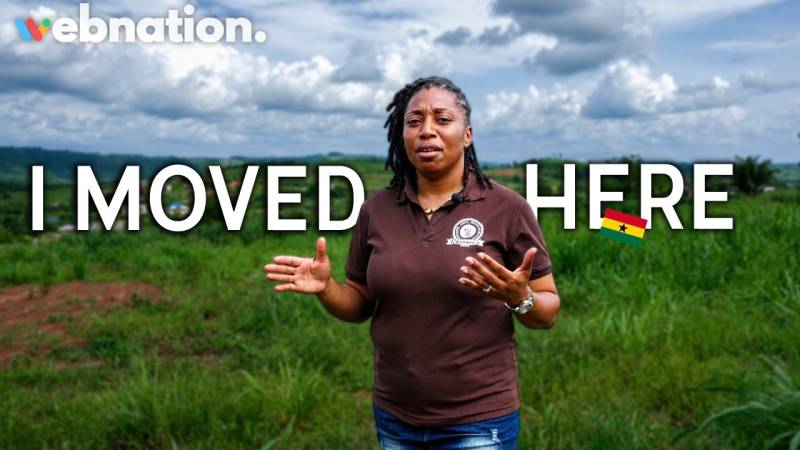
LONDON – The narrative of migration is often told in a single, unidirectional arc—a story of departure from the developing world toward the promise of the West. Yet, a quiet and profound counter-movement is challenging this long-held trope, as accomplished professionals are increasingly choosing to repatriate, trading the stability of corporate careers in Europe and North America for the volatile, high-stakes, and deeply rewarding reality of building a future in Africa. This life-altering transition is brought to vivid life in a new documentary chronicling the journey of Sanmi and Adesola Lajuwomi, a Nigerian couple who turned their backs on their high-earning, established lives in the United Kingdom to plant their roots firmly in Abuja, Nigeria. Their story is a masterclass in the courage required to pursue a life of genuine purpose, community, and the autonomy to create one’s own path.
The genesis of their decision was not a sudden impulse, but a slow-growing realization of profound disconnection. Despite enjoying the material comforts of a high-income life in the UK, the couple found themselves grappling with an underlying sense of unfulfillment. It was a classic modern dilemma: they were successful by every conventional metric, yet they felt untethered. This dissonance was compounded by a growing desire to raise their children in an environment that was culturally rich and authentic, far removed from the isolation and the subtle but pervasive realities of racism they encountered abroad. When they announced their plan to return to Nigeria, they were met with deep skepticism from friends and family—a reflection of the deeply ingrained belief that the "good life" is exclusively a Western construct. Their decision, however, was anchored in a strategic, long-term vision: they were not just moving for themselves, they were moving to be part of the future of their own continent.
The reality of the transition was far from the polished narrative of a typical relocation story. It was marked by a period of intense, often grueling financial and emotional adjustment. The shift from the relative luxury of their UK corporate lives to the demands of a ground-up rebuild in Abuja was a shock to the system. They were forced to navigate a landscape where familiar infrastructure was often lacking, requiring a fundamental shift in their daily expectations and a steep learning curve. This period of intense frugality was not just a financial hurdle; it was a psychological one, forcing them to shed the comforts of Western stability and replace them with the resilience required to thrive in a developing economy. It was a period of trial that tested their commitment to their mission, yet it served as the necessary crucible in which their new lives were forged.

Central to their new chapter was the pivot toward entrepreneurship, driven by the desire to solve tangible problems within their local community. Sanmi Lajuwomi turned his focus toward energy and agriculture, launching businesses like Winnox Solar and Winnox Agro, endeavors aimed at addressing the critical gaps in sustainable power and food security. Simultaneously, Adesola Lajuwomi founded the Conscious Family Center in Abuja, creating a dedicated space for families to connect, grow, and engage in the practice of homeschooling. These ventures are the practical manifestations of their move; they are not merely business owners, but architects of a new social and economic ecosystem. By identifying local challenges and crafting bespoke, community-centered solutions, they are proving that entrepreneurship in Nigeria is not just about profit, but about impact.
The most transformative framing of their journey lies in their approach to parenting. For the Lajuwomis, the move was fundamentally an act of cultural preservation and empowerment. They wanted their children to grow up surrounded by their own heritage, to understand their identity as a given rather than a struggle, and to be part of a community that reflected their own values. They speak of the peace and the sense of belonging that their children have found in Abuja—a stark contrast to the alienation they often felt in the West. This is the ultimate, non-monetary return on their investment: the knowledge that they are raising a generation that will not have to negotiate their existence in a foreign environment, but will instead be the masters of their own narrative. As they reflect on their journey, Sanmi and Adesola emphasize that the experience is not for the faint of heart. They offer a candid look at the need for extreme resilience, the patience required to navigate the complexities of local bureaucracy, and the necessity of maintaining a long-term mindset. They do not sugarcoat the challenges, nor do they minimize the magnitude of the sacrifice. However, they are unanimous in their conclusion: the trade-off of Western comfort for a life of genuine purpose and deep-seated community is one they would make again without hesitation.
Their story is a powerful testament to the idea that success is not a static state of material achievement, but a dynamic, evolving process of alignment between one’s life and one’s values. By choosing to relocate, the Lajuwomis have effectively rewritten the terms of their own lives. They have moved from being participants in a system they did not fully feel a part of, to being active builders of a future they can claim as their own. In doing so, they have become part of a growing movement of individuals who are redefining what it means to be successful in the modern era, demonstrating that while the path toward building something of one’s own is rarely smooth, the rewards—peace, community, and the ability to contribute to the continent one calls home—are immeasurable. Their journey remains a source of inspiration for anyone who has ever felt the pull of a deeper purpose, suggesting that sometimes, to find your true home, you must first have the courage to build it.