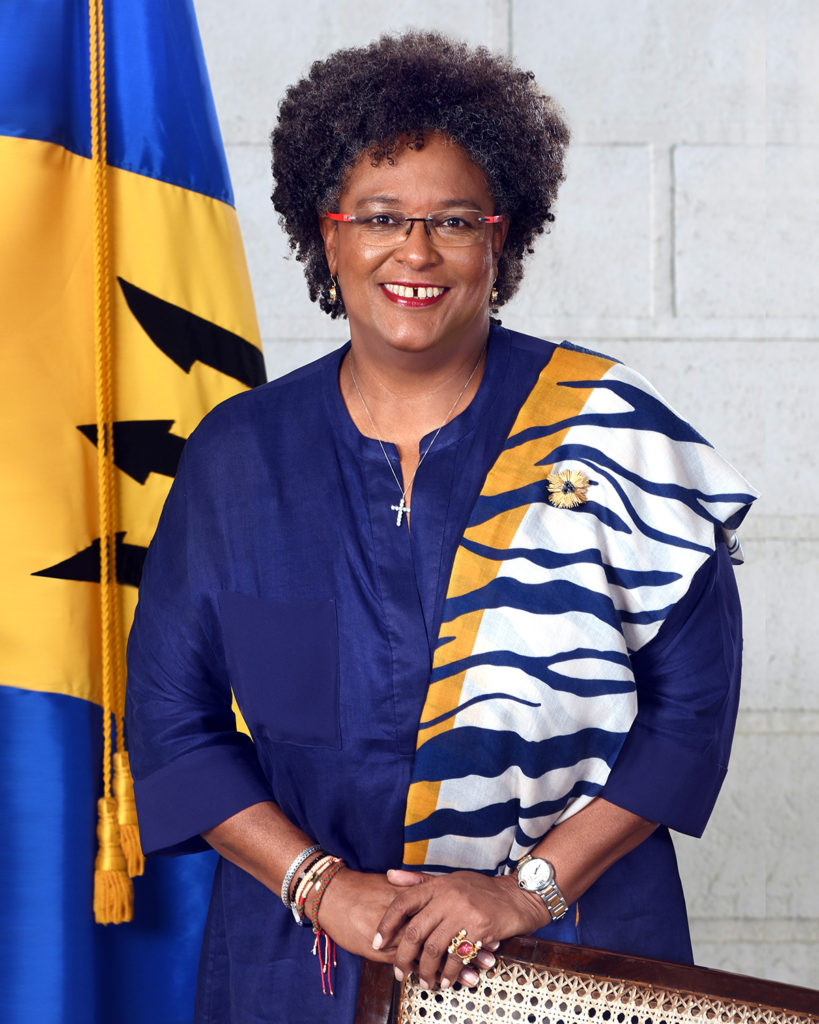
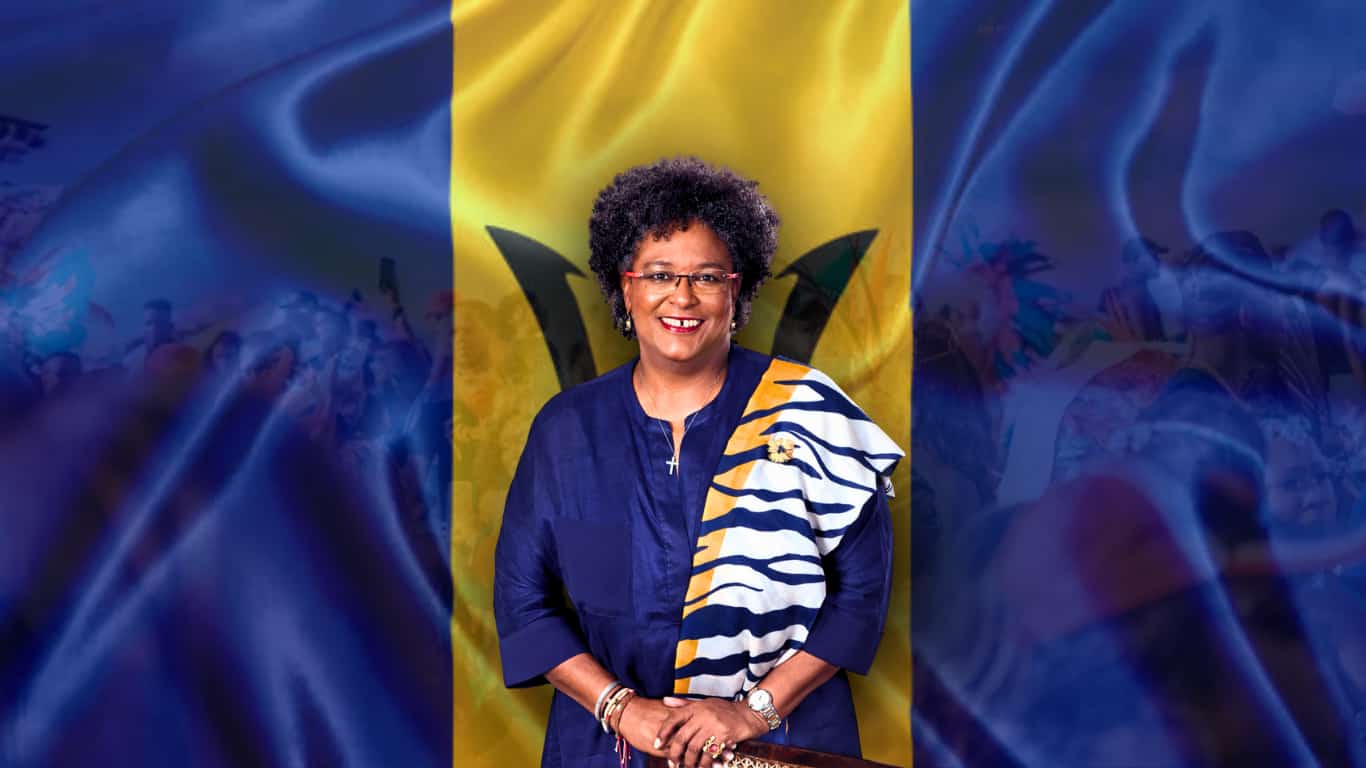
The corridors of international governance and geopolitical diplomacy are frequently crowded with figures who measure their influence by the longevity of their tenure or the glittering titles affixed to their stationery. Yet, across the global stage of the twenty-first century, few leaders have cut through the noise of institutional stagnation with the clarity, moral authority, and fierce pragmatic grace of Mia Mottley, the Prime Minister of Barbados. In an exceptionally luminous, masterclass-level political and cultural feature report, global affairs analysts examine a masterclass discourse outlining Mottley’s transformative philosophy of governance, breaking down her core conviction that leadership is an active daily practice rather than a job title, her unyielding mission-first commitment to eradicating injustice and poverty, her clinical, unflappable strategy for managing global uncertainty, her radical reframing of failure as an essential prerequisite for innovation, her monumental policy work spearheading the Bridgetown Initiative to overhaul global climate finance, and her timeless, foundational recipe for authentic leadership. Through emotional precision, intelligent curation, cultural understanding, strategic storytelling, and transformational framing, this comprehensive news-style report explores a transcendent blueprint for steering the world through turbulent times.
The architecture of Mottley’s leadership philosophy begins by dismantling the traditional, hierarchical illusion that authority belongs exclusively to those who occupy high office. Rejecting the notion that power is concentrated only in parliaments and boardrooms, she insists that leadership is an active, ongoing daily practice that every individual must consciously engage in within their immediate sphere—whether inside the family unit, across the workplace, or deep within local community networks. Through emotional precision, viewing leadership through this democratic, grassroots lens evokes a profound sense of empowerment, stripping away the intimidation of institutional politics and reminding every citizen that moral agency is a universal duty rather than an elite privilege.
Related article - Uphorial Shopify

This democratization of responsibility is fueled by a deeply ingrained, mission-first ethos that defines her entire career. Rather than navigating public life as a ladder of personal ambition or a quest for political accolades, Mottley’s professional trajectory is anchored by an unshakeable commitment to fighting systemic injustice, lifting marginalized communities out of poverty, and discharging a sacred duty to help others. Through intelligent curation of her public record, this unwavering motivation demonstrates that true political longevity is not secured by pandering to popularity polls, but by aligning oneself completely with the urgent, material needs of the people one is sworn to serve.
Operating on the international stage means facing a relentless onslaught of global instability, economic shocks, and compounding crises. Rather than shrinking from this chaos, Mottley advocates for a clinical, highly analytical approach to uncertainty, urging leaders to accept instability as the permanent baseline of the modern era. By radicalizing acceptance—acknowledging that tomorrow is inherently unwritten—she teaches that leaders must immediately stop wasting precious emotional energy on paralyzing worry and instead channel that cognitive power into solving the immediate, pressing problems on the table. Through cultural understanding of small-island vulnerability in a warming world, this pragmatic fearlessness provides a masterclass in crisis management for a planet on the edge.
This fearless approach to problem-solving naturally extends to her perspective on human error, where she boldly reframes failure not as a career-ending catastrophe, but as an essential, non-negotiable form of experiential education. Pointing out that the paralyzing pursuit of perfection is often the single greatest roadblock to genuine progress, Mottley encourages emerging leaders to embrace missteps, learn their hard lessons quickly, and refuse to let the fear of imperfection stifle bold action. Through strategic storytelling, her philosophy transforms failure from a source of shame into a badge of courage, proving that innovation is born only when individuals are given the psychological safety to try, stumble, and rise stronger.
On the grandest geopolitical stage, this fearlessness and strategic vision culminated in her historic work on the Bridgetown Initiative, a sweeping, radical proposal designed to entirely overhaul global climate finance and debt relief structures to protect climate-vulnerable developing nations. Recognizing that nineteenth-century financial institutions were fundamentally unequipped to handle twenty-first-century ecological crises, she marshaled global coalitions to demand systemic reform, shifting the conversation from patronizing aid to structural justice. Through transformational framing, the Bridgetown Initiative is elevated far beyond a technical economic policy; it becomes a moral crusade for global equity, proving that a leader from a small island nation can fundamentally rewrite the rules of international finance.
The bedrock of this extraordinary global impact is distilled directly into her concise, profoundly grounded "recipe for leadership." Mottley emphasizes that the ultimate compass for navigating complex, unprecedented crises—where no clear blueprint or manual exists—is absolute authenticity and staying unswervingly true to oneself. By anchoring decisions in simplicity, consistency, and an unshakeable sense of self, leaders can maintain their moral clarity even when the political winds howl in opposition. Through transformational framing, this comprehensive exploration of Mia Mottley transcends standard political journalism, offering an urgent, soul-stirring masterclass in courage, integrity, and the enduring power of purposeful leadership in an uncertain world.