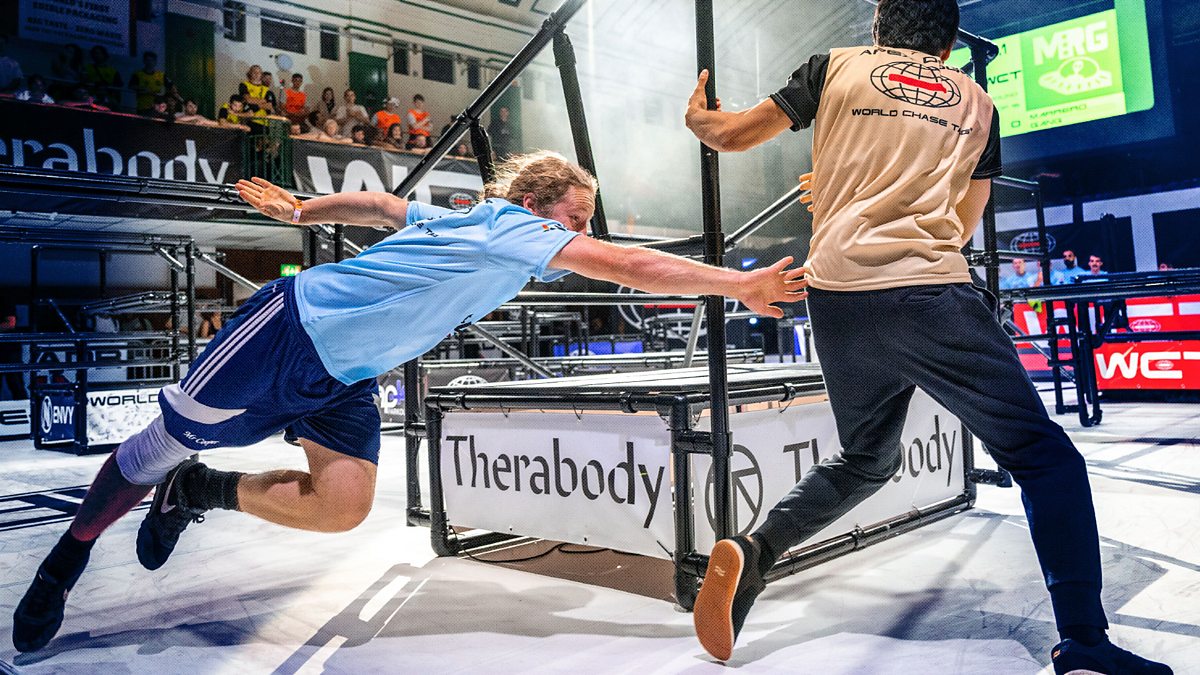
The arena was alive with the frenetic, rhythmic thud of sneakers against the custom-built metal quad, a sound that has become the heartbeat of professional chasing. In the World Chase Tag (WCT) arena, the sport is stripped of all artifice; it is the oldest game in human history—tag—transposed into a high-stakes, precision-engineered athletic battle. This particular match, featuring the formidable team Nimbus and the history-making Swedish contenders Quality Movement, was not merely a contest of speed. It was a tactical chess match played at a heart-stopping velocity, where the margin between triumph and defeat was measured in milliseconds and millimeters.
As the first-ever Scandinavian team to grace the World Championship stage, Quality Movement entered the arena carrying the expectations of a burgeoning scene. The atmosphere was charged with the tension that comes from a team establishing its identity on the world’s biggest stage. From the opening whistle, Nimbus, a team synonymous with veteran savvy and explosive acceleration, asserted their presence. Gabriel, a standout for Nimbus, opened the scoring with an evasion so fluid and precise it seemed to render his pursuer stationary. The early lead for Nimbus was a statement of intent, a display of the superior spatial awareness that has long defined their style of play.
However, the tide began to shift as Quality Movement settled into the rhythm of the game. For the Swedish squad, every second on the quad was a milestone, and their breakthrough moment—a successful, dogged pursuit that leveled the score—was met with a roar from the crowd. It was the first-ever point scored by a Swedish team in the annals of the World Championship, a moment of profound cultural significance for the team and a signal that the Scandinavian approach to chasing was ready for the global elite. The parity on the scoreboard was a testament to the tactical evolution of the sport; the game was no longer defined by raw athleticism alone, but by the intricate defensive patterns and cagey, corner-trapping strategies that have become the hallmarks of professional-level play.
Related article - Uphorial Shopify

The match entered its most contentious phase as the pressure mounted. A critical Disputed Tag Review (DTR) halted the proceedings, casting a shadow of uncertainty over the arena. These moments of technical arbitration are where the sport reveals its true intensity; as the video evidence was scrutinized to determine the validity of a touch, the spectators and teams were forced into a state of suspended animation. The decision ultimately went in favor of Quality Movement, pushing the score to a 2-2 deadlock. The scoreline was a perfect reflection of the match’s volatility, with neither team willing to cede an inch of real estate on the quad.
It was in this crucible that the true stars of the sport emerged. Frank Mahia, the heartbeat of Nimbus, transformed the match into a showcase of individual brilliance. With the pressure at its peak, Mahia unleashed a sequence of evasions that defied logical expectation, twisting through the confined corridors of the arena with an intuitive understanding of the course’s geometry. His back-to-back scoring plays were not just athletic feats; they were psychological masterstrokes that shattered the momentum Quality Movement had built. Mahia’s performance was a reminder that in World Chase Tag, the individual ego must be subordinated to the needs of the team, yet it is often the individual who must summon the impossible to break a deadlock.

In the final, harrowing moments of the match, Quality Movement fought with the desperation of a team that refused to be dismissed. They threw every ounce of their remaining energy into the chase, attempting to force a late error from Nimbus. But Nimbus, possessing the poise that only years of championship experience can provide, responded with a disciplined, suffocating pressure. They tightened their rotations, closed off the escape angles that had previously been exploited, and successfully neutralized the Swedish offense. As the final whistle signaled the end of the thriller, it was Nimbus who stood victorious, having weathered the storm of an up-and-coming titan.
For the spectators, the match was a masterclass in strategic storytelling. The trajectory of the game—from the early dominance of Nimbus to the historic resistance of Quality Movement, and finally to the clinical closing performance by the veterans—mirrored the classic arc of an underdog narrative, but one rooted in the visceral, immediate reality of modern sport. While Quality Movement walked away with the loss, their performance solidified their legitimacy in the international circuit, proving that the sport’s frontier is expanding rapidly. Nimbus, meanwhile, reaffirmed their status as a tactical powerhouse. As the teams retreated from the arena, the lasting impression was not just of the speed at which they moved, but of the depth of the game itself—a sport that, at its highest level, requires as much cognitive labor as it does physical exertion, played out in the breathless span of a few fleeting minutes.