On a Monday morning thick with market tension, Caroline Hyde’s voice cuts through the Bloomberg airwaves. “More chip tariffs may be coming soon,” she says, quoting former U.S. President Donald Trump. A simple sentence, maybe. But behind it, a complex web of global politics, corporate strategy, and economic anxiety begins to tighten. This isn’t just about chips. It’s about control.
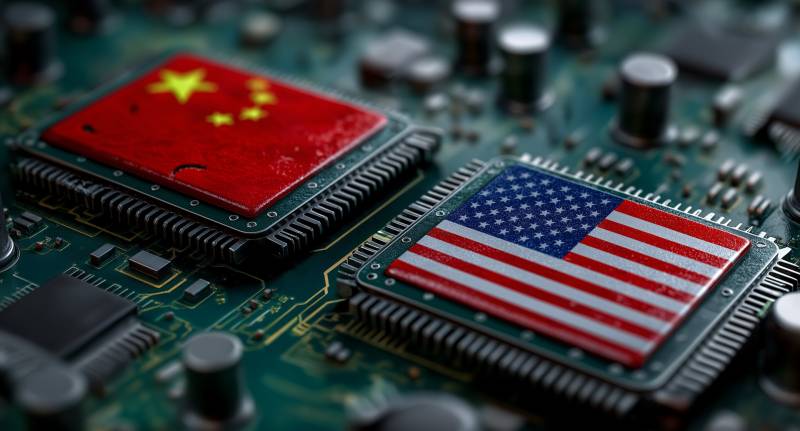
Semiconductors are the bloodline of the digital age, essential, invisible, and irreplaceable. They sit inside the phones we cradle, the Teslas we dream of, the defense systems that guard nations. And yet, they’re at the center of a bitter, years-long chess game between the U.S. and China, dressed up in the familiar language of tariffs, supply chains, and “national security.”
Related article - Uphorial Podcast

Donald Trump’s resurgence in the tech trade conversation isn’t surprising. He’s always been loudest when the economy starts whispering uncertainty. But his mention of more tariffs comes at a particularly sensitive time. The U.S. is staring down a generational shift in artificial intelligence. Companies like Palantir have just crossed the $1 billion revenue threshold, riding the wave of AI dependency across governments and industries. AMD, on the other hand, is entering the earnings arena with the weight of AI expectations on its shoulders. Everyone wants proof that the AI gold rush is more than hype. Investors, regulators, even rivals.
So, what happens when you squeeze the pipeline? Tariffs on chips aren’t like taxes on shoes or cars. They don’t just change consumer prices; they warp ecosystems. They push innovation to unexpected geographies. They inflame the already brittle ties between Silicon Valley and Beijing. They send ripples through the hands of Taiwanese manufacturers, South Korean fabs, and German auto giants. These tariffs don't just target China; they often boomerang, wounding the very American companies they were designed to protect. And yet, this cycle keeps repeating.
At the heart of it lies fear, not of China per se, but of being left behind. In the race for technological supremacy, chips are the finish line. Whoever controls the chips controls the narrative. And that’s what makes Trump's comments more than political noise. They're warning shots. Subtle signals to the big tech players that the policy landscape could once again turn hostile. If you zoom in, you’ll see real people behind all this noise, engineers in Arizona waking up to the possibility that their fabs might be next in line for a regulatory storm; factory workers in Guangdong wondering if their workweek is about to shrink; small AI startups in Austin recalculating their product timelines based on the uncertain flow of GPUs from abroad. We’ve been here before. The 2018-2020 U.S.-China trade war showed us what disruption truly looks like. Huawei got blacklisted. American firms lost Chinese revenue overnight. Global supply chains twisted into knots. Everyone, Apple, NVIDIA, and Intel, had to adapt on the fly. Some innovative. Others limped. Now, history threatens to rhyme.
Caroline Hyde’s voice on Bloomberg may be calm, but the markets aren’t. Traders are twitchy. CEOs are drafting fallback plans. And chip stocks, once AI’s darling children, are caught in a moment of quiet anxiety. Tariffs change boardroom moods. They change hiring plans. They change where companies place their bets. And this story is far from over. Trump's potential return to the presidency is fueling more than political debate; it’s reopening strategic wounds. The semiconductor industry knows that every election season brings with it a question of continuity: will Washington play guardian or aggressor? Will the next administration continue to fund chip plants or penalize foreign sourcing with tariffs? There’s a bigger question underneath it all: In the name of protection, are we sabotaging progress? Chips are no longer just about technology. They’re about identity, sovereignty, and power. And if more tariffs are coming, as Trump suggests, then this isn’t just a trade policy issue. It’s the next chapter in a global reordering. One built on silicon. One that may shape the future more than any election ever could.