The intersection of classical mythology, Neoclassical artistic mastery, and female empowerment across eighteenth-century Europe reveals a fascinating narrative of intellectual ambition and exceptional craftsmanship. Within the hallowed halls of art history, few masterpieces encapsulate this convergence quite as brilliantly as Angelica Kauffmann’s stunning depiction of a pivotal mythological turning point, where fate, deception, and martial destiny collide. In an exceptionally insightful, deeply detailed art-historical exploration, scholars pull back the velvet curtain on a rare preparatory painting that bridges the gap between ancient legend and imperial Russian patronage. Through emotional precision, intelligent curation, cultural understanding, strategic storytelling, and transformational framing, this comprehensive news-style report examines the mythological depth, structural genius, and historic legacy of Kauffmann’s extraordinary modello.
The narrative heartbeat of the painting is anchored in a celebrated, high-stakes episode from Greek mythology surrounding the legendary hero Achilles and his divine mother, Thetis. Desperate to circumvent a grim, unyielding prophecy foretelling that her son would meet an early, violent death if he participated in the Trojan War, Thetis conceals young Achilles in women's clothing, hiding him among the daughters of King Lycomedes on the island of Scyros. Yet, fate cannot be permanently cheated. The psychological core of the composition captures the breathless, heart-stopping moment when the cunning Greek strategist Ulysses arrives in disguise and sets a clever trap, presenting the royal maidens with a seductive mixture of trinkets, jewels, and hidden weaponry. True to his warrior nature, Achilles instinctively abandons the feminine disguise, bypassing the glittering jewels to grasp a magnificent sword instead, instantly unmasking his true identity. Through emotional precision, Kauffmann renders this split-second betrayal of disguise with gripping dramatic tension, capturing the exact instant a young man's destiny overtakes his mother's desperate protective illusions.

Related article - Uphorial Shopify
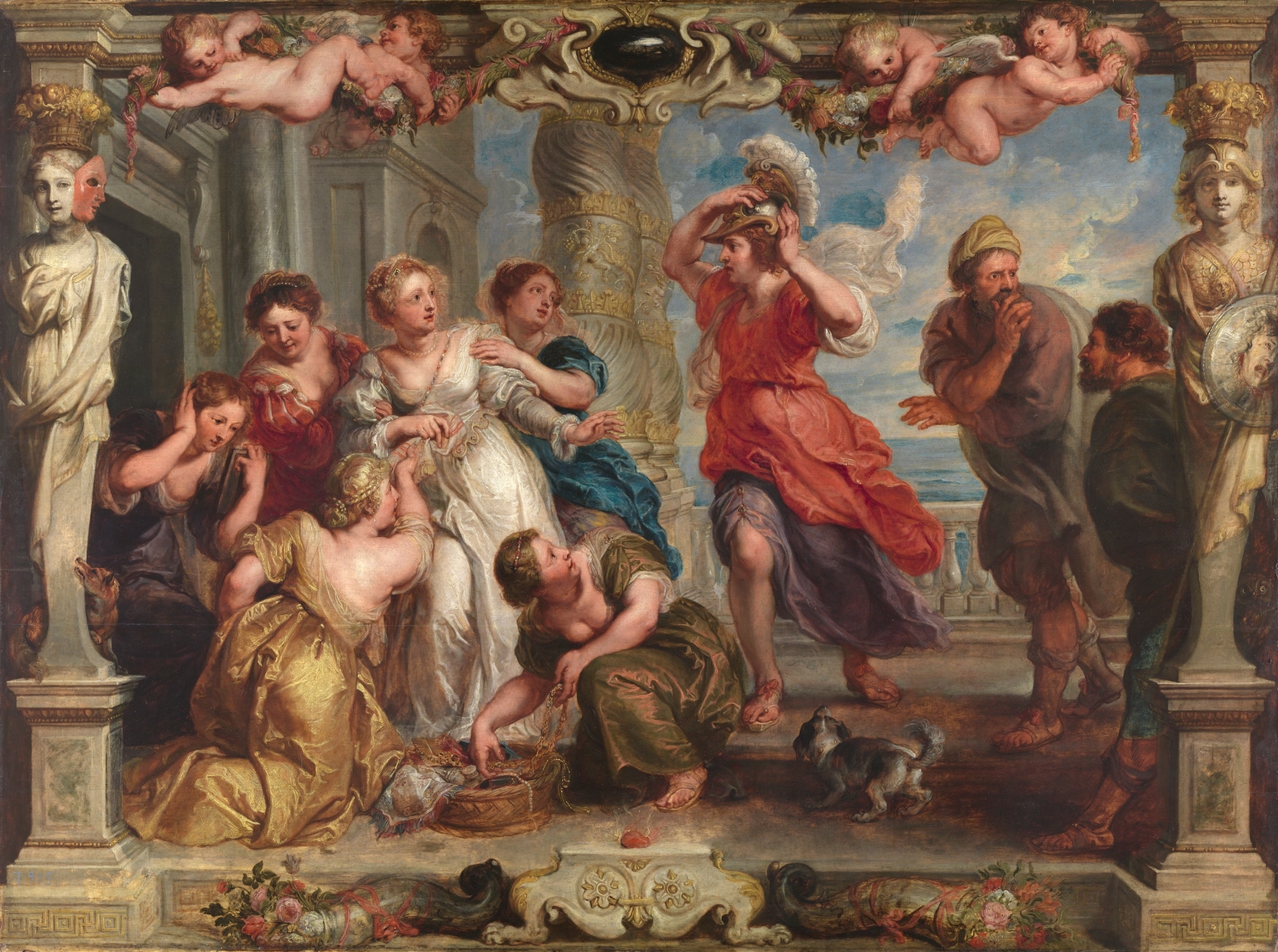
To translate this legendary drama onto canvas, Kauffmann deployed the rigorous, elevated visual language of the Neoclassical movement, of which she was a celebrated European pioneer. The composition is deliberately structured with a shallow, frieze-like spatial arrangement, consciously mimicking the dignified, linear elegance found on ancient classical Greek pottery and relief sculptures. Through intelligent curation of form and space, every figure is meticulously positioned to create a harmonious, theatrical tableau that prioritizes intellectual clarity and moral gravitas over baroque excess, reflecting the Enlightenment's deep fascination with antiquity.

Adding an extraordinary layer of historical intimacy to the piece is its physical nature: the work is a modello, a highly finished, meticulously executed preparatory painting created specifically for Empress Catherine the Great of the Russian Empire. Crucially, the surface of the canvas still bears the faint, deliberate grid lines hand-drawn by Kauffmann, serving as a rare mechanical blueprint used by the artist to meticulously scale and transfer the design onto a massive, final monumental canvas. Through strategic storytelling, these visible grid lines transform the painting from a static museum artifact into a breathing window across centuries, allowing viewers to witness the exact creative mechanics of an artistic master at work.
The triumph of this masterwork is inextricably linked to the trailblazing, defiant career of its creator, Angelica Kauffmann herself, who defied the rigid patriarchal boundaries of the eighteenth-century art world to reach the pinnacle of international renown. Born in Switzerland, Kauffmann cultivated her craft through formative years in Italy before establishing a dominant presence in the elite cultural circles of London, where her exceptional talent, intellect, and business acumen earned her the rare distinction of becoming one of only two founding female members of the Royal Academy of Arts. Through cultural understanding of the immense gender barriers governing the Georgian art establishment, Kauffmann’s professional ascent was a revolutionary act, proving that female genius could command the respect of monarchs and high-society patrons alike.Ultimately, Angelica Kauffmann’s preparatory masterpiece transcends the physical boundaries of eighteenth-century portraiture and mythological illustration. Through transformational framing, the painting is elevated into an immortal testament to human agency—proving that whether examining a mythical hero's inescapable march toward his destiny or a brilliant female artist's conquest of an exclusionary art world, the courage to claim one's true identity remains the most powerful narrative in human history.