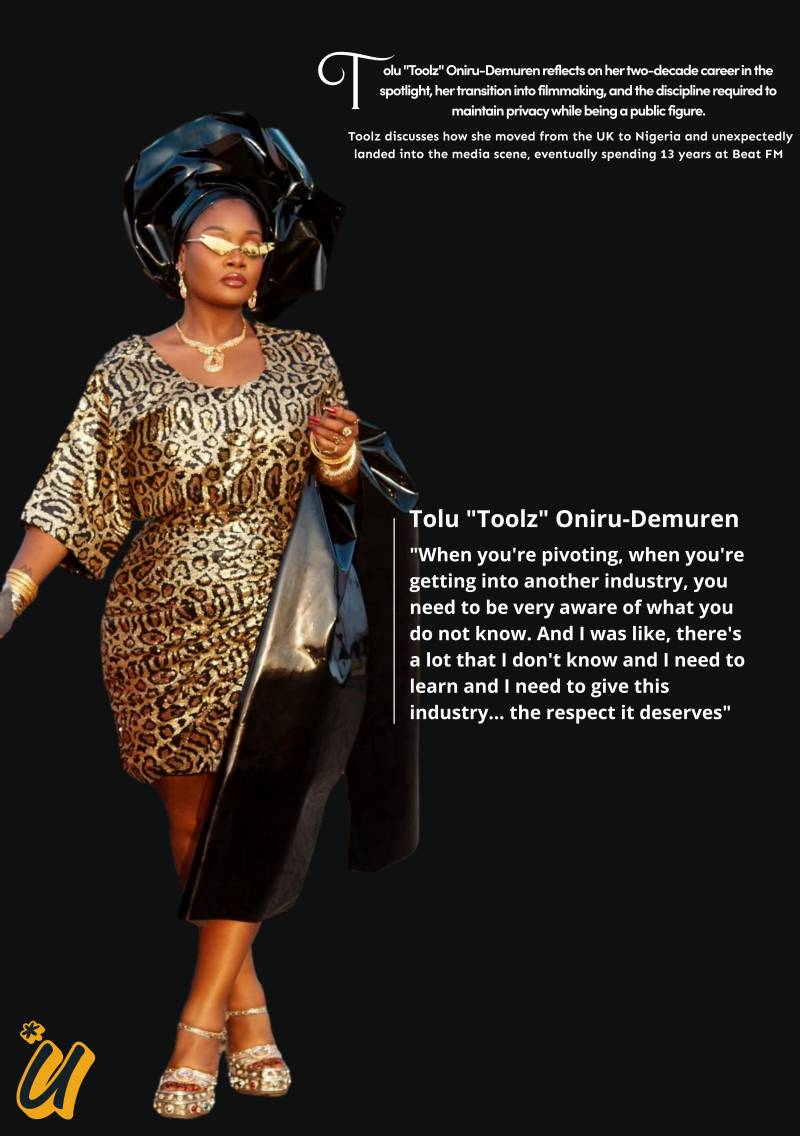
The vibrant ecosystem of Nigerian entertainment is built upon the shoulders of pioneers who did not merely participate in the industry's explosive growth, but actively sculpted its contours. To maintain relevance, cultural resonance, and creative vitality across two decades of rapid digital and structural transformation requires an extraordinary degree of discipline, resilience, and reinvention. In a deeply captivating, funny, and profoundly honest episode of the popular podcast Tea With Tay, host Taymesan sits down with veteran media personality, television host, and trailblazing executive Tolu "Toolz" Oniru-Demuren. Across an expansive, soul-baring conversation, Toolz pulls back the polished curtain of celebrity to reflect on a legendary career, the unyielding pressures of public life, the complex realities of privilege, and her fearless, highly anticipated transition from the radio booth to the director’s chair.
The journey begins with an insightful look back at the shifting sands of the Nigerian media landscape, anchoring itself in Toolz’s monumental thirteen-year tenure as a dominant voice at Beat FM. During an era when traditional terrestrial radio reigned supreme as the undisputed cultural heartbeat of Lagos, she was part of the elite vanguard that dictated pop culture trends, broke breakout musical acts, and kept a finger firmly on the pulse of urban youth. Yet, true media longevity demands an acute awareness of changing tides. Toolz reflects on the organic, necessary evolution from legacy broadcasting to the dynamic frontier of digital media platforms—exemplified by her successful ventures like OffAir. This strategic pivot highlights a masterclass in modern media survival: recognizing that formats may disintegrate and rebuild, but the core currency of authentic connection remains eternally valuable.
Related article - Uphorial Shopify

Amidst discussions of professional milestones, the conversation gracefully pivots to an introspective examination of heritage, identity, and the modern discourse surrounding privilege. Toolz addresses head-on her background as a member of the esteemed Oniru royal family of Lagos, unpacking the cultural nuances of her upbringing and her formative years spent living and studying in the United Kingdom. With intelligent curation of her own narrative, she demystifies the mechanics of traditional ruling houses and directly confronts the modern "nepo baby" conversation. Rather than deflecting her background, she offers a grounded perspective on the intersection of heritage and hard work, emphasizing that while lineage may open certain doors, sustaining a multi-decade career in the cutthroat public eye requires unyielding grit, professional competence, and an independent work ethic that no family name can buy.
That public eye, however, exacts a heavy psychological toll, introducing complex boundaries between professional visibility and personal sanctuary. With remarkable emotional precision, Toolz opens up about the darker dimensions of fame, detailing the sharp, unpredictable sting of viral digital backlash and the systemic invasions of privacy that plague modern public figures. She shares how navigating the fishbowl of celebrity taught her the hard way about the vital necessity of keeping her inner circle fiercely protected and tightly knit. In a world that demands constant digital exposure and performative vulnerability, Toolz champions the radical act of emotional preservation, asserting that true peace of mind depends on knowing which parts of oneself to give to the roaring crowd and which parts to reserve strictly for home.
The most electrifying dimension of the conversation centers on her latest professional metamorphosis: stepping boldly behind the camera as a first-time film director for an upcoming cinematic project. For an icon who spent her entire career utilizing her voice as her primary instrument, the transition to visual storytelling represents a monumental, terrifying leap into uncharted territory. Toolz speaks candidly about the grueling, high-stakes realities of bringing a film to life—from the nerve-wracking trenches of pitching her vision to skeptical financiers and navigating the complex politics of casting, to the sheer creative discipline required to helm a complete production set. This directorial debut is framed not as a superficial vanity project, but as a deep-seated commitment to storytelling, proving that her creative hunger remains as insatiable as it was on day one.
Ultimately, this masterclass of an interview serves as a transformational framing of what it means to age gracefully and powerfully within the entertainment industry. Through cultural understanding, strategic self-reflection, and an unwavering commitment to authenticity, Toolz Oniru-Demuren stands as a shining blueprint for modern African creatives. Whether she is commanding a radio console, building digital media empires, or calling "action" on a movie set, her enduring legacy is a testament to the fact that true influence belongs to those who refuse to stand still, daring to reinvent their stories while keeping their foundational integrity entirely intact.