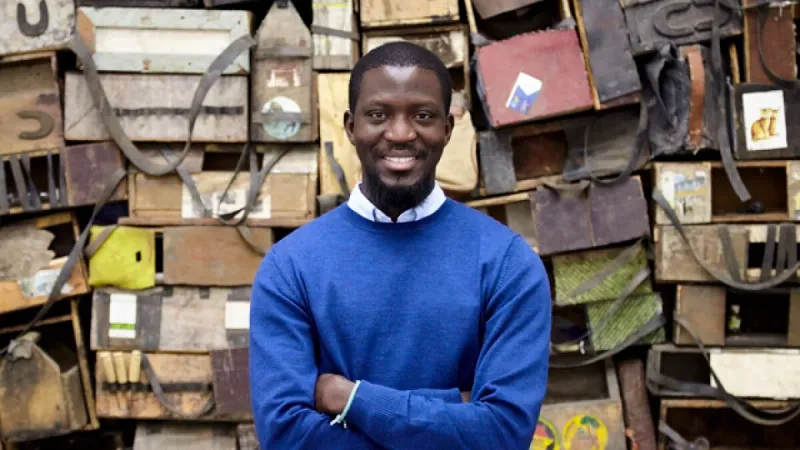
Ray Smith's studio, housed within an abandoned New York City warehouse, stands as a profound testament to a life dedicated to art, resilience, and a poignant commentary on the city's evolving landscape. For Smith, this building is nothing short of a "church," representing everything his life has been. His journey into this unique space began decades earlier, rooted in a dynamic and "groovy" post-World War II Mexico City, where he grew up. It wasn't until his arrival in New York in the mid-1970s that he truly discovered pop art, a pivotal moment that included meeting a teacher who introduced him to Paul Morrissey, the filmmaker for Andy Warhol. In 1975, stepping into Andy Warhol's studio was a transformative experience that "blew [him] away," solidifying his ambition to be in New York.
However, the reality of being a young, aspiring artist in New York in 1978 proved harsh. Despite Soho being cheap and fun, the financial strain was immense; he recounts the "toil" of driving a cab or waiting tables just to barely afford the $500 rent, which he described as "a bitch". This struggle eventually led him back to Mexico, where he serendipitously found an abandoned building near his mother's house in Mexico City. Drawing on his New York experiences with abandoned spaces, he saw its potential, despite it having been a restaurant that never secured a permit and lay untouched for thirty years. He rented the entire building, transforming it into a vibrant hub for parties, artist studios, and events, mirroring the underground scene in New York and generating a modest income. This venture was cut short in 1985 when a devastating earthquake destroyed their building in Mexico City, leaving Smith and his newlywed wife with "no way home" and compelling them to return to New York.

Related article - Uphorial Radio
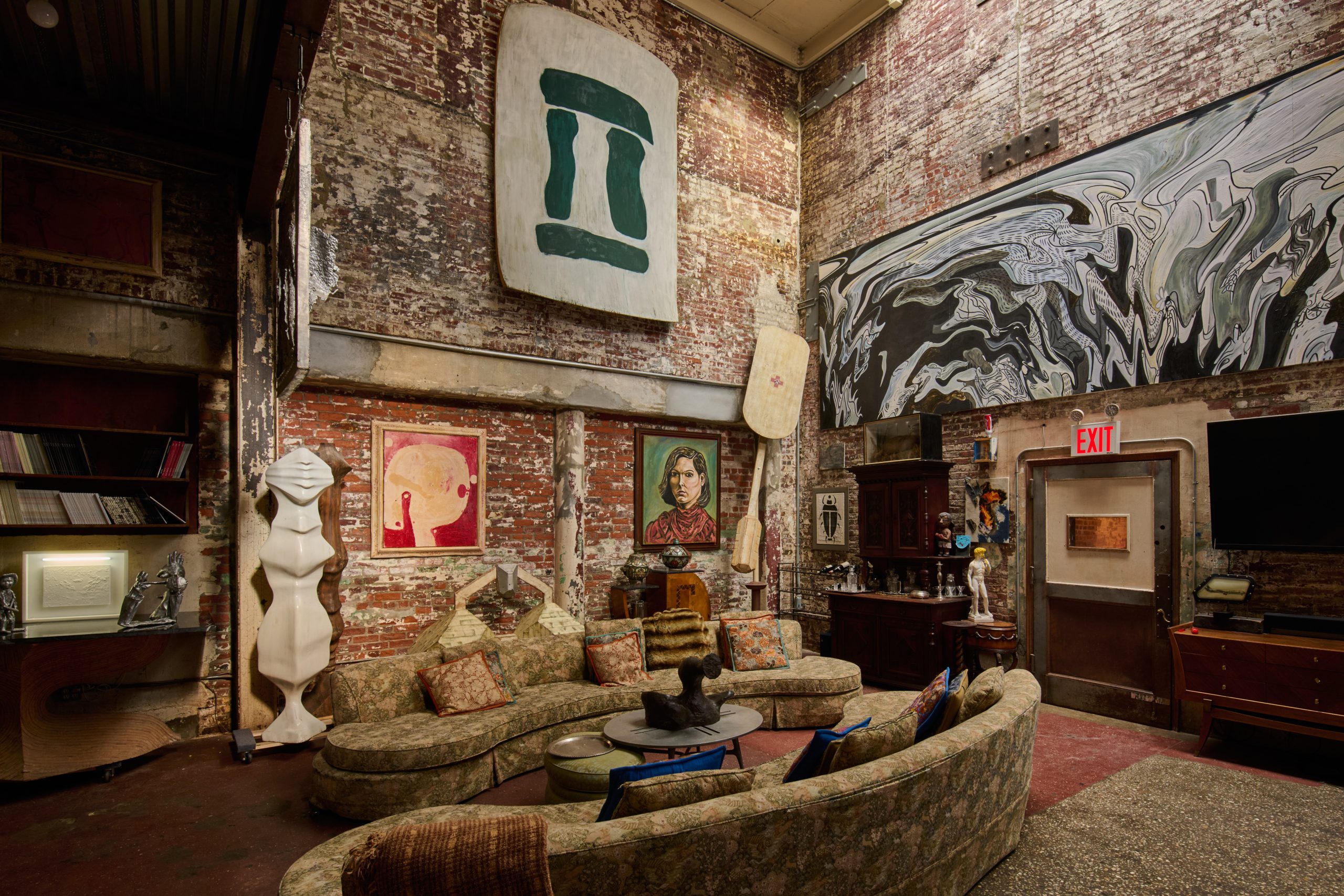
His definitive return to New York and the acquisition of his current studio in the Gowanus Canal neighborhood of Brooklyn occurred in 2000. The area itself boasts a fascinating, albeit troubled, history. Originally marshes, it evolved into an industrial canal lined with factories, often handling "high-risk stuff like chemical plants". By the 1950s, it began a decline, becoming a "very toxic abandoned industrial wasteland". It wasn't until the end of the Bloomberg administration that the full extent of its toxicity was understood, leading to its declaration as a Superfund site. Smith recalls the neighborhood at the time he first arrived in New York as "the edge of the world," a "war zone" where staying indoors after sunset was a necessity. A memorable evening in the Gowanus area prior to his purchase involved being woken by the "most glorious organ music," emanating from the studio of one of the world's best church organ tuners who had opened up a floor between spaces to work. Smith describes this as "the closest thing I think I ever came to like a real spiritual awakening". This profound experience, coupled with his understanding of the area, meant that when he walked into the warehouse in 2000, he knew it was meant to be, making it "the quickest thing I ever bought in my life". He recalls a young broker attempting to highlight all the problems, but Smith, captivated by the "height of the ceilings and the windows," was already convinced, asking, "How much do you want for it?" without a second thought.
The 13,000 square foot warehouse was in a deplorable state, having been used as a "drug den" complete with "mattresses on the floor and human shit," which he bluntly described as "pretty gnarly". The initial work involved welding metal onto the doors to secure the premises and dealing with a pigeon infestation, which was ingeniously solved by a friend's pet peregrine falcon. A crucial part of the cleanup and integration with the neighborhood was the involvement of Edwin Salas, who led a crew of recovering drug addicts in the monumental task. Edwin, who had found salvation through "Jesus and work," not only helped clean the space but also "broke the ice with the neighborhood relations".
The studio's resilience was tested severely by Hurricane Sandy, which inundated the entire area with "about 6 ft of water". Despite having built walls a foot off the ground in anticipation of flooding, Sandy "completely overwhelmed" them, causing the doors to open inward under pressure and flood the space. Over 250 pieces of art were damaged, floating around the studio for three days. These particular pieces, made of laminated plywood and hollow, were then subjected to a unique "curing" process: burning them to eliminate mold. This act transformed them into black artworks, which Smith now loves. He reflects on this experience as a profound lesson, realizing that even meticulously constructed plans can be rendered meaningless by nature.
Smith contextualizes his experience within a broader narrative of New York City. The mid-1970s, when the city was "falling apart," presented artists with "ruins that we can move into" and modify, fostering an "entirely different sort of environment". He sees the "finest hope in the places that are the most hopeless," believing that the city's charm lay in the necessity to "build it, invent it, piece it back together". However, he laments the current state, where the city, once a "magnet of some of the most talented human beings," is "getting rid of the artists". He cites Octavio Paz's tiered view of language, where music, poetry, and painting precede law, suggesting a hierarchy that values artistic expression above rigid structures. Smith observes that few artists can afford the current rents or sustain their presence in the city, which is being relentlessly rebuilt, surrounded by "nothingness" as buildings are torn down to make way for "monstrosities". He finds the developers' rhetoric about supporting art and artists to be a "most amazing load of bullshit," designed to make properties so expensive to upkeep that artists are forced to sell.
Developers have approached him with proposals to transform his building into an "event space," offering to manage it and split the profits. Smith, however, dismisses these offers, stating, "Thank you for the idea but I don't think I need you" because the space "developed itself". He expresses gratitude for developers consistently "underestimating the people that are there to be an artist" and for considering artists "crazy and dumb," which he sees as the "best camouflage". Having never held a traditional job, he prefers "living in my money" by continuing to occupy his studio rather than selling and depositing the proceeds in a bank. His studio, by design, has always existed outside the establishment. He eloquently concludes by describing his current vantage point as "looking over the edge of the abyss," a state he calls "the bliss of the abyss". This narrative underscores the project of Joshua Charow, whose upcoming photography book, Artist and Residence, documents this "last generation of artists who live in these incredible loft spaces across New York City," a generation that is "slowly vanishing".