Alexander McQueen’s Autumn/Winter 2006 collection, "The Widows of Culloden," serves as a profound summation of the designer’s technical dexterity and his fierce commitment to his heritage. To Lee McQueen, the use of his family tartan—meticulously produced by the Lovat's mill in the Scottish Highlands—was far more than a design choice; it was a "visual signifier of clan kinship" and an "unbroken thread between then and now". McQueen’s primary contribution to this collection was his insistence that fashion serve as a "political lesson in history," using the garments to expose the "bloody actuality" of the 1745 Battle of Culloden rather than the sanitized romanticism often associated with Scottish identity. This raw perspective resulted in a collection that Alistair O’Neal, professor at Central St. Martins, describes as a "curious combination of anger and romanticism".

Related article - Uphorial Shopify

'The Widows of Culloden'

The technical execution of these pieces required immense skill, as tailoring patterned fabric cut on the bias demands that the geometric lines match perfectly at every seam. McQueen utilized a "forensic approach to historical detail," incorporating infantry-style jackets inspired by the 42nd Highlanders and decorative gilt buttons bearing the double-headed eagle of the Scottish Rite of Freemasonry. His expertise allowed him to blend 18th-century corsetry features, such as specific tail finishes at the base of the spine, with modern tailoring that included complex four-panel leg constructions.
These garments were never intended to be "understood flat," but were instead engineered to be viewed "in the round on a body in motion" to fully realize the alignment of the tartan.
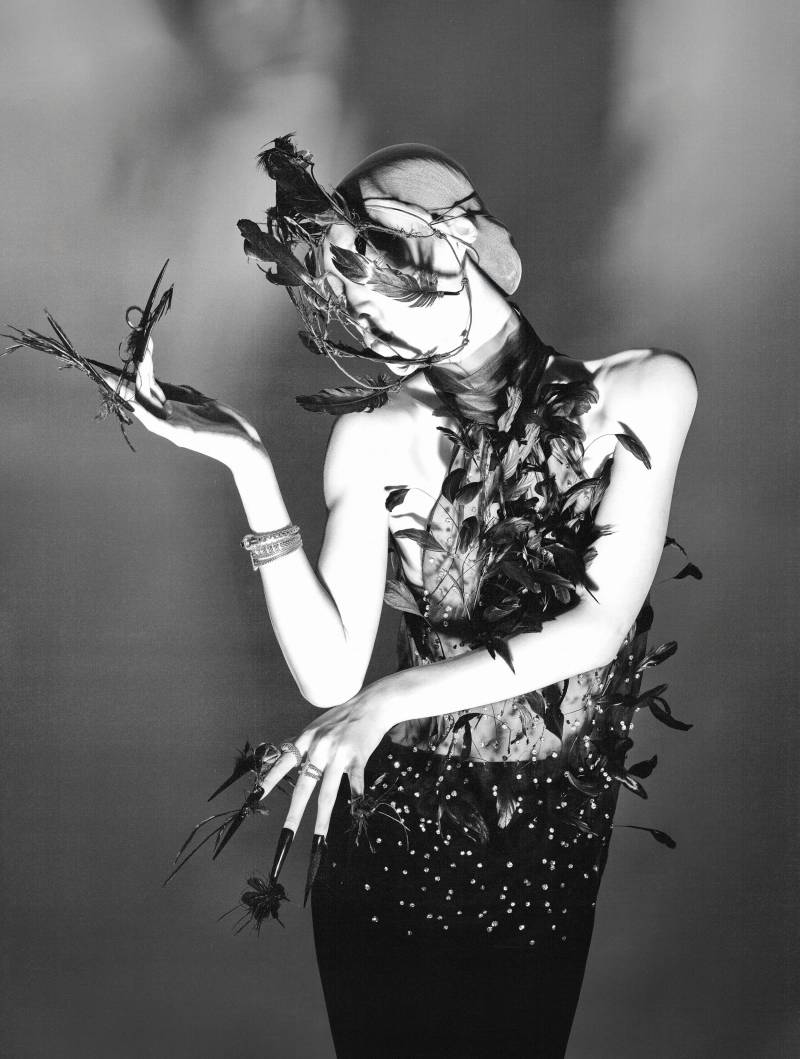
McQueen’s collaborative spirit also defined the collection’s aesthetic, notably through pheasant feather neck pieces and avant-garde hat designs by Philip Treacy. The architectural hallmarks he established, such as the oversized shawl collar and the distinctive peplum skirt, continue to serve as the blueprint for the brand's current identity. Today, Creative Director Seán McGirr continues to draw from McQueen’s original "bird’s tail" constructions, reinterpreting them as an amalgam of men's workwear and women's tailoring for the Spring/Summer 2025 season. Ultimately, "The Widows of Culloden" remains a testament to McQueen’s ability to weave personal ancestry and political defiance into the very fabric of high fashion. Constructing a McQueen garment from the family tartan is like assembling a three-dimensional map of an ancestral battlefield; every seam must line up with geographic precision so that when the fabric moves, the weight of history is carried effortlessly by the person wearing it.