The boundless theater of the cosmos has always beckoned humanity with the silent, blazing majesty of the stars, yet our closest and most influential stellar neighbor often remains the most profoundly misunderstood. While generations of stargazers have gazed upward in silent awe at distant galaxies and nebulae, our very existence is tethered entirely to the churning, nuclear heart of our own local star: the Sun. In an exceptionally illuminating, masterclass-level scientific and astronomical feature report, science communicators examine an awe-inspiring documentary journey led by Cleo Abram into the fiery depths of solar mechanics, breaking down humanity’s surprising planetary address within the heliosphere, the historic milestone of touching the sun's corona, the boiling plasma dynamics of the photosphere, the 170,000-year odyssey of trapped photons, the cosmic science of helioseismology, the eternal alchemy of nuclear fusion, the inevitable twilight of our solar system, and the urgent modern imperative of protecting our vulnerable technological civilization from solar fury. Through emotional precision, intelligent curation, cultural understanding, strategic storytelling, and transformational framing, this comprehensive news-style report explores the breathtaking architecture of our celestial anchor and the vital science that secures our future among the stars.
The philosophical and scientific awakening begins with a profound paradigm shift regarding our planetary address in space, challenging the isolated mental map most humans carry of Earth. Rather than floating in a lonely, empty vacuum of cold space far removed from our parent star, science reveals that Earth is actually situated directly within the Sun’s vast, invisible outer atmosphere—a protective magnetic bubble known as the heliosphere that extends billions of kilometers far beyond the orbit of Pluto. Through emotional precision, realizing that we live, breathe, and build our civilizations inside the literal outer breath of a roaring star instills a humbling, spine-tingling sense of cosmic intimacy, transforming our perception of the sun from a distant glowing orb in the sky into an omnipresent, protective womb that envelops our world.
This intimate relationship has recently been pushed past theoretical boundaries thanks to humanity’s boldest technological crusade into the solar furnace: the Parker Solar Probe. Braving unimaginable thermal extremes and intense radiation, this engineering marvel has successfully plunged directly into the Sun's corona—its scorching inner atmosphere—to sample plasma and magnetic fields at close range for the very first time in history. Through intelligent curation of space exploration milestones, the probe acts as our robotic emissary, bravely knocking on the fiery gates of the sun and returning unprecedented data that allows scientists to decode the mysteries of solar wind acceleration and coronal heating, turning science fiction into tangible human triumph.
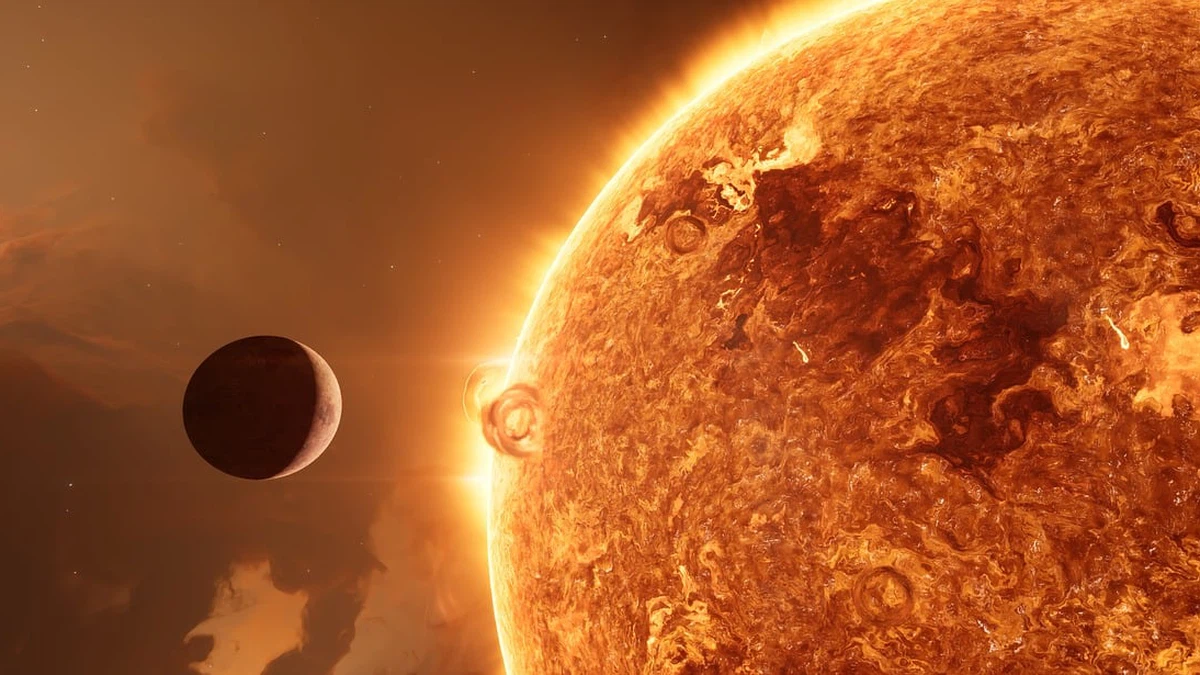
Beneath the blazing crown of the corona lies the photosphere, the visible surface of the Sun, which the documentary reveals to be a violently dynamic theater of boiling, churning plasma. Here, massive, bubble-like convection cells of superheated gas rise from the deep interior, erupting and cooling before plunging back downward in an endless, eternal cycle of thermal energy transfer. Descending further inward into the convective zone, energy generated in the solar depths drives this relentless boiling movement, acting as a colossal planetary engine that powers the entire solar system. Through cultural understanding of humanity's long-standing fascination with the elements, observing these colossal plasma structures bridges ancient elemental reverence with modern astrophysics, reminding us of the raw, untamable energy humming beneath the serene light of day.
Related article - Uphorial Shopify
Journeying deeper still into the solar interior brings us to the radiative zone, a realm of almost incomprehensible density where light particles, or photons, are born in the nuclear core. Trapped in a chaotic subatomic labyrinth of matter, a single photon is bounced, absorbed, and re-emitted millions of times over, taking an astonishing roughly 170,000 years just to migrate outward from the center of the Sun to the surface before embarking on its eight-minute dash to Earth. Through strategic storytelling, this glacial subatomic migration is framed as a poetic masterclass in patience and endurance, revealing how the warm sunlight touching our skin today was forged in the deep interior during an epoch when early humans were just beginning to walk the earth.
To peer even further into the invisible mysteries of the star's inner sanctum, scientists employ an ingenious observational technique known as helioseismology. Much like geologists use seismic waves from earthquakes to map the hidden interior of our own planet, solar physicists listen to the "sound" of the Sun—analyzing continuous pressure waves and surface vibrations rippling across its golden face—to construct precise three-dimensional models of its internal composition, rotation rates, and density layers. Through intelligent curation of scientific methodology, helioseismology demonstrates the profound ingenuity of the human mind, proving that we can dissect the interior of a blazing star trillions of miles away simply by reading the subtle ripples of its surface music.

At the absolute heart of this cosmic engine lies the miraculous, life-giving process of nuclear fusion, where the core of the Sun compresses hydrogen atoms under unimaginable gravitational pressure to forge helium. This relentless subatomic alchemy releases staggering amounts of pure energy every single second, flooding the solar system with the light, heat, and electromagnetic radiation that makes life on Earth possible. Through emotional precision, contemplating the quiet, violent perfection of nuclear fusion is awe-inspiring—a continuous, self-sustaining atomic fire that has burned for billions of years without faltering, serving as the ultimate engine of existence for every living thing on our planet.
Yet, like all mortal things in the cosmos, our sun has a defined evolutionary lifespan, currently resting in a stable, middle-aged plateau at approximately 4.5 billion years old. As its core hydrogen fuel slowly diminishes over the deep arc of billions of years to come, the sun will eventually swell into a monstrous red giant, expanding outward to engulf the inner planets before peacefully shedding its outer layers and collapsing into a dense, fading white dwarf. Through cultural understanding of cosmic impermanence, this planetary lifecycle places human history into a humbling perspective, reminding us that our home star is an active participant in an ongoing, billion-year galactic evolution.
Bringing these celestial mechanics down to immediate, practical earthbound concerns, Cleo Abram highlights why this relentless solar research is not merely an academic exercise, but an urgent operational necessity for modern civilization. As humanity expands its technological footprint—relying heavily on delicate satellite networks, global communication grids, and power infrastructures—we remain intensely vulnerable to violent solar storms and coronal mass ejections capable of triggering global technological blackouts. Furthermore, as astronauts prepare for ambitious future exploration missions to the Moon and Mars, understanding the invisible hazards of space weather is the ultimate line between life and death. Through transformational framing, this comprehensive journey into the heart of the Sun elevates solar science from a distant branch of astronomy into an essential roadmap for human survival, proving that by deeply understanding the roaring star that gave us life, we secure the wisdom needed to navigate our cosmic future.