The British Museum’s Oceania section serves as a vital bridge between historical archives and the living culture of the I-Kiribati people, specifically through the curation and study of the world’s most ingenious and labor-intensive armor. Within the museum's collection storerooms—active spaces where source communities are invited to reconnect with and "greet" their heritage—curator Julie Adams and I-Kiribati native Kaetaeta Watson have been dissecting the extraordinary craftsmanship of the Kiribati archipelago. This ensemble, which dates back to the era of early contact with European sailors, is a visual spectacle that challenges the historical stereotype of I-Kiribati people as simply "warlike". At the foundation of this collection are garments made from te kora, a resilient cord derived from coconut husks. The production of this string is a grueling, months-long process involving soaking husks in sea mud for three months and hand-rolling the fibers against the skin until the maker's legs are red and raw. This fiber is then woven using techniques similar to fishing nets to create dungarees, jackets, and a distinctive high-backed cuirass reinforced with palm wood struts.
Far from being simple tools of violence, the artifacts held by the museum reveal a sophisticated system designed to control conflict and minimize bloodshed over land and resources. The high back of the cuirass was specifically designed to protect a warrior’s head from stones thrown by their own community during ritualized, one-on-one combat. The museum’s scientific contribution includes identifying the specific shark species—such as the blacktip reef, silky, and "nervous shark"—whose individually drilled teeth were lashed onto weapons with coconut fiber. Perhaps the most striking element in the collection is the helmet, made from the dried, spiked skin of an inflated porcupine fish. While intimidating to the enemy, these pieces also held deep spiritual significance; many were decorated with patterns of human hair, a material viewed across the Pacific as having immense spiritual potency.

Related article - Uphorial Shopify
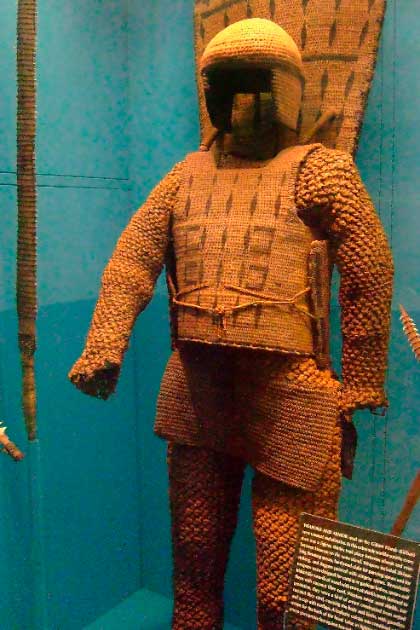
The British Museum’s contribution to preserving this heritage is rooted in a long history of community engagement. Records show that in the 1870s, a man known as "Kiribati Bob" visited the museum and was photographed wearing the exact cuirass currently in the collection. Today, the museum continues this tradition by supporting contemporary I-Kiribati artists who use the collections to relearn and maintain vanishing weaving techniques. To bring this history to a global audience, the museum’s conservators spent months preparing a custom mannequin to demonstrate how the layers of fiber, shark teeth, and fish skin sat upon the human body. This fully restored suit is currently the centerpiece of the touring exhibition "Islanders: Voices from the Pacific," currently on display in Barcelona, designed to inspire the same "wow" factor that the original warriors commanded centuries ago.
Ultimately, the museum’s work transforms these objects from relics of a bygone era into active symbols of cultural resilience. By providing the space for I-Kiribati people to research their own history, the institution ensures that the ingenuity of the atoll dwellers remains a living part of the present. To view these suits is to see a civilization that mastered its environment, turning the humble materials of the coconut and the sea into a sophisticated technology of both protection and diplomacy.
To understand the construction of this armor is to see it as a metaphorical tapestry of the island itself; just as thousands of individual coconut fibers are twisted into a single, unbreakable cord, the identity of the I-Kiribati is woven from the painful labor, spiritual beliefs, and the communal need to preserve peace through strength.