The highly anticipated resurfacing of a lost Audemars Piguet (AP) pocket watch, aptly nicknamed the "Grand Piece" (GP) for its super-large size, has been highlighted by Sotheby’s as a monumental moment in horological history. This rediscovery, which coincidentally occurred during the brand’s 150th anniversary, resolves a decades-long search by Audemars Piguet for this unique timepiece. The Grand Piece and its companion, the Universal, represent the only two ultra-complicated watches AP has ever produced in its entire history, making them some of the most important pieces the company has created. Both watches "speak the same language" in their shared pursuit of the ultimate level of complication possible in a pocket watch.
The Grand Piece is an astronomical marvel, containing the largest movement Audemars Piguet has ever made, measuring 26 lines. Despite its immense size, it is noted for being so well balanced that it does not appear truly large. This watch is the only AP watch known to date that features the night sky, specifically the sky of London with 315 stars. It stands as the most integrated astronomical watch AP has ever made.
Related article - Uphorial Shopify
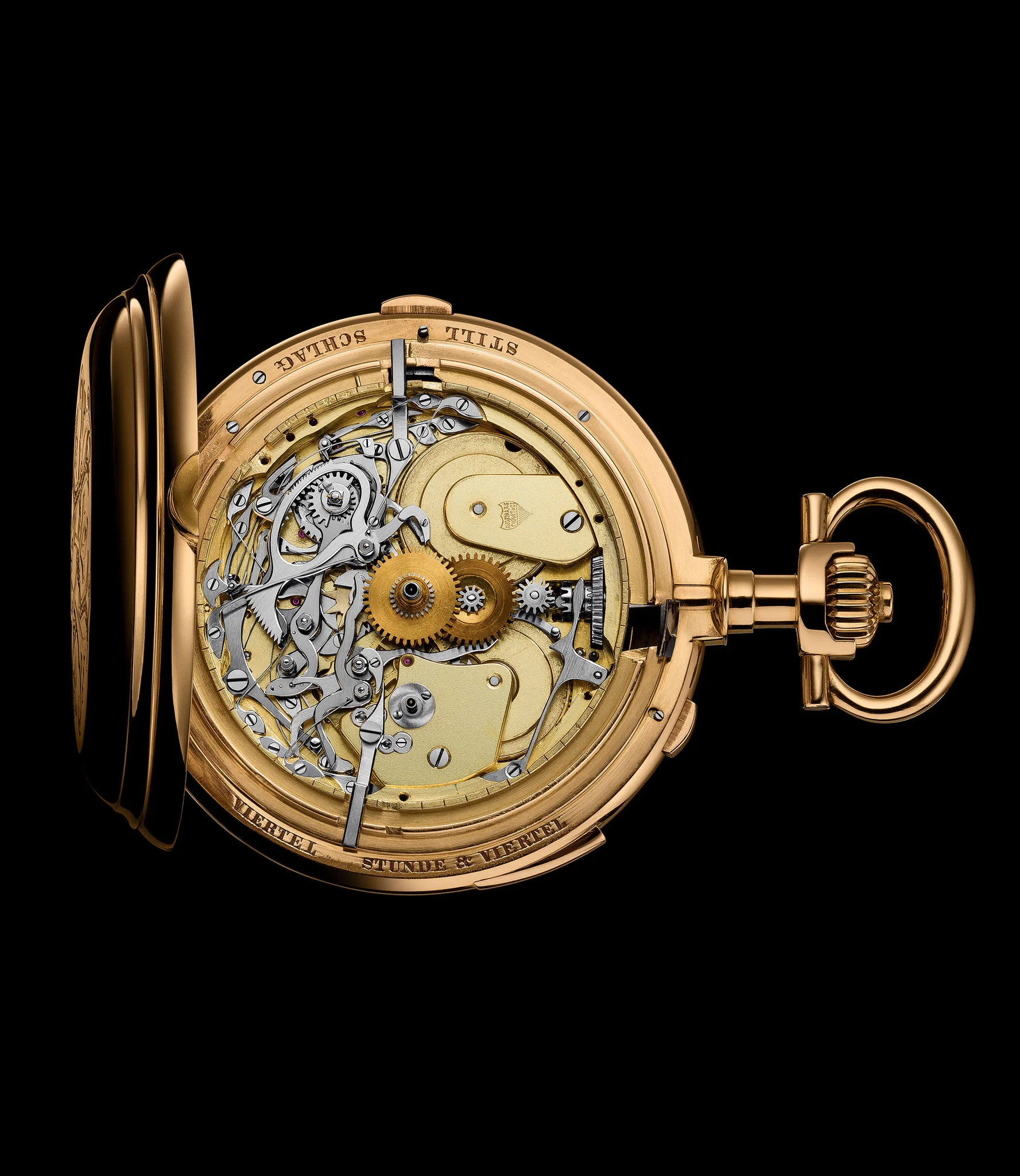
The staggering complexity of the watch is a testament to the craftsmanship achieved with the limited tools available at the time of its creation. The Grand Piece's design is heavily focused on timekeeping and calendar functions, incorporating a perpetual calendar with the day, date, and moon phase—a "very classical indication for any grand complication". More uniquely, the watch is able to deliver the sidereal time and the 24 hours plus the minutes of sidereal time. This is then compared to the minute, which is located on the opposite side of the watch. It is explained that human time itself is not entirely natural, as it "was invented by the watch makers and it's not entirely based on the rotation of the earth around itself and around the sun". The watch can calculate the real solar time using an equation of time, appearing with a plus and minus 14 minutes correction.
Beyond its astronomical features, the watch is a chiming complication, which in the 19th century was considered the "utmost complication," making up more than half of AP’s complicated production. The timepiece is a "great strike," meaning it chimes every 15 minutes. It can also be set to the small strike position, where it chimes every hour, or it can be silenced. The sound quality, produced by two hammers and cathedral gongs, is described as being "even more beautiful than cathedral gongs". A watchmaking expert with 25 years of experience noted they had "never heard something like that" in terms of sound quality.
The Grand Piece also features an intricate chronograph with two hands on the counter at 3 o'clock, one for the hour and one for the minutes. The challenge of having "two armors beating two different hearts in the movement and to bring the two hands to zero at the exact same moment is something very rare and very difficult to achieve". Furthermore, a sophisticated element not immediately visible is the presence of a Tourbillon, or Tobio, adding to the watch's inner beauty and sophistication.
The deep connection to Audemars Piguet's heritage is emphasized by the watchmaker who opened the Grand Piece for study—the grand-great-grandson of Louis Piguet, whose son also created the timing systems for the GP and the Universal, illustrating that the craft "stays in the family". The opportunity to study these two unique pieces together, the Universal (which brings the best of the chronographs) and the Grand Piece (focusing on astronomy), provides an unparalleled opportunity for modern watchmakers and scholars. The level of rarity achieved by the resurfacing of this watch is at the "utmost point possible".