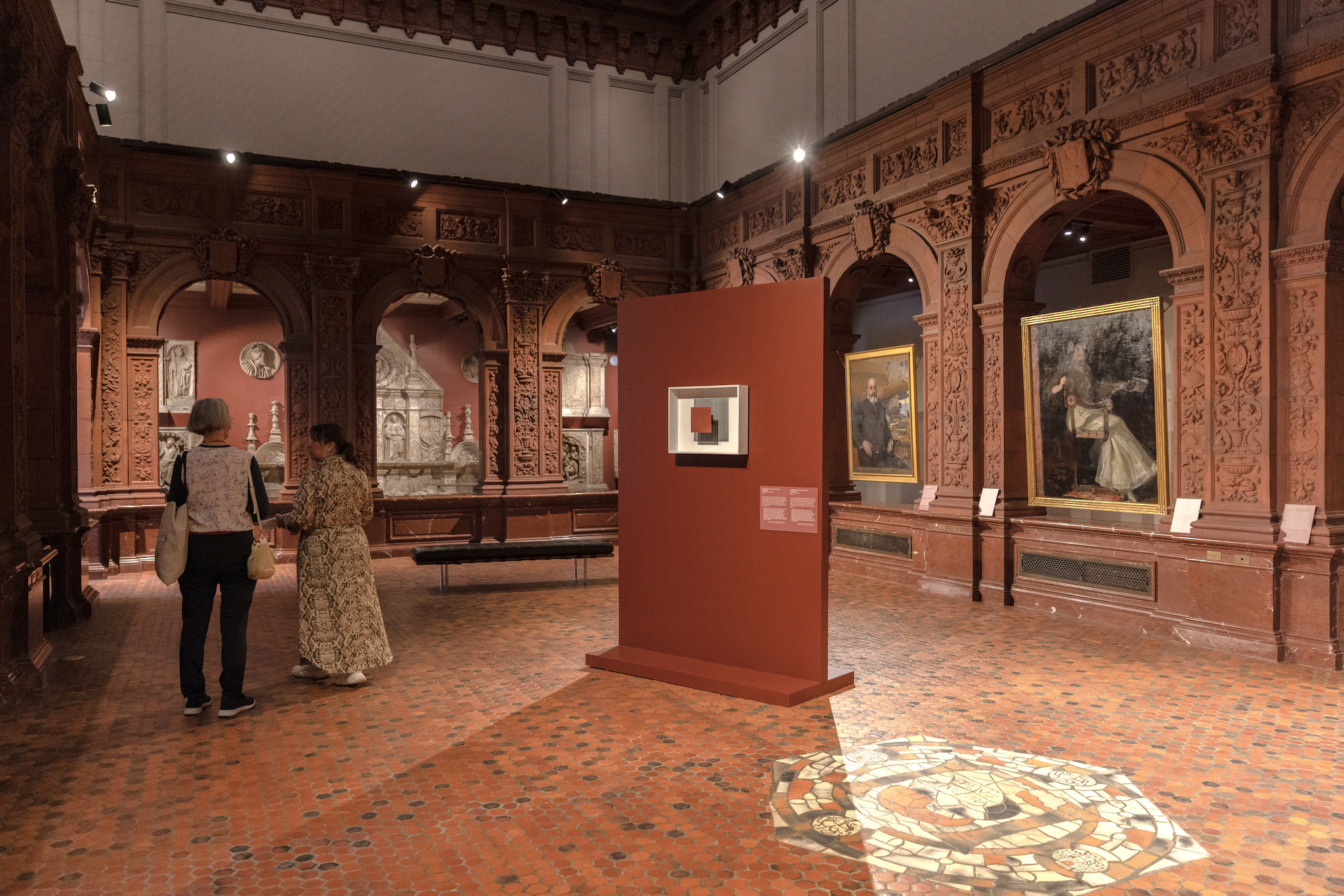
NEW YORK – The cultural landscape of New York City has long been defined by its ability to synthesize the historical with the contemporary, yet few endeavors have captured this synergy as effectively as the inaugural partnership between the Hispanic Society Museum & Library and the storied auction house Sotheby’s. Currently hosted within the brutalist architecture of the historic Breuer building, the exhibition In Residence: The Hispanic Society Sorollas stands as a masterclass in institutional storytelling. It is a transformational framing of one of the world's most significant, yet often under-recognized, collections, effectively stripping away the distance of time and geography to place the mastery of Joaquín Sorolla at the very center of the modern cultural conversation.
The Hispanic Society itself, founded in 1904 by the visionary collector Archer M. Huntington, has quietly operated as a primary guardian of Spanish and Latin American heritage for over a century. With an expansive collection exceeding 800,000 objects—a treasure trove that includes rare, fragile manuscripts and seminal masterpieces by Goya and Velázquez—the Society occupies a unique position in the art world. Yet, as the exhibition demonstrates, such an institution is not meant to be a static repository of the past. The collaboration with Sotheby’s is a strategic intervention, a means to bridge the gap between historical preservation and public engagement, ensuring that this vast reservoir of human creativity is not just housed, but actively experienced by a diverse, contemporary audience.
At the heart of this exhibition is a focused, intelligent curation of the works of Joaquín Sorolla, an artist whose ability to manipulate light and color remains unparalleled in the history of figurative painting. The selection of three pivotal works—Sea Idyll, the portrait of Louis Comfort Tiffany, and Señora de Sorolla in a Spanish Mantilla—offers a window into the dynamism of the late nineteenth and early twentieth centuries. Sorolla did not merely paint the world; he captured its vibration. In Sea Idyll, the viewer is met with a mastery of luminosity that transforms a simple scene into a meditation on the fluidity of existence, while the portrait of Tiffany reveals Sorolla’s profound insight into the complexity of the modern individual. These paintings, characterized by their bold brushwork and unyielding vitality, serve as a testament to Sorolla’s position as a bridge between the traditional and the modern.

v7xzaOgdbsk?si=jlRUfN-aHagdhuWf

The significance of this exhibition extends far beyond the canvas, touching upon the fundamental duty of the museum in the twenty-first century. The director of the Hispanic Society has articulated a vision that defines the museum not as a fortress of high culture, but as a public sanctuary for inspiration, engagement, and human connection. This philosophy challenges the traditional view of curation, which often prioritizes the safety of the object above all else. In contrast, the current exhibition argues for a more porous approach, where the complex processes of conservation and logistics are utilized not to hide the art, but to ensure that it remains accessible, impactful, and alive for the viewer. This is emotional precision in practice: recognizing that a painting is not truly alive until it has been witnessed, reflected upon, and integrated into the personal narrative of an individual visitor.

The strategic vision behind this partnership is perhaps its most compelling element. In an era where cultural institutions are increasingly tasked with demonstrating their relevance, the collaboration between a heritage museum and a global auction house serves as a necessary evolution. It acknowledges that bringing historical collections into the present-day discourse requires innovation, new venues, and the willingness to engage with partners who can reach wider, more diverse demographics. By moving these works from the established halls of the Hispanic Society to the iconic, stark surroundings of the Breuer building, the curators have created a new context that allows the paintings to speak with a renewed urgency. The contrast between the refined, romantic light of Sorolla and the severe, geometric lines of the Breuer architecture creates a tension that invites the viewer to look closer, to question their own perceptions, and to engage with the works not as relics, but as living artistic statements.
Ultimately, In Residence: The Hispanic Society Sorollas is more than an exhibition; it is a vital effort to reclaim the "untold story" of the Hispanic Society’s collection and its enduring impact on our understanding of Western art. It reminds the public that history is not a closed chapter, but a living foundation that requires constant attention, reinterpretation, and celebration. By highlighting the mastery of Sorolla, the curators have provided a lens through which we can understand our own relationship to the past. The exhibition stands as a promise that when history is treated with intelligent curation, strategic ambition, and an unwavering commitment to the public good, it ceases to be a burden of the past and becomes, instead, a vibrant guide for the future. As the Breuer building welcomes visitors into this shared space, the dialogue between the legacy of Huntington’s collection and the modern spectator becomes a testament to the fact that beauty, light, and artistic truth are not bound by time, but are perennial treasures waiting to be rediscovered by those willing to look.