GRESHAM COLLEGE - In a profound exploration of the intersection between mathematics, physics, and art, Professor Milton Mermikides delivered a keynote lecture at Gresham College this week, asserting that music is a fundamental property of the physical universe. Titled "Music of Earth and Space," the presentation moved beyond the idea of music as mere human expression, positing instead that the laws of vibration, frequency, and resonance are the primary architects of both the cosmos and the compositions we hold dear.
Mermikides began by revisiting the ancient philosophical foundations of "Nada Brahma"—the Vedic belief that the universe is essentially sound—and the Pythagorean "Music of the Spheres." He illustrated how these early thinkers recognized that the same mathematical ratios governing harmonious musical intervals also appear to govern the celestial bodies. This historical perspective set the stage for a discussion on how terrestrial environments have shaped human music; Mermikides demonstrated how cultures have long imitated their natural surroundings, from the water-inspired overtones of Tuvan throat singing to the wind-like timbres of the Japanese Shakuhachi flute. He noted that even architectural choices, from the acoustics of dense forests to the soaring reverberations of Gothic cathedrals, have dictated the evolution of musical genres.
The lecture then shifted to the modern frontier of data sonification, where music serves as a tool for scientific inquiry. Mermikides highlighted the work of Brazilian composer Heitor Villa-Lobos, who famously "composed" mountain skylines by translating their jagged silhouettes into melodic lines. This legacy continues today as scientists transform seismic activity and climate change data into audible patterns to better understand planetary shifts. The Professor further expanded this concept to "the sounds of space," demonstrating how the unique atmospheric densities of Venus, Titan, and Mars would radically alter the pitch and speed of a musical performance, effectively turning different planets into distinct "acoustic filters."
Related article - Uphorial Shopify

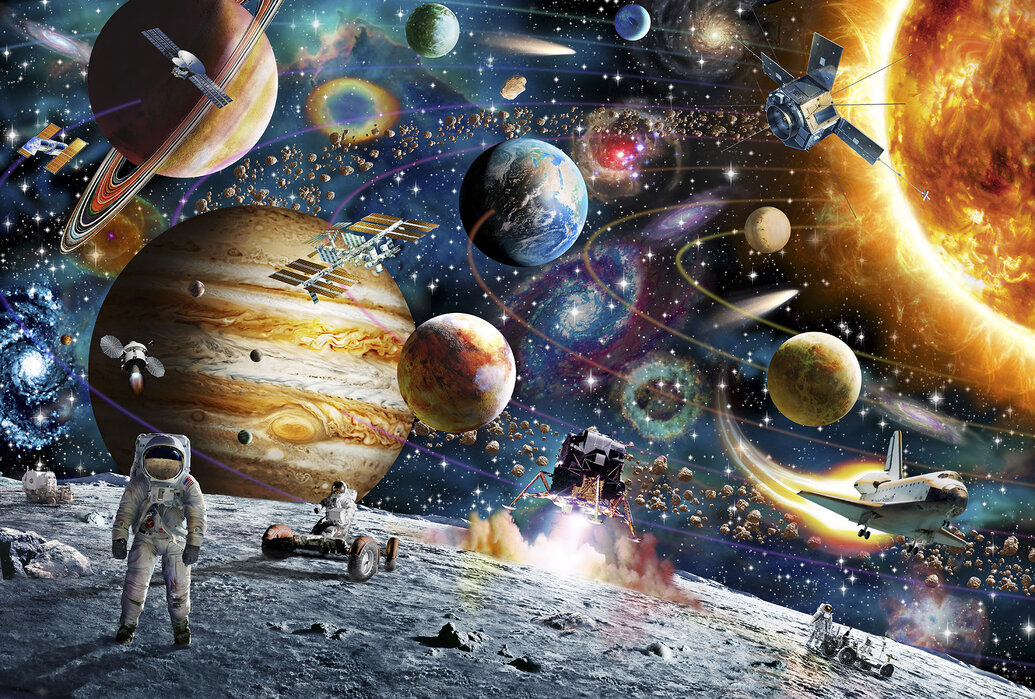
The culmination of the address focused on the "Cosmic Harmony" found within the structure of the solar system and beyond. By translating planetary orbits and exoplanet systems—such as the TRAPPIST-1 cluster—into musical chords and rhythmic cycles, Mermikides revealed a universal tendency toward ordered, harmonic relationships. The lecture concluded with a literal "symphony of creation": the sonification of the Cosmic Microwave Background (CMB). By shifting the ancient, low-frequency pressure waves of the Big Bang by 50 octaves into the human hearing range, Mermikides allowed the audience to listen to the oldest sound in existence—the "creaky, bass-heavy" hum of a universe in its infancy.
Ultimately, Mermikides argued that our musical intuition is not a separate human invention, but a refined sensory reaction to the structured variations of the universe. By listening to the cosmos, he suggested, we are not just hearing external data; we are hearing the very fabric of the reality that produced us.