SEATTLE – The global stage of the 2026 World Cup is a spectacle defined by human achievement, but beneath the feet of the world’s greatest athletes lies a different kind of triumph: a multi-year engineering odyssey that has transformed the very foundation of North American sports. As the tournament unfolds, the sixteen host venues—many of which were born and bred for the rigid, high-impact demands of the NFL—are presenting a surface that is as much a feat of laboratory science as it is a canvas for soccer. This transition from synthetic turf to natural grass is not merely a cosmetic change; it is the culmination of eight years of intense horticultural research, logistical warfare, and a reimagining of what a stadium floor can be.
The challenge was as simple to state as it was complex to solve: FIFA mandates natural, consistent surfaces, yet many of the tournament’s venues were built to thrive without the sunlight, air, or moisture that real grass requires to survive. In many of these domed or roofed stadiums, plants have historically had no business growing. To bridge this gap, scientists from institutions like the University of Tennessee and Michigan State University spent years analyzing turf varieties, conducting deep-dives into root structures, and simulating the exact physics of an elite-level soccer match. They were not just growing grass; they were developing a modular, high-performance ecosystem designed to endure the most demanding tournament in history.
The result is what turf experts call a "layer cake" approach—an intricate, engineered subterranean architecture. Below the verdant surface lies a sophisticated assembly: drainage pipes, layers of gravel or specialized modular plastic, and several inches of high-oxygen sand, creating a root zone that remains stable under the heavy, repetitive load of professional play. To ensure competitive neutrality, this "field" was tested with devices like the "fLEX" machine, which mechanically simulates a 170-pound player’s foot strike to guarantee that a ball’s bounce and roll in Miami’s humidity feel identical to the experience in the cooler climates of Vancouver or the high-altitude conditions of Mexico City.
Related article - Uphorial Shopify

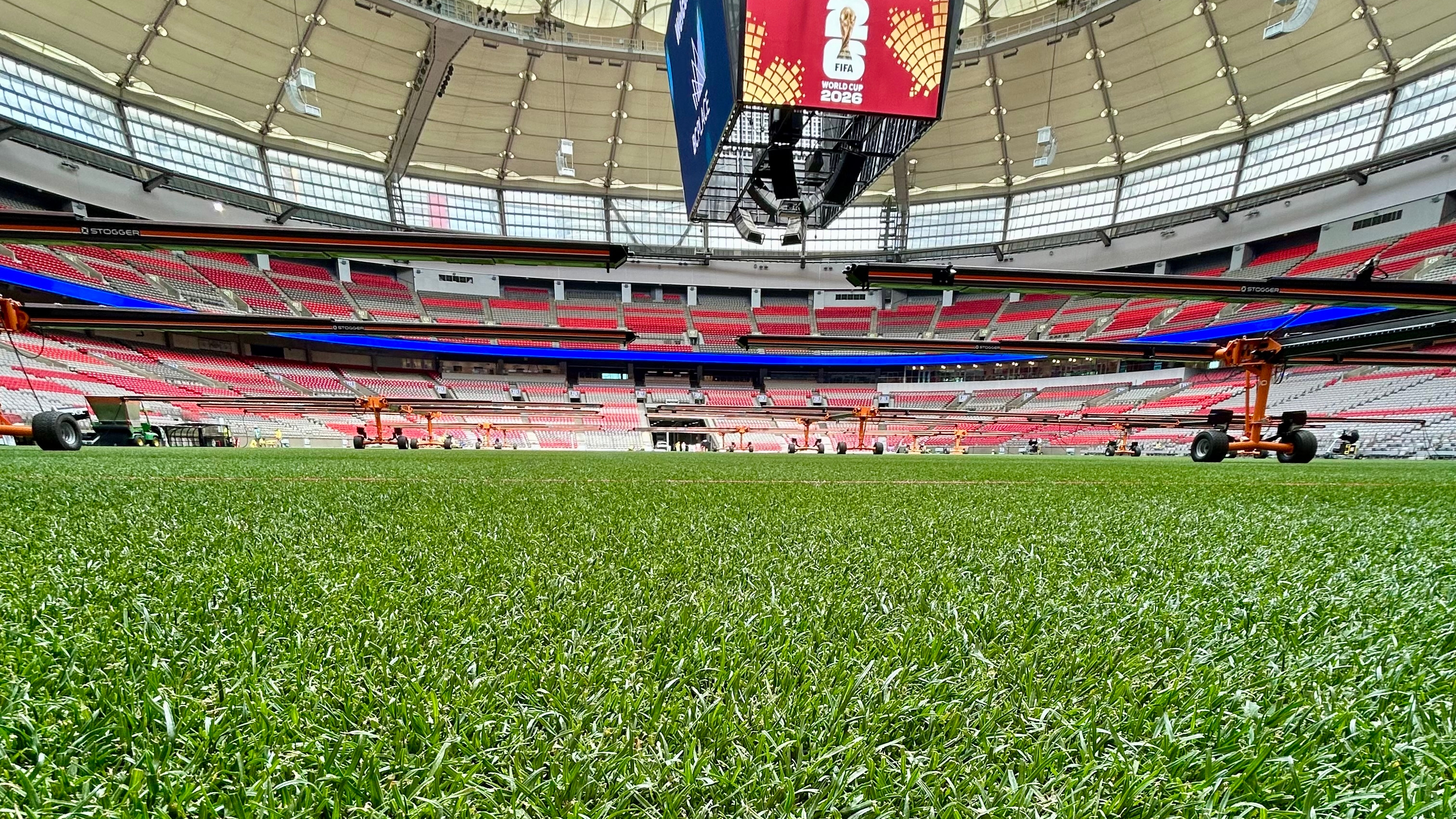
Logistics played a role equal to science. Because some stadiums required grass varieties that could not be grown locally, the tournament necessitated a "cold chain" transport operation reminiscent of pharmaceutical distribution. Millions of square feet of sod were grown in specialized farms across North America, treated with precise fertilizers, and monitored by moisture sensors for months before being harvested. When the time came, these massive rolls were whisked away in refrigerated trucks, racing against the heat to reach their destination. In venues like MetLife Stadium, this meant transporting sod from hundreds of miles away, while other sites saw crews working around the clock to strip out existing synthetic surfaces and stitch in new grass just days before kickoff. The architectural obstacles were equally daunting. Each stadium required unique surgery to accommodate this sudden infusion of nature. In Dallas, for example, the entire pitch had to be elevated by more than a foot to house the necessary irrigation and aeration infrastructure. In other venues, advanced LED lighting systems were permanently installed to mimic the sun’s spectrum in environments where shadows from stadium tiers would otherwise kill the turf. The groundskeeping teams, often walking the field with equipment moments after a match ends, treat the pitch as a living, breathing component of the game, repairing divots and managing moisture levels with a precision that borders on surgical.

Perhaps the most significant legacy of this project lies in what it proves for the future of stadium design. By demonstrating that high-quality, natural-grass surfaces can be engineered to survive in the most hostile environments, the 2026 World Cup is effectively ending the era of the "unplayable" dome. While much of the grass will be reclaimed or replaced after the final whistle blows, the methodologies developed—the reinforced hybrid systems, the adaptive irrigation, and the light-supplementation technology—represent a paradigm shift for athletic infrastructure. For the players, the surface may feel like the pristine fields of Europe or South America, but for the engineers and scientists who spent nearly a decade in the lab, it is a testament to the pursuit of excellence. The goal of this monumental effort was always "invisibility": the hope that fans and players alike would never have to think about the ground beneath them. In that sense, the project is a resounding success. By blending agricultural passion with rigorous mechanical engineering, the organizers have ensured that the focus remains exactly where it belongs: on the beauty of the game itself, played upon a stage that refused to compromise.