The intersection of artificial intelligence and the commercial music industry has entered a volatile, highly consequential era characterized by intense legal battles, structural corporate realignments, and a desperate search for sustainable coexistence. As generative audio tools democratize the mechanics of composition, they have simultaneously flooded the digital landscape with automated noise, triggering fierce pushback from major record labels and global copyright holders. In an exceptionally thorough, masterclass-level industry analysis, digital media analysts unpack the sweeping policy changes, high-stakes licensing deals, and philosophical shifts defining the future of platforms like Suno. Through emotional precision, intelligent curation, cultural understanding, strategic storytelling, and transformational framing, this comprehensive news-style report explores the crackdown on mass-generation, the introduction of audio tracking technology, landmark industry partnerships, and the evolving roadmap for independent creators.
The immediate catalyst for these sweeping platform reforms stems from a deliberate corporate effort to curb the rampant abuse of generative tools through aggressive restrictions on content extraction. Suno instituted strict limitations capping the number of songs users can export from the platform, a direct measure designed to throttle the automated mass-generation and industrial-scale distribution of low-effort tracks onto global streaming services. Through emotional precision, this policy shift acknowledges the growing fatigue of an industry drowning in digital spam, signaling that the Wild West days of frictionless, infinite uploads are coming to a close.
To enforce this new paradigm beyond simple export caps, the platform integrated advanced audio watermarking and digital fingerprinting technology directly into its ecosystem. These invisible cryptographic markers make it radically easier for streaming platforms, aggregators, and regulatory bodies to automatically identify AI-generated content across the digital supply chain. Coupled with these technical guardrails, the company overhauled its community guidelines to establish absolute prohibitions against the upload of copyrighted source material, the unauthorized recreation of existing commercial songs, and the predatory practice of unconsented voice cloning. Through intelligent curation of these safeguards, the platform is effectively drawing a hard line between transformative artistic inspiration and blatant intellectual property theft.

Related article - Uphorial Shopify
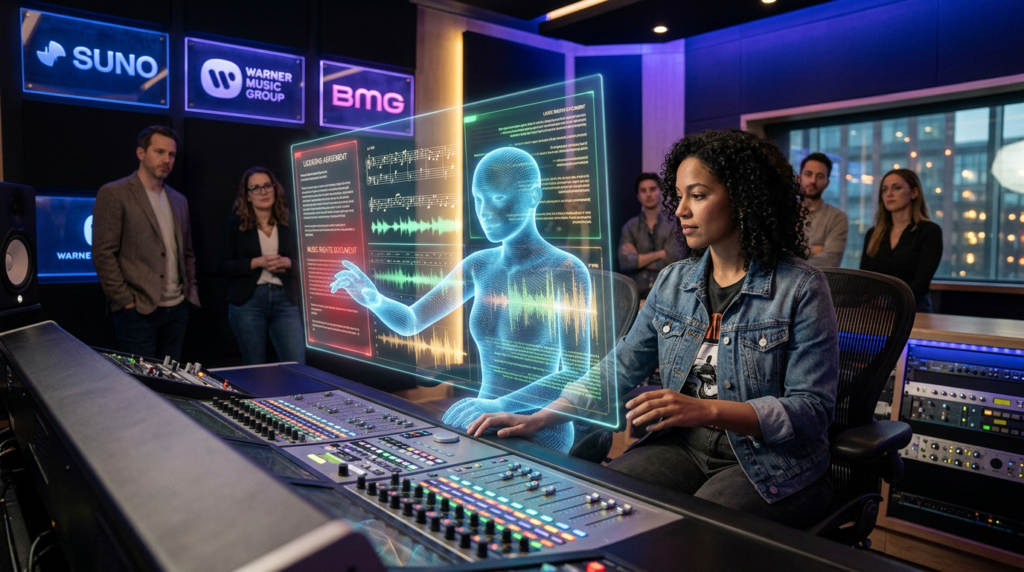
These structural pivots did not happen in a vacuum, serving instead as a direct strategic response to immense, existential legal pressure from the traditional music establishment. Facing devastating copyright lawsuits from major conglomerates like Sony and Universal Music Group, alongside a punishing and unfavorable court ruling in Germany, the platform needed to dramatically alter its legal posture to protect its corporate valuation and ensure long-term survival. This defensive posture yielded a historic breakthrough with a major global licensing deal secured with BMG, marking the first major rightsholder partnership of its kind since prior agreements. This landmark alliance provides a formal framework to compensate creators for past usage and establishes a legal pathway for participating artists to share in future revenues. Through cultural understanding of the music industry's historical protectionism, this partnership proves that even the most disruptive technological upstarts must eventually bend the knee to copyright law to achieve mainstream legitimacy.
For independent artists caught in the middle of this corporate transition, the overarching message from industry veterans is one of strategic evolution rather than despair. As the commercial ecosystem trends aggressively toward a future of fully licensed, labeled, and traceable AI music, relying on generic AI prompts is no longer a viable career path. Industry experts advise independent creators that the ultimate way to maintain leverage and protect their livelihood is through deep personal skill development, authentic human artistry, and undeniable ownership of their core craft. The wisest path forward is to treat artificial intelligence strictly as an inspiring supplementary tool for brainstorming rather than a wholesale replacement for human ingenuity, ensuring that your unique creative contribution remains distinct, provable, and entirely your own.Ultimately, this turbulent chapter in generative audio transcends a simple corporate policy update. Through transformational framing, the evolution of AI music platforms is elevated into a vital maturation process—demonstrating that true creative innovation can only thrive when technological power respects artistic heritage, honors intellectual property, and places human creators safely at the center of the cultural universe.