LOS ANGELES - In the world of competitive and recreational swimming, the sensation of "sinking legs" is often described as the single greatest barrier to efficient freestyle performance. This phenomenon, which can make a standard lap feel like an arduous uphill climb, is frequently attributed to natural body composition. Because muscle and bone are denser than water while fat and air-filled lungs are buoyant, individuals with higher muscle-to-fat ratios often find their lower halves acting as anchors. However, elite coaching data suggests that this "anchor effect" is not a permanent physical limitation, but rather a technical flaw that can be corrected through four fundamental mechanical shifts.
The most immediate correction involves the "seesaw effect" of head positioning. Many swimmers instinctively look forward to see the wall, a move that inadvertently drops the hips. By tucking the chin slightly and lowering the eyeline to look at the pool floor at a 45-degree angle, the swimmer shifts their center of buoyancy. This neutral neck position allows the lungs to act as a fulcrum, naturally levering the hips and heels toward the surface. Veteran coaches refer to this as "swimming downhill," a posture that significantly reduces frontal drag.
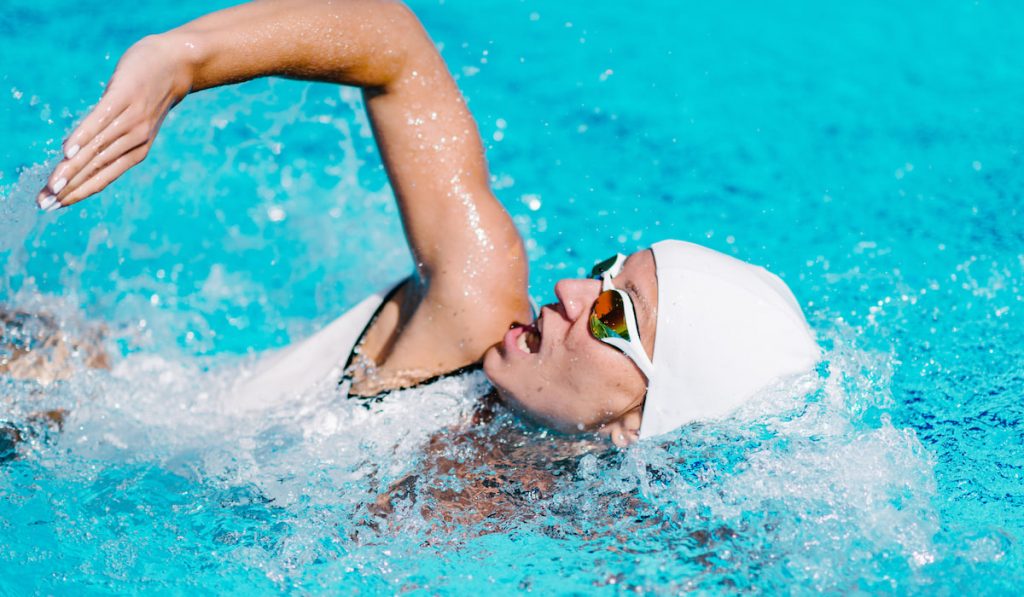
Propulsion mechanics also play a critical role in vertical alignment. A common error among novice swimmers is pushing downward on the water during the initial "catch" phase of the stroke. This downward pressure provides a momentary lift to the upper body but simultaneously drives the legs deeper into the water. To counter this, experts advocate for the "high elbow catch," or Early Vertical Forearm (EVF). By rotating the elbow toward the surface and pulling the water backward toward the feet rather than downward, the swimmer generates forward momentum that keeps the body streamlined and level.
Related article - Uphorial Shopify
:max_bytes(150000):strip_icc()/freestyle-swimming-f5135d648bdc42238ccb09228d3ee29b.jpg)

The structural integrity of the swim relies on "core engagement," a term often misunderstood as simply tensing the abdominals. In a swimming context, this requires a synchronized contraction of the stomach muscles and the glutes to create a rigid, "tall" frame. This internal bracing prevents the midsection from sagging—a primary cause of sinking legs—and ensures that the power generated by the arms is efficiently transferred through the torso. When the core is properly engaged, the body moves as a single, buoyant unit rather than a disconnected series of sinking parts.
Finally, the nature of the leg kick must be refined from a propulsive engine to a stabilizing tool. Many struggling swimmers exhibit a "bicycle kick," characterized by excessive knee bending that creates massive drag. An effective flutter kick should remain small and consistent, with the movement originating entirely from the hips and glutes. Keeping the knees relatively straight and the toes pointed creates a "whip" effect that provides just enough lift to keep the feet at the surface without exhausting the swimmer’s aerobic capacity. While temporary aids like pull buoys can provide an artificial fix, mastering these four pillars remains the only path to a sustainable, effortless freestyle.