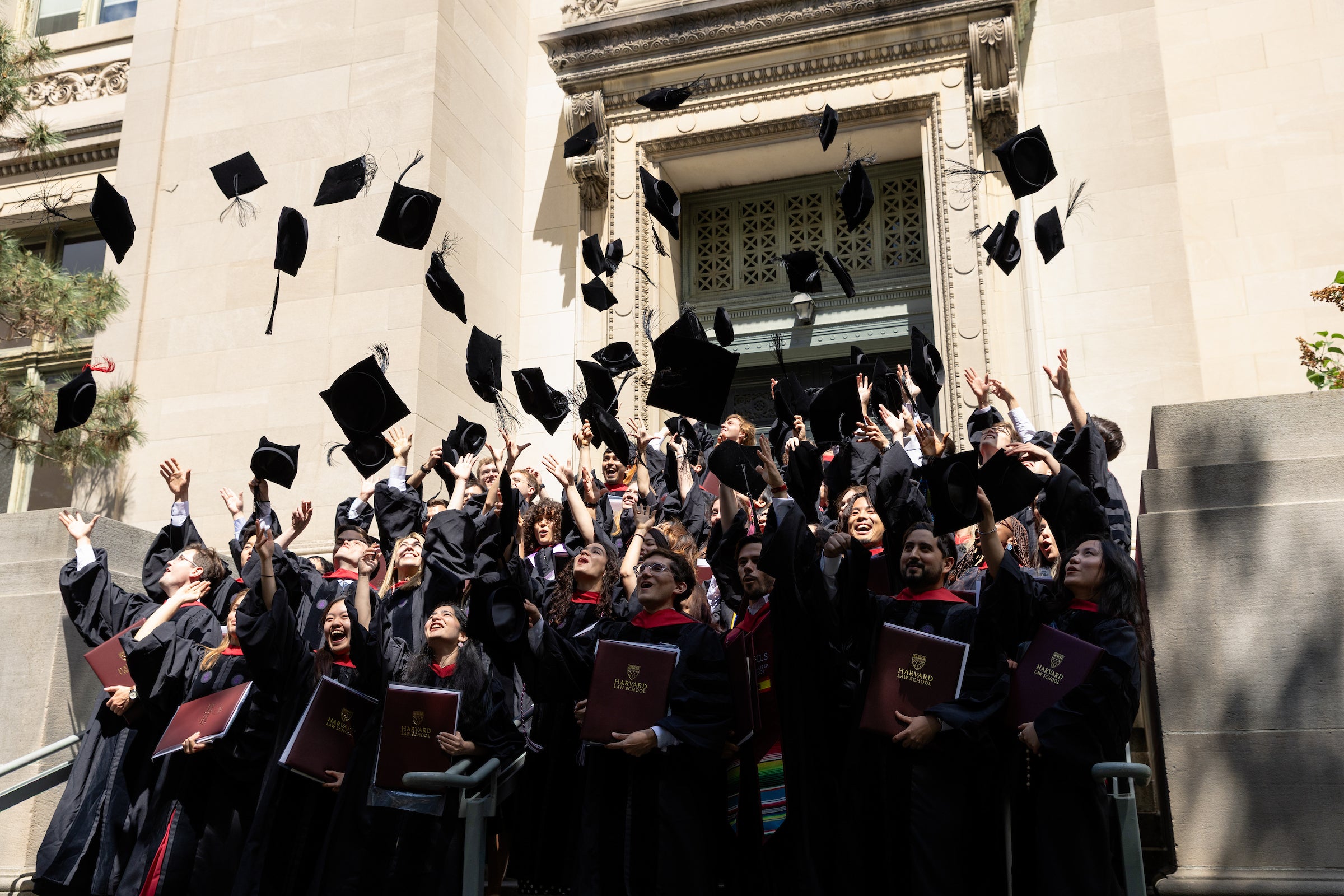
HAVARD — In the quiet, hallowed halls of Harvard Business School, the air on commencement day is always thick with the weight of expectation. Yet, as Dean Srikant Datar stood before the graduating MBA and doctoral classes, the atmosphere was defined by something far more profound: the collective endurance of a cohort that had navigated the tremors of an unprecedented era. His address was not merely a formal send-off but a sobering, hopeful testament to the resilience required of the modern leader. He began by honoring the memory of Zoe Sevelos, a student whose life was cut short in 2025, serving as a poignant reminder that even amidst the drive for professional achievement, the fragility of the human experience remains the ultimate context for all we do.
Dean Datar’s core mission was to prepare these graduates for a world increasingly defined by the rapid, often bewildering integration of artificial intelligence. It was a message of strategic storytelling, framing the arrival of AI not as an existential threat to be feared, but as a crucible for the refinement of human leadership. He insisted that while the tools of the trade are undergoing a radical metamorphosis, the fundamental requirements of governance—integrity, ethical character, and wisdom—are immovable. The transition into an AI-augmented economy requires a transformational framing of what it means to manage: it is no longer enough to be technically proficient; one must be a steward of the human element in an increasingly automated machine.
Central to this argument was the vital distinction between intelligence and judgment. In an age where generative models can mimic, iterate, and predict with startling speed, the Dean emphasized that human Emotional Intelligence (EQ) has become the most valuable currency in the marketplace. He noted that while algorithms may eventually surpass human IQ in raw processing power, they are fundamentally incapable of genuine empathy, moral intuition, or the nuanced navigation of complex social contexts. It is here that the graduate’s education—steeped in the rigors of the HBS case study method—must pivot. He urged the class to view their time at the school not just as a repository of knowledge, but as a laboratory for the cultivation of discernment, teaching them to listen, to weigh competing perspectives, and to distinguish truth from the encroaching tides of misinformation. To navigate this landscape, Dean Datar invoked the concept of agency, drawing inspiration from the insights of Andre Karpathy. He issued a stirring call for graduates to adopt a mindset of proactive initiative, urging them to act with the ownership of a founder regardless of their position within an organization. Passive acceptance of the status quo, he suggested, is a relic of a slower, more predictable era. The modern leader must be an active architect of outcomes, possessing the courage to intervene when systems fail and the vision to redirect when trends diverge from the public good. This is the new mandate: to be both the navigator of complex systems and the moral compass that determines their direction.
Related article - Uphorial Shopify

The address reached its emotional zenith as the Dean pivoted to the foundational values that must undergird this professional life. He spoke of integrity, humility, and the necessity of empathy as the anchors of a meaningful career. The intelligent curation of his message was evident in how he highlighted the quiet, everyday heroism of the student body. He recounted the efforts of students like Nate Alvarez, whose dedicated work to honor campus staff demonstrated that the most effective leadership often manifests in the recognition of others' contributions. It was a subtle, powerful reminder that the true spirit of service is not found in the grand gestures of the boardroom, but in the acknowledgment of the humanity of those around us.
As he looked toward the future of the graduating class, Dean Datar brought the perspective of history to bear by referencing the Alumni Achievement Award recipients, including Mitt Romney. By holding up these figures as models, he encouraged the students to measure their future successes not by the balance sheet, but by their capacity to contribute to something larger than their own advancement. The message was clear: the world they are entering is fraught with instability and technical disruption, but it is also a canvas for unparalleled positive influence.
The ceremony concluded with a call to uphold the responsibility of service. In an era that celebrates the "disruptor," the Dean championed the "builder"—the leader who is patient enough to listen, brave enough to act with agency, and wise enough to temper technical power with human empathy. He sent the graduates out into the world with the solemn charge to be the architects of a future where AI serves the cause of human flourishing rather than replacing it. It was a send-off marked by emotional precision, recognizing both the grief of recent losses and the immense, untapped potential of the class of 2026. As the caps were tossed and the final notes of the ceremony faded, the message remained clear: the tools of the future have changed, but the virtues required to lead have remained, and will always remain, the same.