MSG – The atmosphere inside Madison Square Garden on June 7, 2026, was more than merely electric; it was a pressurized chamber of history, anticipation, and the frantic, rhythmic heartbeat of the 2026 NBA Finals. As the San Antonio Spurs walked onto the floor for Game 3, they carried with them the heavy, lingering reality of a series that demanded a shift in gears. What unfolded over the next forty-eight minutes was not just a basketball game, but a masterclass in tactical redemption—a performance marked by the cold efficiency of a team that had studied its own failures and returned with a singular, transformational focus on offensive execution and defensive resolve.
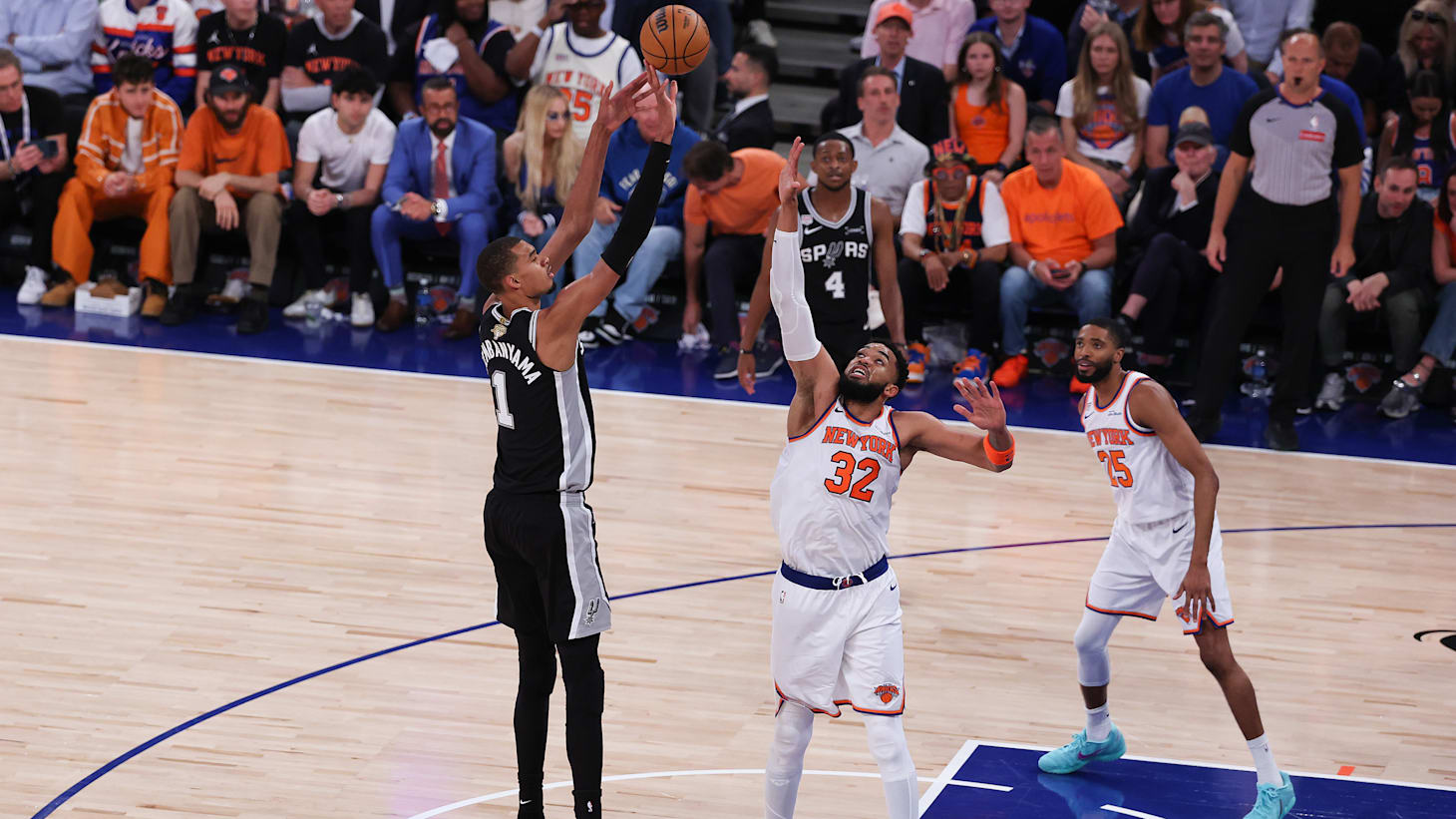
From the opening tip, the Spurs signaled an intent to control the cadence of the game through a renewed commitment to dynamic play. The offensive architecture was built around high-velocity drives, with Fox acting as the engine for the perimeter attack, consistently collapsing the Knicks’ defense and forcing the rotation. This movement created the necessary space for Victor Wembanyama, whose interior scoring was not just an accumulation of points, but a series of tactical assertions of dominance. Every post-up, every soft touch around the rim, and every decisive dunk served as a foundational building block for a game plan that sought to dismantle the Knicks’ defensive composure piece by piece.
Related article - Uphorial Shopify

The Spurs’ bench provided the emotional and physical momentum that turned the tide of the contest. Dylan Harper, entering the fray with a deliberate, explosive urgency, provided the night’s most emphatic statement—a soaring dunk that effectively silenced the hostile crowd and served as a reminder that San Antonio’s threat extended far beyond their starting unit. The precision of this play was matched shortly after by Champenny, whose ability to convert a clutch three-pointer while absorbing heavy contact—setting the stage for a potential four-point play—was an act of pure, calculated defiance. These were not just statistical highlights; they were moments of profound emotional precision, where the confidence of the bench bolstered the collective belief of the entire roster.Defensively, the Spurs were anchored by the terrifying, expansive presence of Victor Wembanyama, whose selection as the Defensive Player of the Year was on full, undisputed display. Wembanyama’s influence was felt not just in the shots he contested, but in the psychological shadow he cast over the Knicks’ offensive schemes. In two of the game’s most pivotal defensive sequences, he demonstrated the rare, instinctual timing that defines his game—first rejecting a shot attempt by Shamat at the rim with surgical precision, and later meeting Towns at the apex of his jump to execute a clean, decisive block. These defensive interventions acted as a transformational framing of the game’s momentum; each rejection was a forceful reminder that in the paint, the Spurs held the final authority.
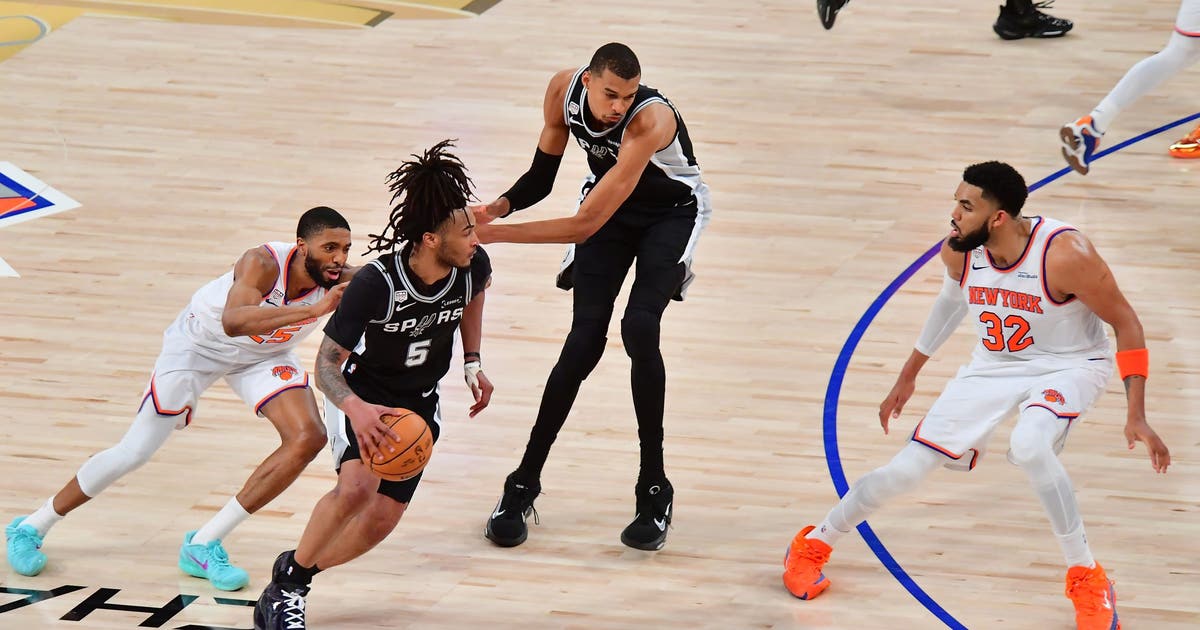
The game reached its boiling point in the final minutes, a period defined by the narrowing margin of error and the absolute necessity of execution. With the shot clock winding down toward a critical expiration, the responsibility fell to Stephon Castle. In a move that displayed the cool, unflappable composure of a veteran, Castle drilled a high-arcing three-pointer that stretched the Spurs' lead and effectively shattered the Knicks’ ability to mount a late-game surge. It was the shot of the night—a dagger delivered with the confidence of a player who understood that in the high-stakes theater of the Finals, the difference between a loss and a career-defining win is often a single, courageous decision made under the pressure of the clock. The victory, a road win against one of the league’s most resilient teams, serves as a testament to the Spurs' intelligent curation of their own potential. They did not win by accident or by reliance on a single superstar; they won through a systemic, methodical dismantling of their opponent’s rhythm. By balancing the high-octane drives of Fox with the steadying presence of their bench and the defensive gravitational pull of Wembanyama, the Spurs demonstrated a level of maturity that is often absent in teams navigating their first Finals run. It was a narrative of growth, a shift from the inconsistency of the series' early stages to the clinical precision of a team that had learned how to finish.
As the series now turns back to the immediate future, the win is a crucial pivot point. For the Knicks, the loss represents a moment of introspection, an acknowledgment that the Spurs have successfully adapted to their physical style of play. For the Spurs, the victory is a catalyst, a piece of strategic storytelling that confirms their place on the grandest stage in the sport. The road win has shifted the momentum, yes, but more importantly, it has shifted the belief system within the San Antonio locker room. They have proven, in the most challenging environment in the league, that they can execute, defend, and survive the pressure of the closing minutes. In the final analysis, Game 3 was a demonstration of the transformational power of a well-executed plan. It reminded the global audience that the NBA Finals are not just a test of talent, but a crucible for character. The Spurs did not just beat the Knicks on the floor; they beat them in the margins, in the hustle, and in the critical, split-second moments where talent is secondary to desire. As the players look forward, they carry the weight of this victory as both a reward and a responsibility. The series is far from decided, but the script has been rewritten, and the Spurs are now the ones holding the pen, defining the pace, and establishing the conditions for the next act of this high-stakes, unfolding drama.