Some foods tell a story, not just of taste, but of time. The century egg—preserved, blackened, cloaked in mystery- is one such creation. To outsiders, it looks foreign, strange, even unsettling. Yet for those who grew up with it, this delicacy carries memory, history, and an intimacy with survival. Like the landscapes of our lives, it is transformed by waiting, by patience, by the alchemy of time. And perhaps, so too are we.
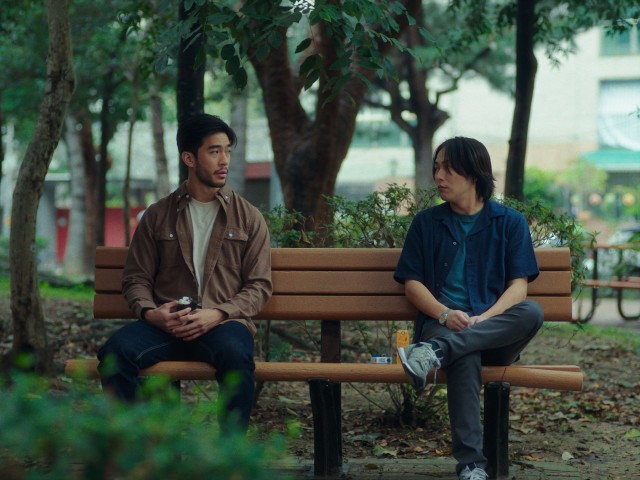
A man returns to Taiwan, the country he left decades ago. The streets where he once ran barefoot as a child have been paved over, turned into glowing avenues of neon and glass. The scent of incense from corner shrines has been overpowered by the mechanical buzz of traffic lights. He feels like a stranger in a city that once held him close. And then, as if by fate, a younger man, someone who never left, takes him in, offering him food, conversation, and a place to rest. Among the dishes on the table sits a century egg, sliced open, its yolk now the color of amber, its white turned translucent as jade. The elder stares at it, and in that strange egg, he sees his own life reflected.
Because what is the century egg if not a metaphor for endurance? The egg is buried in clay, ash, and salt, forgotten for weeks, sometimes months. When it emerges, it is no longer the same; it has endured transformation, surviving a kind of exile. It is no longer raw, no longer fragile. It has become something strong, pungent, resistant, and beautiful in its own unexpected way. The man, too, has lived in his own preservation, decades abroad, away from the soil of his birth. Returning now, he wonders if he has become something his homeland will no longer recognize.
Related article - Uphorial Podcast

And yet, even in change, there is belonging. The younger man across from him speaks in a dialect familiar but different, reshaped by modern slang. They eat together. The elder bites into the century egg, and though the flavor is sharp, sulfurous, and challenging, it tastes like memory. He remembers his grandmother peeling eggs for congee, remembers eating in quiet kitchens during years when the family had little but shared everything. Food has a way of collapsing time. Suddenly, the decades abroad dissolve into a single bite.
Recently, Taiwan has been at the center of global news, not just for politics or tensions across the strait, but also for the return of many in its diaspora. Post-pandemic, flights from America, Europe, and Southeast Asia have seen record numbers of Taiwanese expatriates returning home, seeking reconnection with roots they once thought lost. It isn’t always easy. The country has changed, fast, relentless, modern. But home, as the century egg reminds us, isn’t always about remaining the same. It’s about carrying the past forward, even when reshaped by time.
The century egg itself has become a quiet symbol of this endurance. What was once mocked in Western media as “bizarre food” is now gaining recognition in global culinary circles, celebrated for its unique chemistry and history. Chefs in New York, London, and Sydney are experimenting with pairing it with avocado toast, folding it into fusion ramen, or serving it alongside fine wine. And while many see novelty, for those who grew up with it, the century egg is not an oddity. It is home.
The elder man in Taiwan finishes his plate, listening to the city outside. He does not fully belong here anymore. But he belongs to the memory, and that is enough. The stranger who took him in is no longer a stranger. They share food, and in that moment, share history. The century egg, mysterious as it is, becomes a reminder that even after decades, even after change, there is still something that binds us—our taste, our memory, our roots.