The atmosphere at Centre Court on Tuesday evening was unlike anything the All England Club had witnessed in recent memory. As the sun began to dip below the horizon, casting long, dramatic shadows across the hallowed lawn, 15,000 spectators held their collective breath. They were there to witness a bridge between two eras: the homecoming of an undisputed icon, Serena Williams, and the arrival of a new generation represented by 20-year-old Australian Maya Joint. For three sets, the match transcended the scoreline, evolving into a poignant meditation on legacy, the relentless passage of time, and the enduring beauty of competitive fire.
For the 44-year-old Williams, this was more than just a return to the sport; it was a testament to a spirit that refuses to be diminished. Nearly four years since her last singles appearance, Williams stepped onto the grass with the same aura that has defined her career for three decades. The rust was visible—a slight hesitation in her movement and the occasional errant groundstroke—yet the signature weaponry remained. Her serve, often described as a work of art, was lethal from the opening game, firing down seven aces and repeatedly putting Joint on the defensive. It was a defiant display from the seven-time Wimbledon champion, a reminder that while the body might age, the competitive instinct is often the last thing to fade.Across the net, Maya Joint faced the daunting reality of playing against her childhood idol. The 20-year-old admitted later that the nerves were all-encompassing; she had barely slept, spent the night ruminating on the magnitude of the encounter, and nearly forgot her warm-up in the sheer surrealism of the moment. Yet, as the match wore on, Joint’s composure proved to be the decisive factor. She weathered the early storm, maneuvering the ball with precision and forcing the older champion into grueling baseline exchanges. Her ability to remain steady when the crowd—firmly in Williams' corner—cried out "Let’s go, Serena" after every point, spoke to a maturity well beyond her years.

Related article - Uphorial Shopify
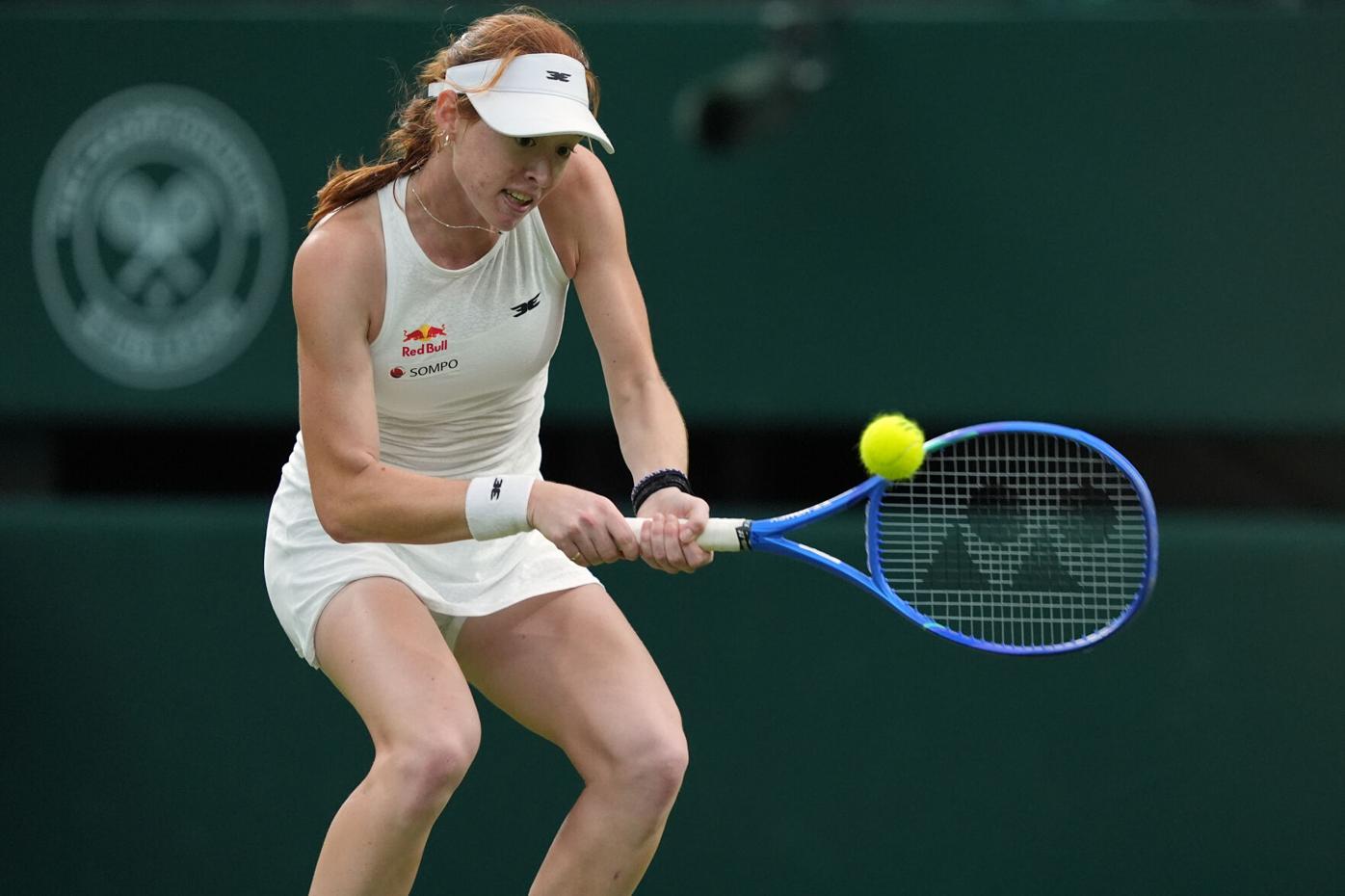
The middle of the match provided the most electrifying tennis of the tournament thus far. After dropping the first set 3-6, Williams found a second wind that brought the stadium to its feet. In a second-set tiebreak that felt like a microcosm of her career, she faced a match point at 5-6. With the weight of the moment bearing down, she delivered two unreturnable serves, clawing her way back to snatch the set 7-6(6). It was a moment of sheer grit, a flash of the "Serena" of old who thrived in the face of inevitable defeat. The stadium surged with adulation, a wave of noise that acknowledged not just the quality of the point, but the history behind the player.However, the third set revealed the physical reality that had been hovering over the contest since the first serve. After two hours of intense, high-stakes combat, the demands of professional tennis began to exact their toll on Williams. Joint, with the fresher legs and the tactical clarity of youth, broke twice in the final set to close out the match 6-3, 6-7(6), 6-3. It was, in many ways, the most poetic result possible. The legend had fought with every ounce of her remaining strength, and the future had been forced to rise to the occasion to earn its victory.
:max_bytes(150000):strip_icc():focal(999x0:1001x2)/serena-williams-wimbledon-063029-3-83fe99982aef4b8da57169c1dcc29a1e.jpg)
As the two players met at the net, the moment was stripped of its competitive intensity, replaced by a profound sense of mutual respect. For Joint, this was a dream realized—a win against one of the greatest athletes of all time that would serve as the anchor for her own professional journey. For Williams, the singles journey had ended, but the standing ovation that followed her off the court served as a final, resonant tribute to her impact on the game.The commentary that night pondered if time had finally caught up to the legend. Perhaps it had, in the literal sense of court coverage and recovery. But in a more significant sense, Williams showed that greatness does not disappear; it merely evolves. She had come back to the stage that made her, tested her mettle one last time, and left the court with the grace of someone who understood that while her time as the dominant force of the tour may have passed, her status as the heartbeat of the sport remains untouchable. Her Wimbledon story continues in the doubles draw alongside her sister Venus, but for one night, the focus was on the singles court, where a legend looked into the eyes of the future and, in her own way, passed the torch.