In the quiet fishing town of Toubab Dialaw, children often grow up watching the stars. Not because they know the names of constellations, but because the night skies are vast, clean, and full of stories. Senegal, a country better known for its music, wrestling, and colonial history, has recently found itself in an unexpected romance—with the stars, and more specifically, with NASA.
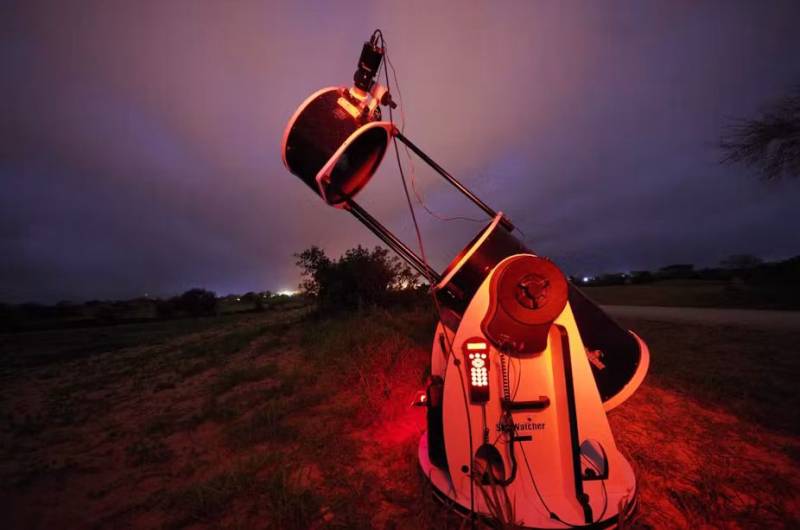
When NASA scientists touched down in Dakar last year, few could have imagined the scale of what they were bringing—not just a telescope or tracking equipment, but an opportunity. Senegal was about to become a central player in a global celestial event: the observation of a stellar occultation involving a faraway Kuiper Belt object, which required pinpoint data gathering from a narrow band of Earth. And Senegal was in the sweet spot.
Related article - Uphorial Podcast
It all sounds very technical—until you zoom in. Meet Dr. Maram Ka, one of the unsung scientists who made this partnership human. Born in Saint-Louis, Senegal, Dr. Ka grew up in a home filled with books her father collected from used French bookstores. Her earliest memory is of being six, looking through a broken pair of binoculars at the moon, and telling her cousin she wanted to “touch the sky.”
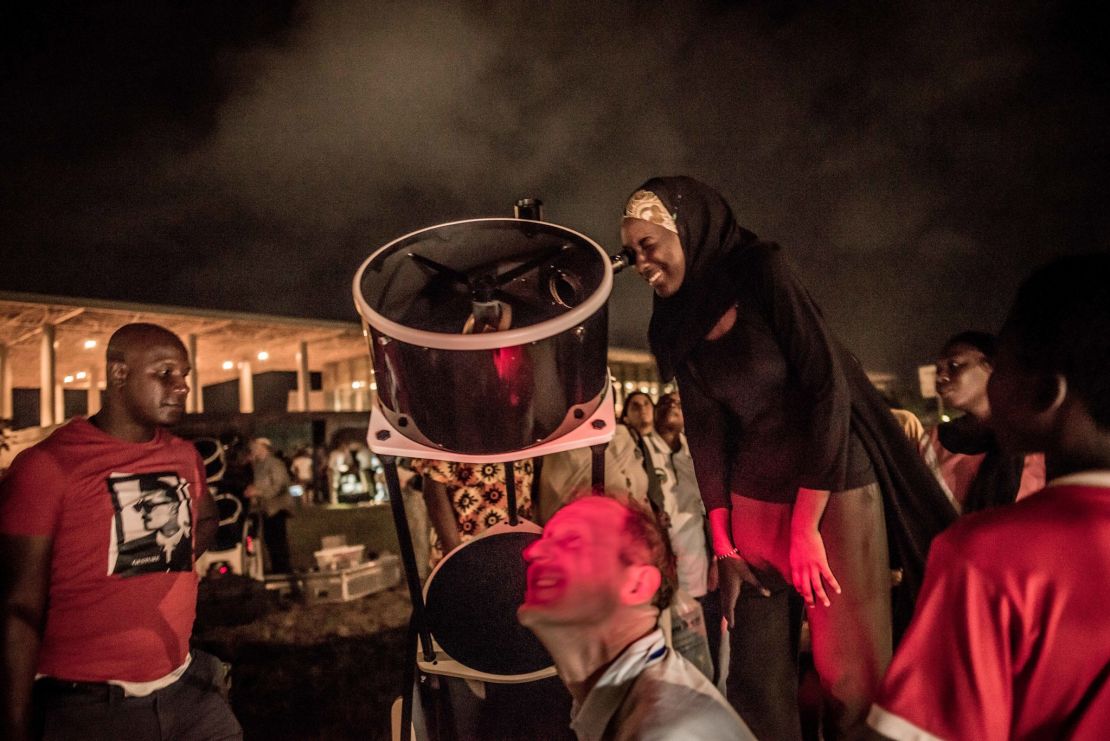
She never stopped trying. Years later, she won a Fulbright scholarship and studied astrophysics in the U.S., eventually earning a spot at NASA's Goddard Space Flight Center. But Ka never forgot her roots. She dreamed of a bridge between African intellect and space science—a vision that had once seemed absurd. Until now. The 2018 and 2023 stellar occultation missions brought NASA and Senegal together in a quietly radical way. With hundreds of local scientists, students, and even amateur observers trained in how to use high-precision telescopes and collect vital astronomical data, Senegal became a living observatory. It wasn’t just a satellite operation—it was a movement.
The latest collaboration in 2025 deepens that relationship. This year, NASA has officially named Senegal a long-term observational partner for tracking Trans-Neptunian Objects (TNOs), thanks to its prime geographic location and growing community of local scientists. What was once a one-off mission has become a multi-year engagement involving funding for STEM education, research grants, and the establishment of the first Senegalese Center for Space Observation in Thiès.
But beneath the headlines and technical jargon lies something more poetic. What happens when a country historically marginalized from global scientific discourse suddenly becomes its backbone, however briefly? It challenges the idea that science is only born in shiny laboratories or Ivy League institutions. It invites us to reimagine who gets to participate in the universe’s grand questions.
Dr. Ka puts it this way: “The sky doesn’t belong to one nation. It belongs to the curious. We’ve always been curious. Now, we have tools.”
Young Senegalese children, some from remote villages, are now trained to assemble telescopes, interpret light patterns, and—most importantly—ask big questions. Questions about what exists beyond Pluto, about time, space, gravity, and even about themselves. That’s the beauty of this partnership: it isn’t just a data exchange. It’s identity work. Senegal’s journey with NASA is proof that global leadership in science doesn’t require massive GDPs or nuclear programs. Sometimes, it starts with a pair of binoculars, a Fulbright dreamer, and a clear night sky. The stars haven’t changed. But who looks up at them—and what they dream of—certainly has.