MIAMI – Under the humid, electric canopy of Miami Stadium, the opening chapter of Group H in the 2026 FIFA World Cup unfolded as a narrative of grit, tactical defiance, and the enduring romance of the underdog. For Saudi Arabia, the match against two-time champions Uruguay was more than a mere fixture; it was a test of national mettle, a challenge to reclaim the spirit that defined their famous 2022 campaign. For Uruguay, led by the enigmatic Marcelo Bielsa, it was a frustrating encounter with reality, where dominance in possession and volume of play met an immovable, human wall.
The tone was set early, as Uruguay arrived with the swagger of football royalty. Within five minutes, Maxi Araujo signaled their intent, testing Saudi goalkeeper Mohammed Al-Owais with a sharp strike that required an immediate, acrobatic intervention. It was a warning shot that suggested a long, difficult night for the Green Falcons. Yet, the Saudi side, managed by Georgios Donis, had entered the tournament with a promise of courage. They absorbed the initial pressure, weathering the storm with a disciplined 4-4-2 formation that focused less on territorial control and more on the integrity of their defensive lines.
As the first half progressed, the energy in Miami Gardens grew palpable. Uruguay continued to search for an opener, with Federico Vinas repeatedly threatening the Saudi goal, including a powerful diving header that forced Al-Owais into yet another save. However, the Uruguayan attack often lacked the clinical edge required to dismantle the Saudi defensive block. The turning point arrived in the 36th minute when Moteb Al-Harbi, surging through the midfield, drew a foul that shifted the momentum entirely.The subsequent set-piece became the crucible of the match. Musab Al-Juwayr delivered a precise corner that found Mohamed Kanno, whose towering header was parried by veteran goalkeeper Fernando Muslera. The ball, however, fell perfectly for Abdulelah Al-Amri. Reacting with a striker’s instinct, the defender poked the ball into the net in the 41st minute, sending the green-clad supporters into a frenzy. Al-Amri’s celebration—dropping to his knees and bowing to the turf—was a poignant image of dedication and national pride, a reminder of the emotional stakes that define the World Cup.

Related article - Uphorial Shopify

The halftime whistle blew with Saudi Arabia holding an improbable, yet deserved, lead. Marcelo Bielsa, clearly dissatisfied with the lethargy of his squad’s first-half performance, acted decisively. The withdrawal of former Liverpool striker Darwin Nunez signaled a shift in tactical philosophy; Uruguay returned for the second half with renewed urgency, pace, and an aggressive intent to suffocate the Saudi defense.The second half became a relentless siege. Uruguay transformed the pitch into a runway for crosses, racking up corners and firing shot after shot toward the Saudi goal. Manchester United’s Manuel Ugarte, dictating the rhythm of the game, nearly leveled the score on the hour mark when his thundering long-range effort rattled the woodwork, narrowly escaping Al-Owais’s fingertips. The heat of Miami began to weigh on the players, and the pressure on the Saudi defense became suffocating, with the Green Falcons retreating deeper into their own half to survive the onslaught.
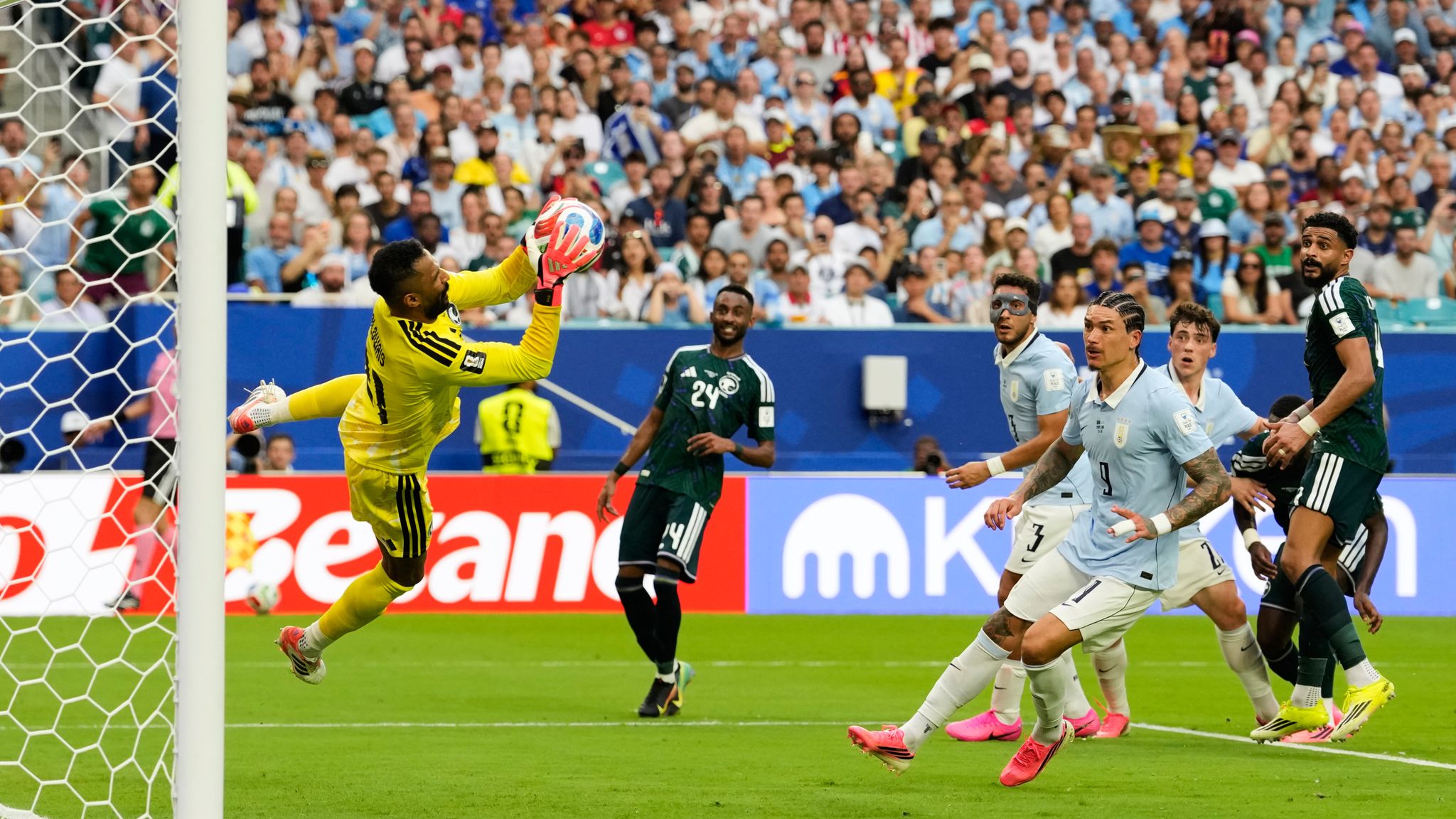
With 27 total attempts and a possession share that soared toward 70 percent, Uruguay’s eventual breakthrough felt inevitable. It arrived in the 80th minute: a Vinas header was once again denied by the inspired Al-Owais, but the deflection fell to the feet of Maxi Araujo. With composure born of desperation, Araujo clipped the ball into the net from a tight angle, finally breaching the Saudi resolve.The final ten minutes were nothing short of a frenzy. Uruguay, sensing the possibility of a comeback victory, poured forward. Federico Valverde and Jose Maria Gimenez tested the Saudi keeper repeatedly, unleashing rasping shots that forced Al-Owais into one save after another. It was a performance for the ages from the Saudi goalkeeper—a masterclass in shot-stopping that ultimately preserved the point for his nation.
When the final whistle finally pierced the air, the draw felt like a victory for the Saudis and a missed opportunity for the South Americans. For Saudi Arabia, the result was a statement of continuity—a validation that they remain capable of standing toe-to-toe with the world's elite. For Uruguay, it was a tactical puzzle that left more questions than answers as they looked ahead to their next challenge in a wide-open group.In the wake of Spain’s goalless draw with tournament debutants Cape Verde earlier that day, the stalemate in Miami leaves Group H in a state of perfect, fragile equilibrium. All four teams sit on a single point, their paths to the knockout stages defined by the narrowest of margins. As the tournament moves forward, the images from Miami will linger: Al-Amri’s humble celebration, the relentless tide of the Uruguayan attack, and the singular, heroic defiance of Mohammed Al-Owais. It was a night that captured the transformational power of the World Cup—where history, pride, and the unpredictable bounce of a ball create a story that stays with us long after the lights at the stadium dim.