URBINO — The halls of The Metropolitan Museum of Art have been transformed into a sanctuary of Renaissance genius as the museum unveils Raphael: Sublime Poetry, the first comprehensive retrospective of Raffaello di Giovanni Santi ever held in the United States. Curated by the esteemed Carmen Bambach, this landmark exhibition assembles over 170 masterpieces and preparatory drawings, offering an unprecedented look at an artist often synonymous with aesthetic perfection. In a sprawling narrative that spans his meteoric rise from the courts of Urbino to the papal splendor of Rome, the exhibition seeks to peel back the layers of the "divine" Raphael to reveal the disciplined, evolving, and deeply human creator beneath the canvas.
The exhibition's layout, masterfully designed by Daniel Kershaw, plays a critical role in the visitor's immersion. By utilizing chapel-like, octagonal rooms, the architecture of the gallery evokes the sacred and civic spaces for which many of these works were originally commissioned. This sense of grandeur is not merely decorative; it serves to contextualize Raphael’s work within the rigorous traditions of the 16th century. As visitors move through these carefully orchestrated spaces, they follow a chronological path that begins in Urbino, where the young artist first absorbed the courtly elegance of his birthplace. This journey then moves into the transformative Florentine years, a period defined by Raphael's intense study of his formidable contemporaries, Leonardo da Vinci and Michelangelo. It was here that the artist refined his technical vocabulary, merging Leonardo's softness with Michelangelo's muscularity to forge a style that was entirely his own.
A defining feature of this retrospective is its emphasis on the power of the graphic line. Carmen Bambach has centered the exhibition on Raphael’s drawings, presenting them not merely as studies, but as the primary evidence of his creative discipline. These sketches provide a rare window into the artist’s process, showing the labor and revision required to achieve his trademark harmony. The drawings trace a clear trajectory toward a more monumental style, revealing a shift from delicate, youthful compositions to the psychological depth and complex figure arrangements that would define his later career. By showcasing these intimate sheets of paper alongside the finished oils, the Met allows the public to witness the cognitive "sublime poetry" of a mind constantly seeking to balance form and emotion.
Related article - Uphorial Shopify


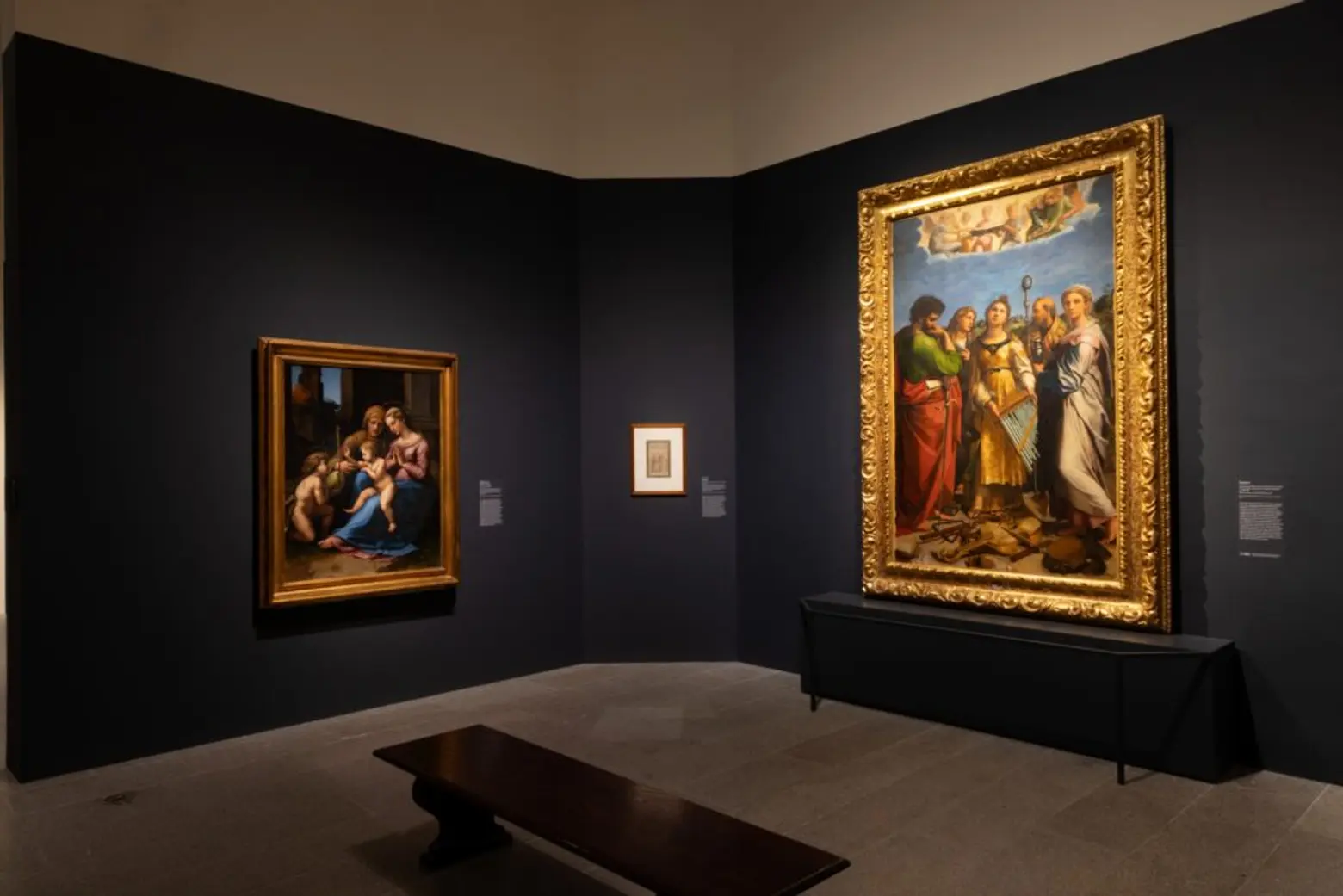
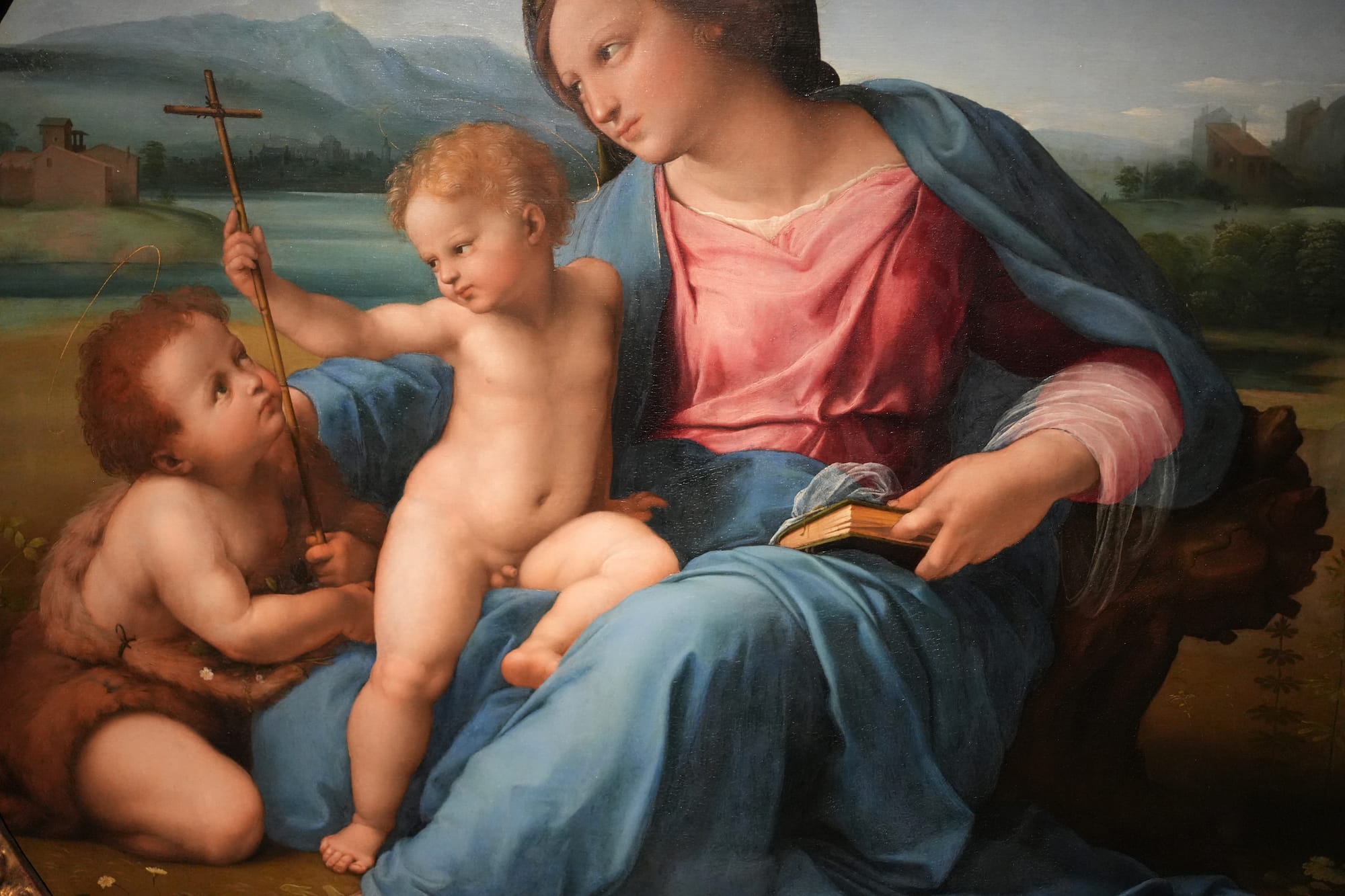
At the heart of the collection stands Raphael’s legendary treatment of the Madonna and Child, exemplified by masterpieces such as the Alba Madonna. The curators delve into the "psychological dynamism" of these works, noting that while they appear effortlessly beautiful, they were deeply grounded in the social realities of the Renaissance. In an era marked by high infant and maternal mortality rates, these paintings offered an aspirational and comforting ideal. Raphael did not simply paint icons; he painted relationships, imbuing the figures with a tenderness and accessibility that provided spiritual solace to a society intimately acquainted with loss.

The exploration of Raphael’s social intelligence continues into the realm of portraiture, most notably with his likeness of the diplomat Baldassare Castiglione. The exhibition uses this portrait to discuss the concept of sprezzatura—the Renaissance ideal of a certain nonchalance or the art of appearing effortless in one's elegance. Raphael possessed this quality in abundance, both in his social standing as a "prince of painters" and in the deceptive ease of his brushwork. His portraits are more than likenesses; they are studies in character and courtiership, capturing the poised, sophisticated demeanor that defined the intellectual elite of his time.
The exhibition reaches a monumental conclusion with a series of studies for the Transfiguration, the artist’s final and perhaps most complex masterpiece. These works demonstrate Raphael's ultimate development as a painter, showcasing his ability to render sculptural, three-dimensional figures that possess an almost physical weight. These final studies serve as a testament to an artist who, even on the eve of his premature death, was pushing the boundaries of what paint could achieve. The figures are rendered with a power that feels timeless, bridging the gap between the classical past and the modern era’s focus on the human condition.
Ultimately, Raphael: Sublime Poetry is an invitation to look beyond the surface of "perfect" art. Through the sheer volume of work and the intimacy of the preparatory sketches, the Metropolitan Museum of Art has created a deeply moving and reflective journey. It is a tribute to a creative genius who shaped the very definition of Western beauty, inviting a 21st-century audience to see the person behind the prestige. By the end of the tour, the "sublime poetry" of Raphael is understood not as a gift from the heavens, but as the result of a brilliant mind working with relentless discipline to capture the essence of the human spirit.