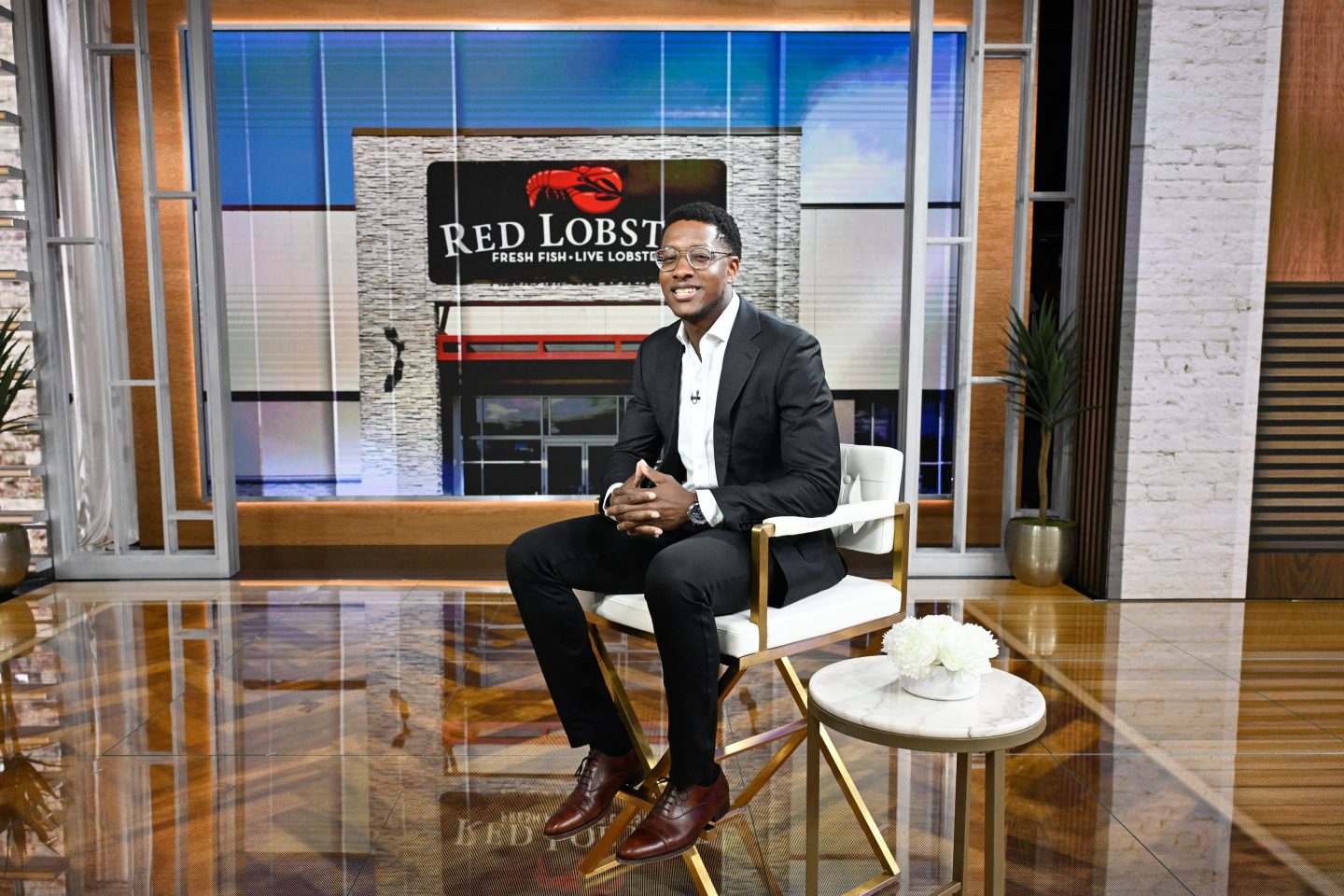
Damola Adamolekun, the 36-year-old chief executive officer of Red Lobster, is currently navigating the fast-casual giant through a post-bankruptcy transformation defined by his belief that organizations fundamentally take on the personality of their leaders. Featured on the Fortune Magazine series Next to Lead, Adamolekun describes how his role as the youngest CEO in the company's nearly six-decade history is rooted in a strategy of reestablishing a connection with guests through menu innovation, enhanced hospitality, and improved restaurant ambiance. Having previously led P.F. Chang's through the challenges of the 2020 pandemic at age 31, he brings a battle-tested approach to Red Lobster, where his initial mission was to galvanize a team suffering from low morale with the promise of executing the greatest comeback in the history of the restaurant industry.
Tactical progress under his leadership has already included the return of fan favorites like hush puppies and the launch of seafood boils, a product that went viral shortly after its introduction. To manage the influx of new guests and maintain quality, Adamolekun implemented Red Carpet Hospitality, a program designed to recognize, engage, and delight customers so they feel like family. He maintains that the job of a leader is to make the proposition of working at the company better than any competitor by offering fair pay, clear career paths, and a culture built on certainty and communication. This focus on people is reinforced by his hiring of experienced leaders like COO Larry Kestenbaum to ensure operational excellence across geographically dispersed locations.
Related article - Uphorial Shopify

The analytical framework Adamolekun uses for high-stakes decisions is a direct evolution of his career in high finance at firms like Goldman Sachs and TPG. He views both business operations and career move through the lens of risk assessment, a discipline learned in private equity where one must understand all possible scenarios and their probabilities before committing to an outcome. His personal rule book for decision-making involves sitting the team in a room to analyze data logically and explicitly inviting dissenters to speak up before a final path is chosen. He argues that if employees have a chance to be heard and understand the reasoning behind a choice, they will own the decision and execute it more effectively even if they originally disagreed.
Looking forward, Adamolekun envisions a future where AI and data technology streamline back-end analytics, such as forecasting sales to optimize labor and product purchasing. While he believes automated tasks like responding to comments will soon be handled by technology, he remains committed to the human connection that defines the sit-down restaurant experience. His mindset remains anchored in a habit of excellence and a refusal to be terrified of failure, traits he credits to his background as a state champion debater and collegiate athlete. Ultimately, he aims to prove that a transparent, ambitious leader can turn a distressed iconic brand into a modern success story by setting high goals and empowering a team to achieve them.
Managing a historic restaurant turnaround is like captaining a legendary ship that has hit a reef. While the captain must quickly patch the structural holes of bankruptcy and supply chain issues, they must also inspire the crew to believe the vessel is still seaworthy, ensuring that every sailor knows exactly which rope to pull as the ship navigates back into the competitive open waters.