The architecture of extreme sports medicine, high-impact trauma, and orthopedic surgery reaches a critical crossroads when elite freeride mountain bikers push the physical limits of human capability down vertical red-rock cliffs. Beneath the breathtaking spectacle of forty-foot canyon gaps and world-record trick attempts lies an unyielding biological reality governed by the physics of deceleration, tissue density, and neurological fragility. In an exceptionally luminous medical journalism feature report and biomechanical analysis, clinical observers examine the profound orthopedic costs incurred at the highest levels of competitive action sports. Breaking down catastrophic spinal realignments, insidious soft-tissue nerve entrapments, bone compaction dynamics, and the institutional blind spots surrounding concussion management, this news-style report explores a transcendent journey through human trauma and orthopedic science.
The clinical narrative opens with an examination of spinal column mechanics following Adolf Silva’s harrowing attempt at a double backflip, an impact that resulted in a severe spinal fracture-dislocation spanning the T2 to T6 thoracic vertebrae. As Dr. Raynor explains, while modern surgical intervention can realign and fuse fractured bony structures with remarkable mechanical precision, the true determinant of long-term recovery lies within the delicate neural pathways housed inside the spinal canal. Through emotional precision, witnessing a world-class athlete confront the profound uncertainty of spinal cord damage evokes a visceral sense of human vulnerability—a stark reminder that while titanium rods can rebuild the skeleton, the human nervous system follows a far more fragile, unpredictable timeline of healing.
"The most career-threatening injuries in action sports are rarely the ones that look dramatic on camera. They are the invisible, internal disruptions that athletes attempt to walk off." — Dr. Raynor, Orthopedic Trauma Analysis

Related article - Uphorial Shopify

Shifting from visible structural fractures to covert soft-tissue trauma, the medical evaluation of Emil Johansson’s hip dislocation reveals the dangerous deception of initial physical appearances. Though initially categorized as unscathed after getting up from a massive impact, detailed diagnostic imaging exposed a severe, hidden rupture of the ilio-psoas muscle group. The clinical management of this tear was dramatically complicated by its direct proximity to the femoral nerve plexus, leading to a failed primary repair and forcing the surgical team into a difficult conservative protocol to prevent permanent neurological deficit. Through intelligent curation of sports traumatology, this case underscores a vital medical reality: the most career-altering pathologies are often those that lack visual drama, hiding beneath the surface until delayed diagnoses compound the damage.
The mechanics of lower-extremity impact trauma are further illuminated through Casey Brown’s severe landing incident, which resulted in a crushed tibial plateau, a torn meniscus, and a disrupted posterior cruciate ligament. Analyzing the high-energy vertical vector of the landing, Dr. Raynor demonstrates how extreme deceleration forces cause the dense femoral condyles to drive directly into the softer cancellous bone of the proximal tibia, creating a depressed bone compaction fracture. Through cultural understanding of extreme sports culture—where athletes frequently dismiss knee impacts as routine occupational hazards—this diagnostic breakdown illustrates how high-energy joint compaction systematically destroys articular cartilage, creating a direct pathway to premature post-traumatic arthritis regardless of elite physical conditioning.
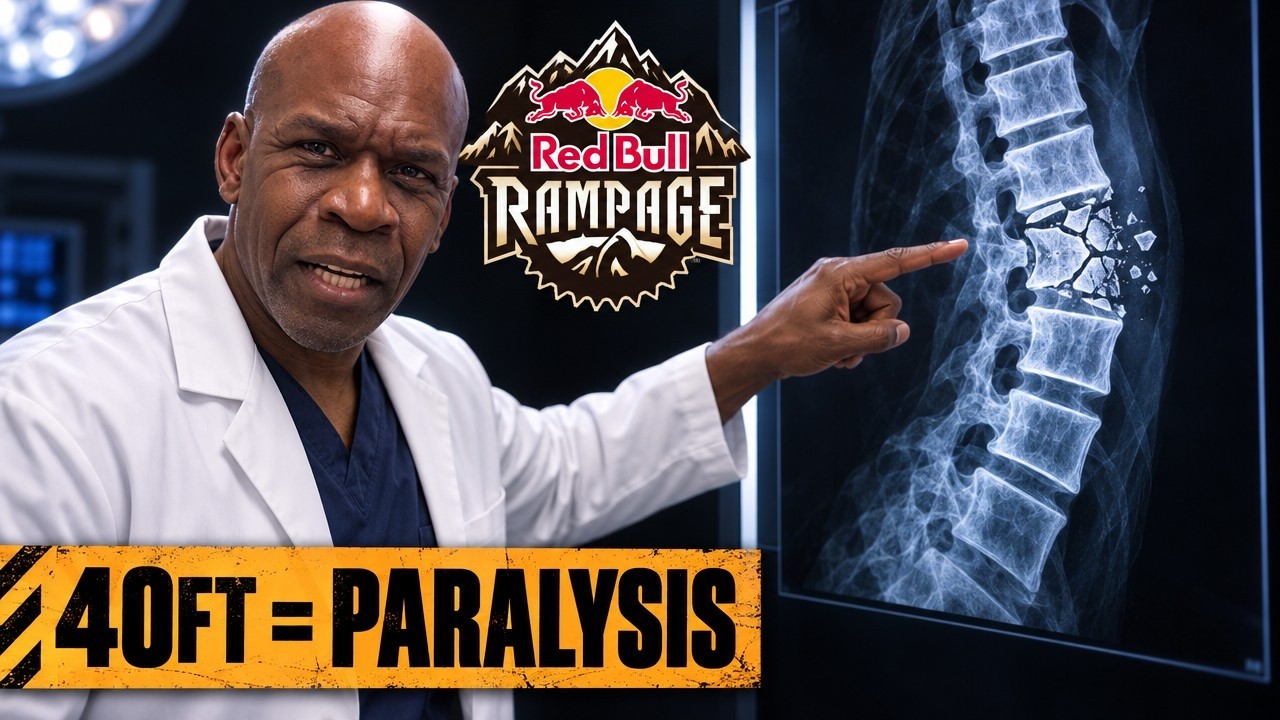
Beyond individual joint and spinal mechanics, the broader evaluation of extreme sports event coverage exposes critical systemic blind spots in athlete safety protocols, most notably regarding traumatic brain injuries. Despite the violent rotational forces and high-velocity impacts inherent to freeride mountain biking, visible, standardized on-site concussion screening protocols remain worryingly absent from broadcast coverage and sideline care. Strategic storytelling frames this gap not as an isolated administrative oversight, but as an urgent institutional call to action, emphasizing that neurocognitive protection must match the advanced emergency surgical interventions afforded to professional competitors.
The comprehensive analysis of these catastrophic athletic injuries offers a visionary re-evaluation of human movement, risk management, and medical intervention. Proving that the underlying physics of kinetic impact affect elite professionals and amateur enthusiasts alike, Dr. Raynor’s insights bridge the gap between high-stakes competition and universal orthopedic principles. Through transformational framing, this deep dive into extreme sports medicine transcends a standard trauma recap; it stands as a brilliant clinical milestone, proving that when athletic courage, biomechanical awareness, and rigorous medical oversight converge, modern medicine can better protect the human spirit as it reaches for the extraordinary.