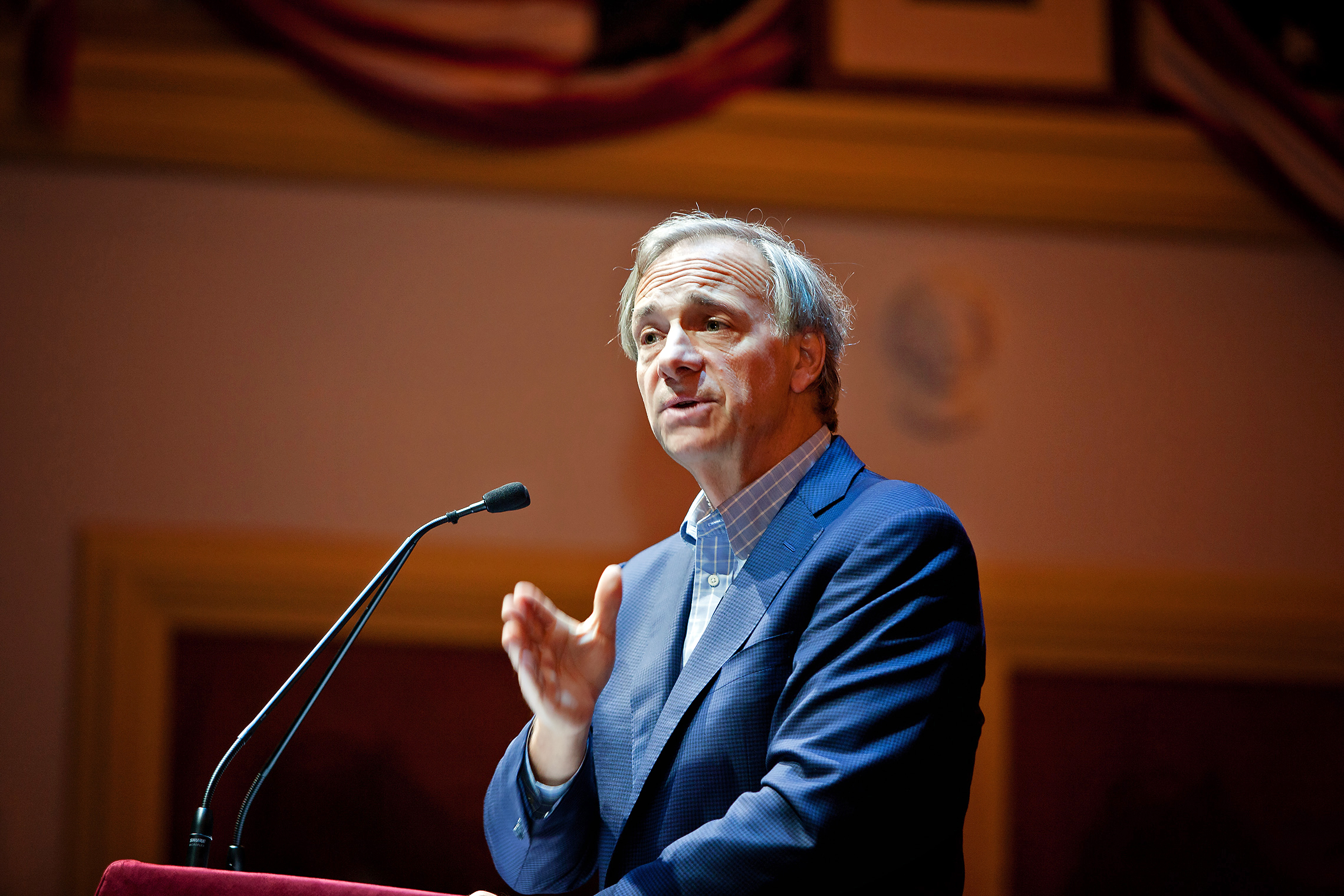
The contemporary global landscape stands at a harrowing, monumental crossroads where the tectonic plates of economics, technology, and geopolitics are shifting with unprecedented velocity. For decades, institutional leaders and everyday citizens alike have watched the established rules of international commerce and governance fray under the weight of compounding pressures. To make sense of this turbulent epoch requires the intellectual rigor of a master macroeconomist who has spent a lifetime studying the rhythmic, cyclical rise and fall of human civilizations. In a profound, sweeping, and deeply candid conversation, legendary investor and founder of Bridgewater Associates, Ray Dalio, steps back from day-to-day market noise to offer a chilling yet illuminating diagnosis of our current global condition, charting the terrifying parallels between past historical empires and the digital-age crises threatening to upend the modern world.
At the very center of today’s financial anxiety is the meteoric, gold-rush frenzy surrounding artificial intelligence, a phenomenon Dalio identifies not merely as a technological revolution, but as a textbook study in human psychology and speculative excess. With intelligent curation of historical market patterns, Dalio explains that the current economic climate exhibits all the classic warning signs of an investment bubble fueled by staggering, almost utopian expectations for artificial intelligence. He notes that throughout financial history, such bubbles invariably emerge when blinding excitement and cheap capital lead to excessive borrowing and aggressive speculation. This intoxicating momentum becomes fundamentally unsustainable the moment central banks are forced to raise interest rates or macroeconomic conditions tighten, leaving a wake of distressed balance sheets and burst valuations. The technology itself may alter the course of human capability, Dalio reminds us, but market human nature remains stubbornly, perilously unchanged.
Zooming out from the immediate speculative fever of Silicon Valley, Dalio anchors this financial volatility within his famous macroeconomic framework: the "big cycle" that repeats itself roughly every eighty years across human history. This grand cycle is consistently characterized by a toxic confluence of unsustainable debt burdens, widening internal wealth gaps, intense political polarization, and rising geopolitical tension between incumbent powers and ascending rivals. With sobering candor, Dalio suggests that Western superpowers such as the United States and the United Kingdom are currently navigating the fragile decline phase of this long-term cycle. This phase is invariably marked by staggering national debt, internal civic fracturing, and a gradual loss of relative economic and cultural influence on the world stage, mirroring the twilight years of the Dutch and British empires before them.

Related article - Uphorial Shopify
This structural decline is further complicated by the socioeconomic shockwaves unleashed by the very technology driving the current market frenzy. While Dalio acknowledges that artificial intelligence will undoubtedly unlock unprecedented levels of human productivity and operational efficiency, he issues a stark, urgent warning regarding its unequal distribution. The AI revolution threatens to widen the chasm of economic inequality, creating a profound, destabilizing wealth gap between the tiny fraction of individuals who own the capital, algorithms, and infrastructure, and the vast majority who do not. In this shifting paradigm, the future of work will no longer belong to those who perform rote, repetitive tasks, but to those intelligent enough to forge symbiotic partnerships with AI, leveraging uniquely human traits such as emotional intelligence, profound empathy, and intuitive creativity that machines can never replicate.
This domestic economic upheaval is unfolding concurrently with a historic, irreversible realignment of international geopolitics. The long-standing post-World War II model of a single-superpower hegemony is officially crumbling, replaced by a multipolar reality defined by a shifting power balance between the United States and China. Dalio points out a fundamental geopolitical truth that many Western analysts choose to ignore: China has steadily consolidated its position as the primary trading partner for a vast majority of nations across the globe. This commercial dominance fundamentally alters international diplomacy, supply chain dependencies, and strategic alliances, ensuring that the future global order will be negotiated among multiple major power blocs rather than dictated from a single Washington boardroom.
Navigating such a labyrinth of financial instability, technological disruption, and geopolitical fracture requires an entirely new playbook for individual survival and prosperity. When offering strategic advice for everyday people trying to protect their livelihoods, Dalio dispels the hubris of attempting to time the volatile market, advocating instead for radical, uncompromised asset diversification as an essential shield against systemic shocks. Furthermore, he urges individuals to invest heavily in their own continuous education and adaptable skill sets to remain perpetually useful in a rapidly automating economy. Most importantly, he advises a globalized mindset, warning against the dangerous vulnerability of relying entirely on a single geographic location, currency, or political jurisdiction for one's security.
Ultimately, Ray Dalio’s profound reflections serve as a transformational framing of our modern reality. Through strategic storytelling, cultural understanding of historical patterns, and emotional precision in confronting uncomfortable truths, the conversation challenges us to drop our collective complacency. By understanding the deep currents of the big cycle, respecting the immutable laws of debt and productivity, and preparing intelligently for a multipolar future, humanity can hope to navigate the stormy seas of the twenty-first century and build resilient foundations for the generations yet to come.