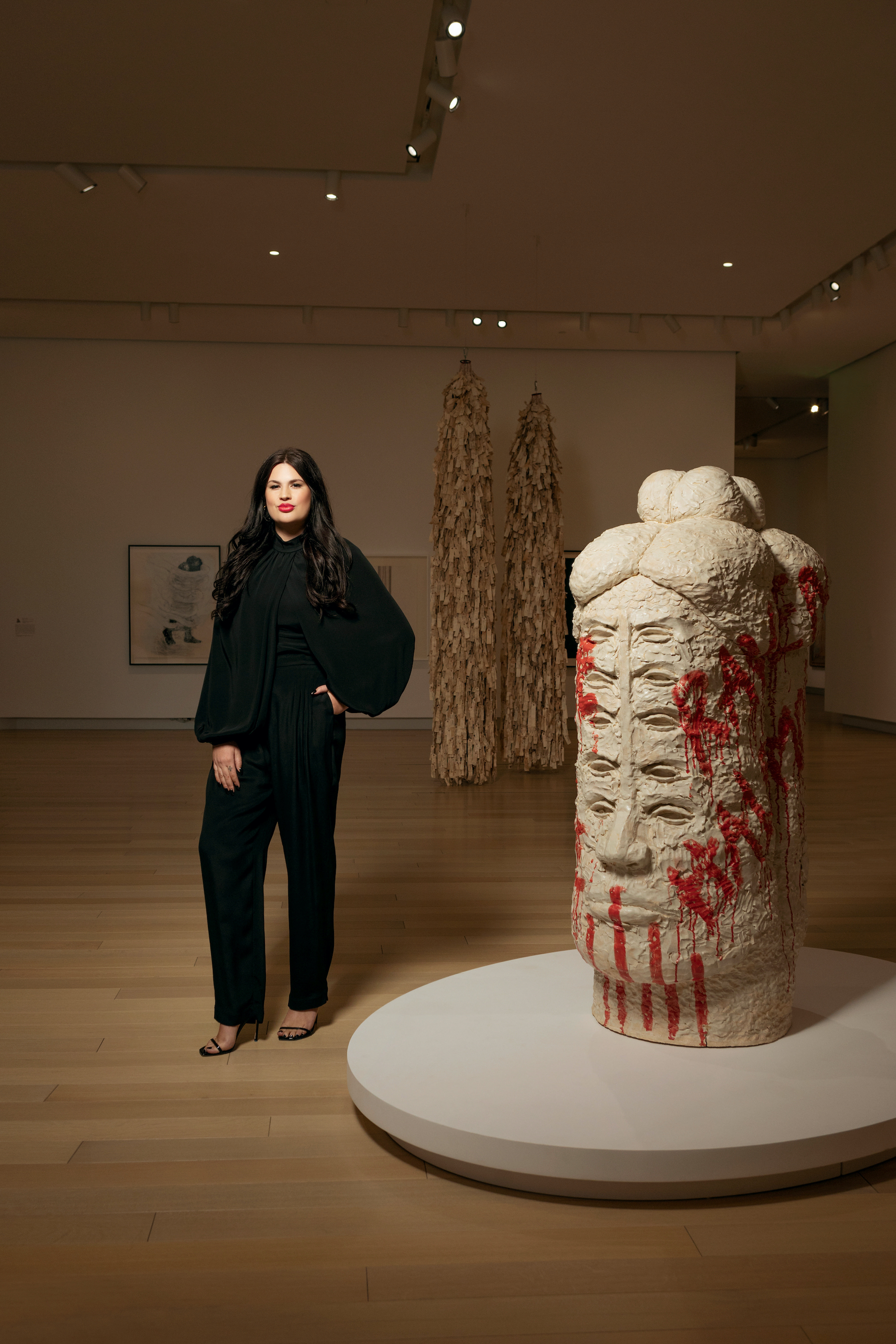
In the high-ceilinged quiet of her Norman, Oklahoma studio, Raven Halfmoon does not merely work with clay; she engages in a dialogue with time itself. As a contemporary artist hailing from the Caddo Nation, Halfmoon has emerged as a formidable force in the art world, reimagining the ancient, ancestral traditions of her people through a lens that is both fiercely modern and profoundly tectonic. Her sculptures, which often rise to monumental heights, are not intended to be polished or polite. They are intentionally "grungy," raw, and textured—a physical manifestation of a life history that refuses to be sanitized. Through her hands, the medium of clay is transformed from a simple material into a vessel for Indigenous identity, a repository of female lineage, and a map of ancestral memory that reaches back centuries and forward into the unknown.
The foundation of Halfmoon’s practice is rooted in a deep, generative connection to her heritage, a connection she credits to the foundational mentorship of Caddo elder Jerry Redcorn. It was under his guidance that she first touched the earth with the intent of preservation, learning the traditional coil pottery techniques that would become the backbone of her aesthetic. Yet, Halfmoon does not treat these techniques as static relics to be stored in a museum. Instead, she has scaled them to an architectural magnitude, reimagining the intimacy of a hand-pinched vessel on a monumental scale that demands the viewer’s physical and emotional engagement. Her work is a refusal to let Indigenous history be confined to the small, the delicate, or the historical past; it is designed to take up space, to command the room, and to force a confrontation with the resilience of the Caddo people.Every piece that leaves her studio carries the literal mark of its creator. Halfmoon utilizes a hand-coiling and pinching process that explicitly rejects the urge to smooth the surface, ensuring that every fingerprint, every indentation, and every physical struggle of the making process remains visible. This is not an oversight; it is a tactical choice of emotional precision. By leaving these traces, she insists on the presence of the human hand in the work, serving as a reminder that the object is not just a form, but a relic of a specific moment of labor and intent. When coupled with her high-contrast color palette—bold, vibrant hues that pulse with urgency—and symbols like spirals, lightning bolts, and crosses, her sculptures become complex narratives of survival, spirit, and cultural navigation.
Related article - Uphorial Shopify
.jpeg)
Perhaps the most significant articulation of this philosophy is her nine-foot bronze masterpiece, The Guardians. Created during a residency at the UAP foundry and now held in the permanent collection of the National Gallery of Australia, the work represents a pivot point in Halfmoon’s career. The sculpture depicts two figures standing back-to-back, a dual entity that represents the artist herself and her maternal ancestors. It is a work that captures the four directions of the world, anchoring the viewer in a sense of cosmic and historical geography. In The Guardians, the monumental scale is matched by an overwhelming sense of quiet reflection; it is a sentinel, watching over the continuum of Indigenous history while simultaneously projecting into the future. It is a work that acknowledges the burden of the past while celebrating the enduring stability of the lineage it represents.Halfmoon’s practice is deeply influenced by the earthworks of her mound-builder ancestors—the ancient architects of the American landscape who understood that greatness is measured by how one relates to the ground beneath their feet. By creating sculptures that challenge the physical dimensions of the gallery space, she is participating in a long-standing tradition of monumental making. Her work asks the viewer to slow down, to acknowledge the weight of history, and to consider the quiet power of memory. She is not creating objects to be looked at; she is creating landmarks of identity in an industry that has historically struggled to see, hear, or value Indigenous voices.
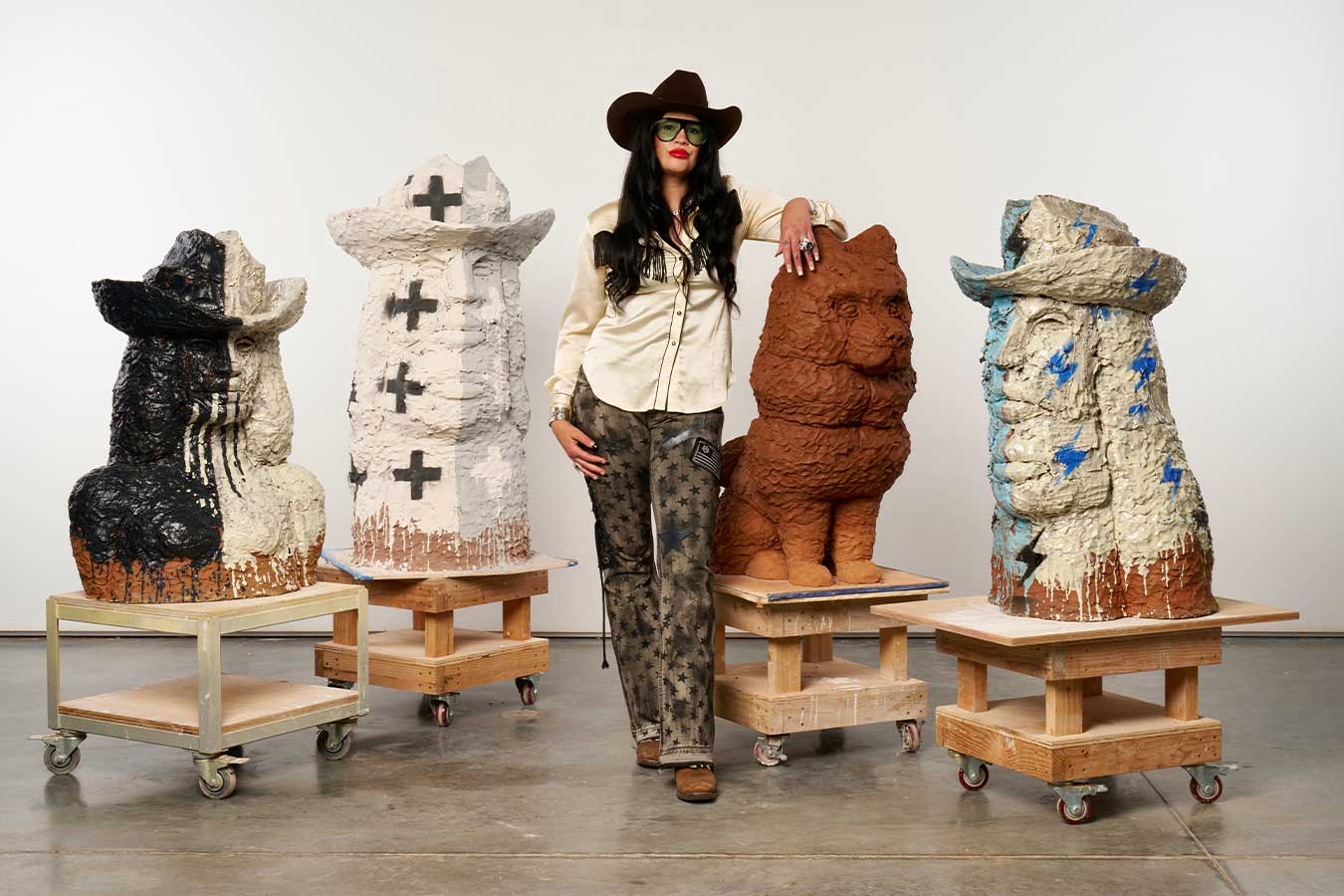
The transformational framing of Halfmoon’s work lies in her ability to balance the personal with the universal. She is telling the story of her own female lineage, yet she is also speaking to the broader, often fractured narrative of Indigenous presence in the contemporary world. Her art is a bridge, built from the very earth that her ancestors moved to create their own markers of place and time. By choosing to work on such a colossal scale, she effectively reclaims a space for Indigenous history within the narrative of the global contemporary art world, asserting that Indigenous identity is not a static point on a map but a dynamic, growing, and monumental force.In the end, Raven Halfmoon’s practice is an act of reclamation. It is a deliberate, strategic effort to ensure that the stories of the Caddo Nation are not buried in the archives of history but are instead cast in bronze and clay, standing tall for the next generation to witness. Her commitment to the raw, the imperfect, and the colossal is a testament to an artist who understands that the most powerful narratives are those that reveal their own making. As she continues to push the physical boundaries of her medium, she is solidifying her role as a vital custodian of ancestral memory, proving that when we listen to the clay, it tells us exactly who we are and exactly where we are going. Each coil, each smudge, and each monumental curve of her work serves as a silent, powerful demand for recognition—a demand that the history of her people be respected, not just as a ghost of the past, but as a living, breathing, and monumental reality of the present.