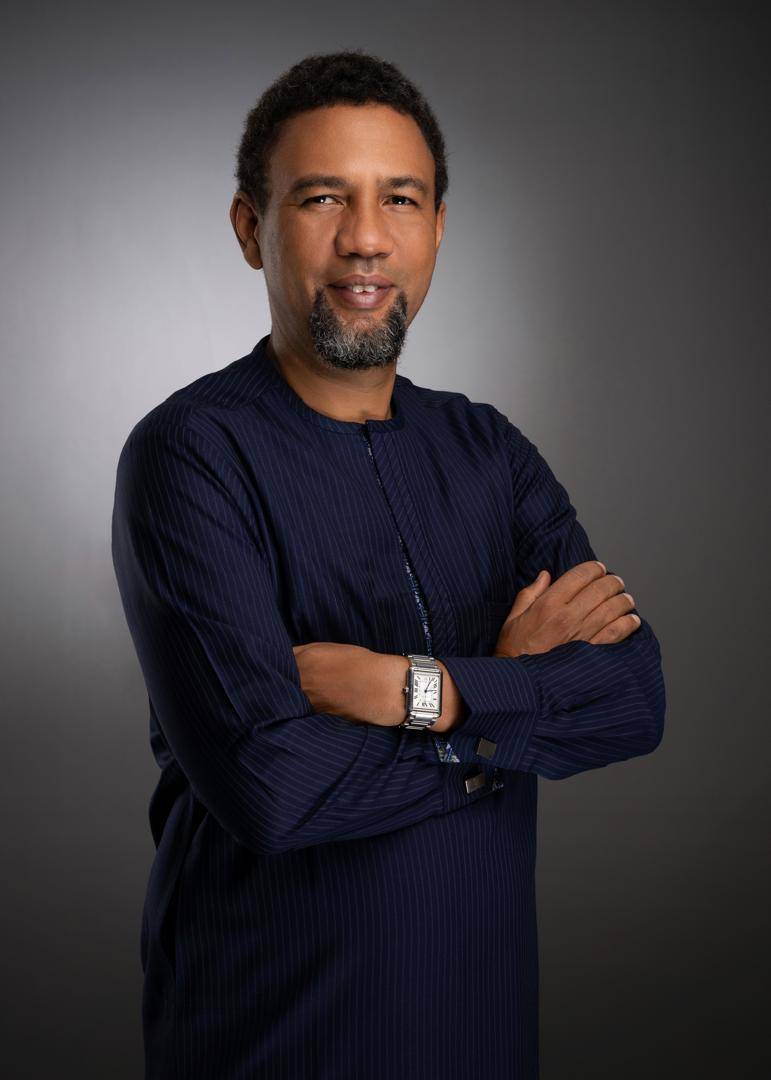
In a revealing session captured by Glitch Africa Studios on "The Joey Akan Experience," Paul Onwuanibe, the founder and CEO of Landmark Africa Group, offered an in-depth look into the genesis of his billion-dollar real estate empire, the intricacies of navigating Nigeria's dynamic business environment, and the personal philosophies that underpin his remarkable journey. His discussion paints a vivid picture of a leader whose success is rooted in a distinctive combination of strategic foresight, unwavering values, and a profound understanding of both market forces and human character.
Onwuanibe portrays himself as an unassuming figure, one who deliberately operates from the background, ensuring his "work counts, not who you are". This approach stands in stark contrast to what he identifies as a prevalent Nigerian cultural inclination where "the louder people get the most attention" and identity often supersedes accomplishment. Reflecting on his formative years, Onwuanibe recalls a highly structured upbringing in London, born to diplomat parents, before being "shipped out" at age 10 to Federal Government College Lagos for secondary school to gain a Nigerian identity. While his parents maintained strict rules, he deliberately adopted a different parenting style, aiming to raise "street wise" children who are alert, make sound decisions, and interact effectively with others, despite their comfortable, privileged lives – what he jokingly acknowledges makes them "Nepo babies". He instilled in them a rigorous work ethic, even requiring them to secure loans for university fees.
Central to Onwuanibe's operational philosophy, especially pertinent to Nigeria, is "street wiseness," which he defines as a critical blend of adaptability and resilience. He argues that in Nigeria, neither intelligence, strength, nor wealth guarantees long-term survival; instead, it is the ability to "maneuver" through the nation's inevitable cycles of "ups and downs" that truly enables one to "fight for another day". For anyone contemplating business or relocation to Nigeria, he advises cultivating a tough skin, unwavering resilience, adaptability, and profound passion. Resilience, he elaborates, is the capacity to move through periods of good and bad fortune, maintaining one's strategy and perspective.
His strategic pivot to Africa, following ventures in Europe and America, was fueled by a desire to "be somewhere where I count" and "make a difference," influencing market trends and customer preferences rather than merely being "just a statistic". Initially, he expanded across four major African cities—Lagos, Johannesburg, Nairobi, and Cairo—to acquire a broad understanding of diverse cultures and legislations. However, he later consolidated his focus exclusively on Nigeria, specifically Lagos, a decision directly influenced by his mother's sagacious advice: "Put all your eggs in one basket and watch that basket carefully". This singular focus, he found, allowed for unparalleled depth, execution, and impact, especially considering Lagos's sheer population and dynamic energy, which he likened to New York.
Related article - Uphorial Radio

Onwuanibe distills his formula for undeniable success into three pivotal elements: conceiving a good idea that effectively solves problems for many, executing it in an unparalleled way, and being adequately prepared for the resulting wealth. He passionately asserts that excellence, hard work, and integrity are powerful currencies in Nigeria, where opportunities are abundant and competition in these values is surprisingly low. He acknowledges the inherent challenge of upholding these values in a system sometimes perceived as "filled with darkness," but he firmly believes that being a "good person" and persevering will ultimately lead to success, even if it is not immediate or conventional.
To navigate life and business effectively, he offers four practical "tools." First, fostering ambitious friendships—genuine "life partners" who share similar aspirations. Second, networking relentlessly through "the strength of weak ties," a concept suggesting that casual acquaintances, met by chance, often provide more serendipitous opportunities for success than close friends or family, accounting for 73% of successful people's achievements. Third, actively increasing one's "surface area for luck," rejecting the notion that luck is purely by chance and instead asserting that it is created through proactive effort, akin to an orange seller choosing a high-traffic location. Finally, he stresses the critical importance of counting everything that matters to ensure focus and accountability, noting that "if you can't count it, it doesn't count".
Onwuanibe also takes on two pervasive "fallacies." The "just world fallacy," which posits that good is always rewarded and evil punished, is dismissed as a cinematic ideal; in his 60 years, he's observed evil often reaping immediate rewards, though he insists that evil ultimately fails and good eventually triumphs. The second is the "balance fallacy," which promotes an equal distribution of work, rest, and social life. Onwuanibe contends that prioritizing balance over sacrifice will prevent one from reaching the "top 1%" of any field, emphasizing that extraordinary achievement demands significant personal costs, including missed family moments and personal comfort. He poignantly describes his "greatest sacrifice" as trading the ordinary for the extraordinary, enduring hunger, fatigue, and missed memories for the profound satisfaction of influencing and improving the lives of thousands.
At 60, Onwuanibe's motivation transcends personal success, now focused on "significance"—a stage beyond survival, security, and success, oriented towards legacy and philanthropy. He acknowledges the immense "weight" of expectation that accompanies leadership, advocating for treating everyone—from governors to drivers—with equal time and respect, and decrying Africa's tendency to overvalue money and social status. His philosophy is deeply embedded in adaptability, recognizing that change is constant and one must continuously pivot to remain relevant. He concludes with a powerful guiding principle: "If you want something you've never had, you've got to be prepared to do something you've never done," coupled with an imperative to act now, as "the opportunity of that lifetime can only be realized in the lifetime of the opportunity".