Bloomberg Technology has captured the intense strategic shifts occurring across the media, finance, and infrastructure sectors, dominated by OpenAI's assault on Wall Street, Warner Bros. Discovery’s potential sale, and geopolitical maneuvers over critical materials. The program, co-anchored by Caroline Hyde in New York and Ed Ludlow in San Francisco, reports that the technology ecosystem is simultaneously experiencing massive corporate M&A, supply chain realignments, and infrastructure stress.
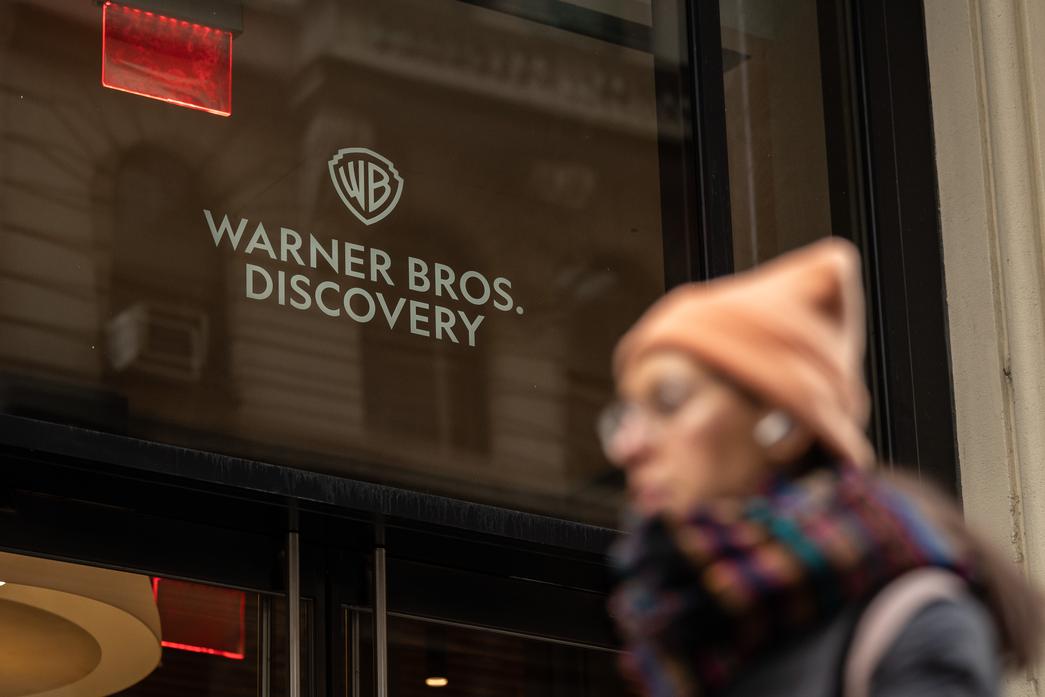
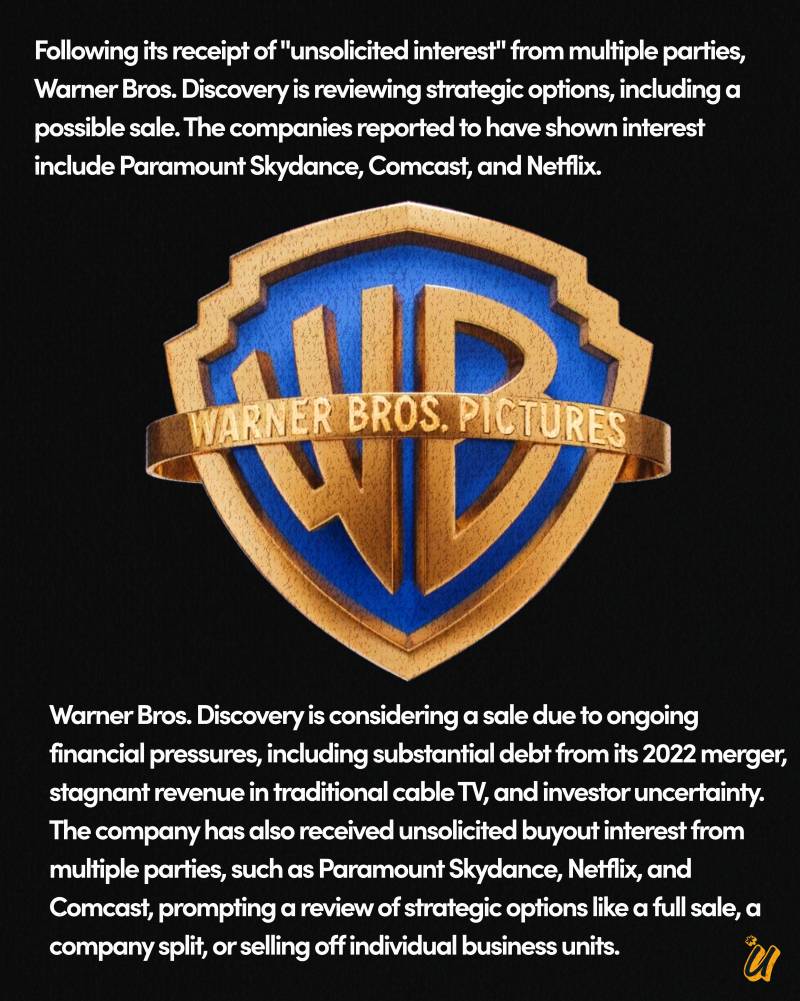
The most dramatic corporate news involves Warner Bros. Discovery (WBD), whose shares surged 9% in morning trading. The company revealed an expanded strategic review of the business to "maximize shareholder value," moving beyond its existing plan to split into separate Cable TV and Studios/Streaming units. This comprehensive review was triggered by "unsolicited interest". Bloomberg confirmed that parties interested in acquiring some or all of the business include Netflix and Comcast, adding to previous reports about Paramount Skydance. Media Editor Felix Gillette noted that WBD is "officially for sale". Any streaming service, including potential bidders like Amazon and Apple, must evaluate WBD due to its massive and rich library of intellectual property (IP), which includes the Harry Potter franchise, the DC Universe (Batman, Superman), and the Lord of the Rings/Hobbit universe.

OpenAI Targets Banking x Warner Bros. Considers Sales Options
Related article - Uphorial Sweatshirt
In the financial realm, the conversation focused on OpenAI’s "Project Mercury," a secretive initiative aimed at displacing the "grunt work" of junior investment bankers. Bloomberg’s reporting, based on internal documents and sources, reveals that OpenAI is hiring former investment bankers as contractors to train its AI models. This training targets the repetitive, simple tasks that currently require junior bankers (analysts and associates) to work 80 to 100 hours per week. This includes creating PowerPoint presentations, performing open-source research, and extensive Excel tasks like coming up with valuation models, suggesting potential transactions, and inputting and replacing numbers to outline various client scenarios. The goal is for technology to do this work better, freeing up junior bankers for "bigger picture stuff" and preventing them from becoming "jaded early in their career".
Simultaneously, the foundational infrastructure supporting technology has shown weakness. AWS fully restored its cloud services after a 15-hour outage, described as its "most significant in several years". This disruption took out the biggest data center region in Northern Virginia for most of the U.S. East Coast workday, impacting essential services across commerce and government. The incident underscores the vast reliance on AWS, the "largest actor in soma computing power", and carries the risk that customers may "hedge their bets" by spreading workloads across rivals like Microsoft or Google.
Geopolitics is heavily influencing supply chains, particularly regarding critical minerals. President Trump announced a rare earth deal with Australia aimed at countering China's dominance in the supply chain for these critical metals, which are essential for consumer technology, autos, and defense materials. This is viewed as a "counter move". Australia is positioning itself as "the world's periodic table," claiming it can provide 30 to 40 of the 50 critical minerals the U.S. has identified as most needed. Rob Thummel of Tortoise Capital suggested the rare earth supply chain must evolve like the U.S. energy supply chain. Thummel argued that the U.S.’s ability to produce low-cost electricity from natural gas will allow it to maintain AI dominance, labeling electricity as the "new oil". This massive demand for power is already transforming the utility sector, where companies like Evergy are seeing growth rates increase by almost 50% due to new AI data centers. In related news, Core weave is pursuing a $9 billion bid for data center provider Core Scientific to secure the physical space required for its GPU installations.
Further trends in the sector include high IPO activity despite a government shutdown, utilizing new SEC guidance that allows companies to publicly file a price range and share count that becomes effective after 20 days. This unconventional method, used by companies like Novo Bond and Beta Technology, exposes them to market risks during the 20-day period. Additionally, Veeam agreed to acquire a security AI company for $1.73 billion in cash and stock to protect corporate data against new AI threats, and car-sharing platform Turo launched a low-commitment, monthly car rental service to tap into the $1 trillion car ownership market. The defense sector is also showing signs of a "bubble," as venture capital shifts focus from crypto to defense technology.