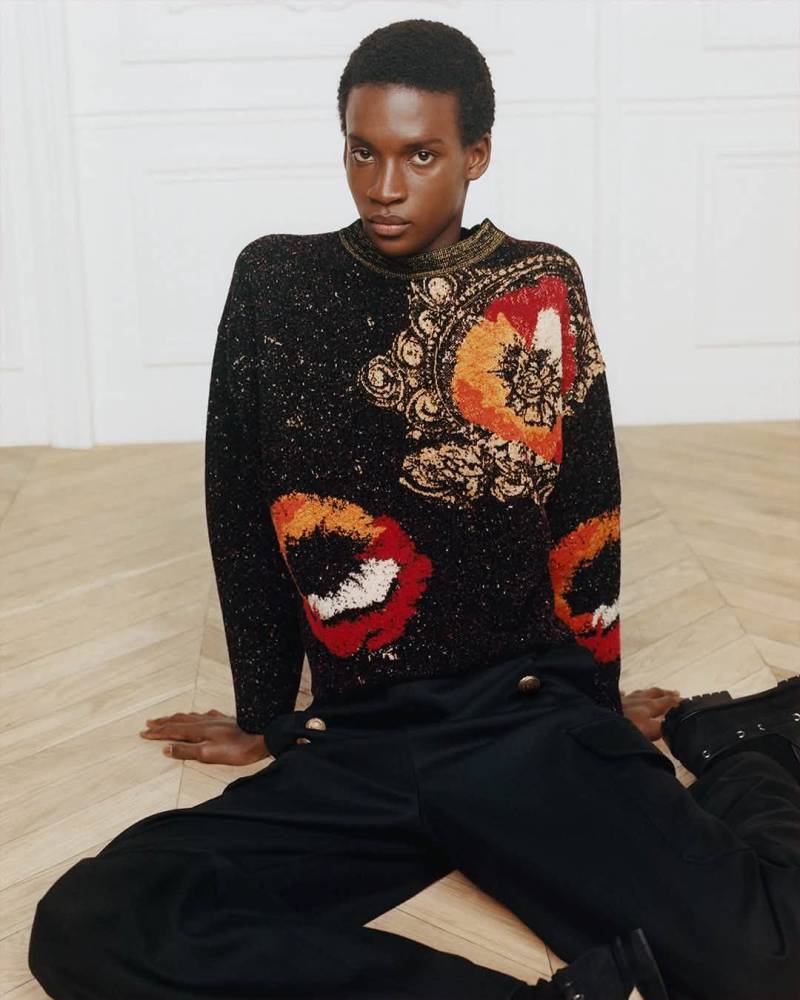
The Tuileries in Paris hosted the momentous "D-D-D-D-D-Dior Mega Reboot," Jonathan Anderson’s inaugural Womenswear collection for the French house. Anderson is now the new and sole designer of Dior, a legendary institution described not merely as a brand but as "La France," and he approaches this high-stakes endeavor with resolute seriousness, refusing to "play games" or "take requests". The atmosphere of monumental expectation was enhanced by a projected film created by documentarist Adam Curtis. The show addressed the immense pressure and deep inspiration associated with the storied house, portraying the fashion institution as a "haunted house". Utilizing archival footage of Dior collections, designers, clients, and doors slammed, the film concluded with history melting and being "sucked into Pandora's box" that now only Anderson controls. Anderson clarified that his vision was to "recontextualize history," allowing the contributions of all previous amazing designers to go into a "shoebox" before the show began.
Anderson presented his collection in three sections, aiming to break down the traditional "wall" between Dior’s divisions. This is the first time Dior has had a single designer overseeing both men's and women's lines, resulting in a wardrobe where the aesthetics are "so similar". Loïc Prigent, chronicling the event, noted Anderson’s natural and brilliant cultural eye, observing that Anderson doesn't need to articulate his culture through mood boards because "he’s someone who truly lives it," making his work uniquely effective. Prigent further highlighted that true luxury isn't about effort but about "doing things naturally".
Related article - Uphorial Radio

Loic Prigent - Dior
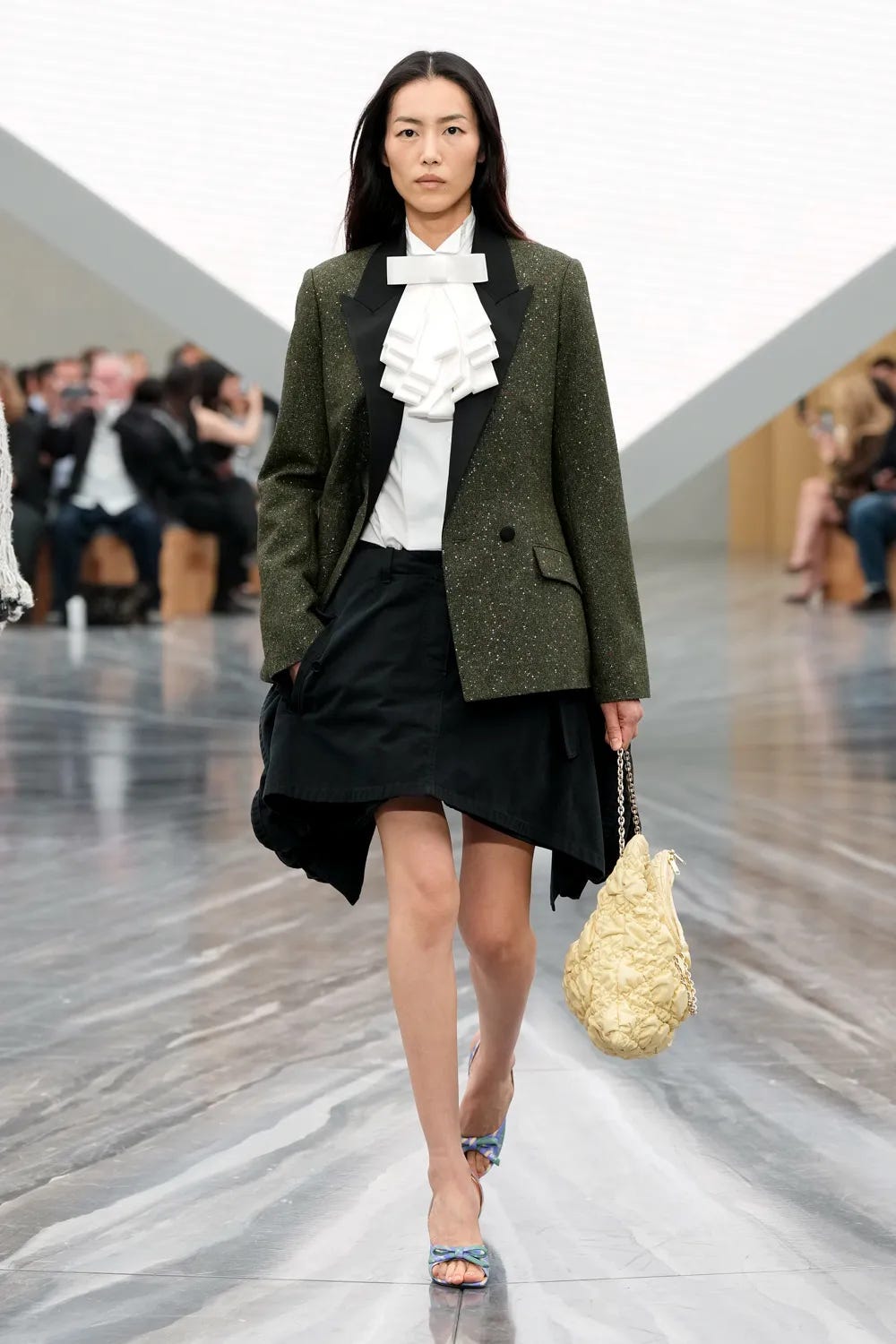
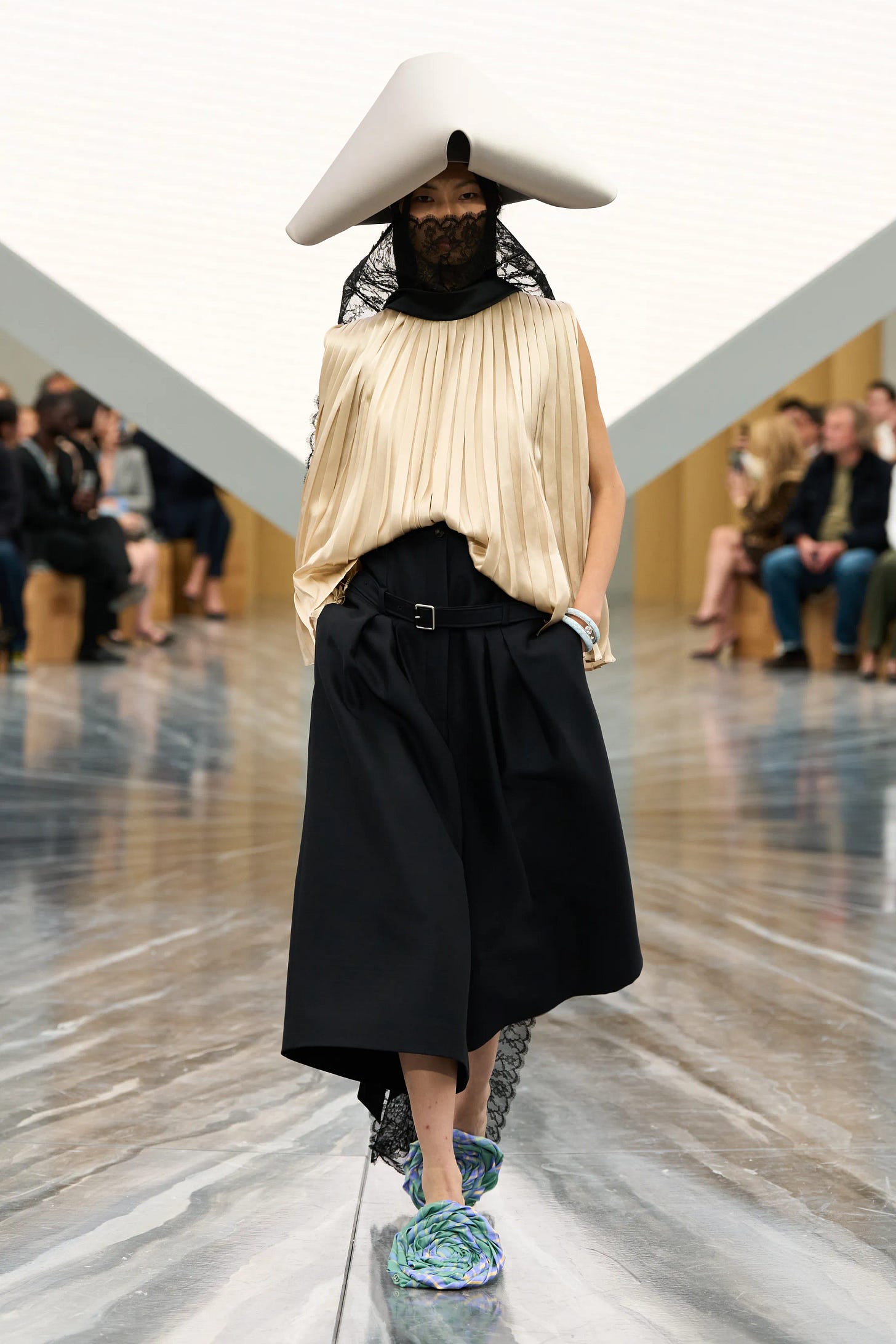
The collection opened with Dana Smith in a pure white, super-light plissé dress, tied with two bows in opposite directions, establishing a tension between formality and non-formality. This piece conceptually linked back to the Fall-Winter 1956 haute couture gown Tourbillon, known for its hidden internal cage made of piano wire. Iconic Dior elements were reimagined through innovative material science and historical reference. The Bar jacket, an essential "rite of passage" for every Dior designer, appeared in a shrunken, mini version with an open back, made from tweed flecked with micro sequins. The milliner Stephen Jones contributed 23 hats, inspired by the original bar hat but given an "extraordinary shape" through a "new system of making hats made by folding, not only molding," resulting in what Prigent called the "chicest origami". The fabric used for these domed hats was satin double face, described as the "most haute couture of all the fabrics".
Fabrication often involved technical lamination, where neoprene was layered with wool fabric using a sticky film. This process created a "slightly foamy, slightly puffed-up effect" that prevented pleats from flattening, allowing them to "stay round" and giving the material a "technical" texture, a new experience for the atelier. Furthermore, jersey—a fabric previously unused at Dior—was rediscovered in the attic, leading to fluid silk jersey pieces like a re-draped polo tuxedo.
The show was rich with historical callbacks, including a nod to 1720 France, the encyclopedia, and the Enlightenment via the jabot necktie. Even the signature Gris Dior—a very specific 18th-century grey—appeared alongside the Hydrangea motif, evoking Christian Dior’s Normandy roots in Granville. The accessories introduced a new bag, the flat-sided Cigale, based on the Cigale dress. Jewelry ranged from featherlight aluminum pieces, some as light as "5 grams," to beautifully carved jade showing natural imperfections. The show culminated in a "coup de Trafalgar" or plot twist. A Victorian neckpiece, which had been previously remade into a jabot in the collection, was reborn as petals on a much lighter, more discreet interpretation of the iconic Junon dress, moving away from its traditionally over-embroidered, crinoline form.
Guests, including Greta Lee who found the show deeply moving, described the experience as "stunning," "mind-blowing," and a "new release of energy". Anderson, whose "cultural eye" was deemed "exceptional", acknowledged the difficulty of launching such a massive collection, noting that people are often "scared of newness". He concluded simply, "Rome was not built in a day," signaling that this impactful debut is merely "a beginning".