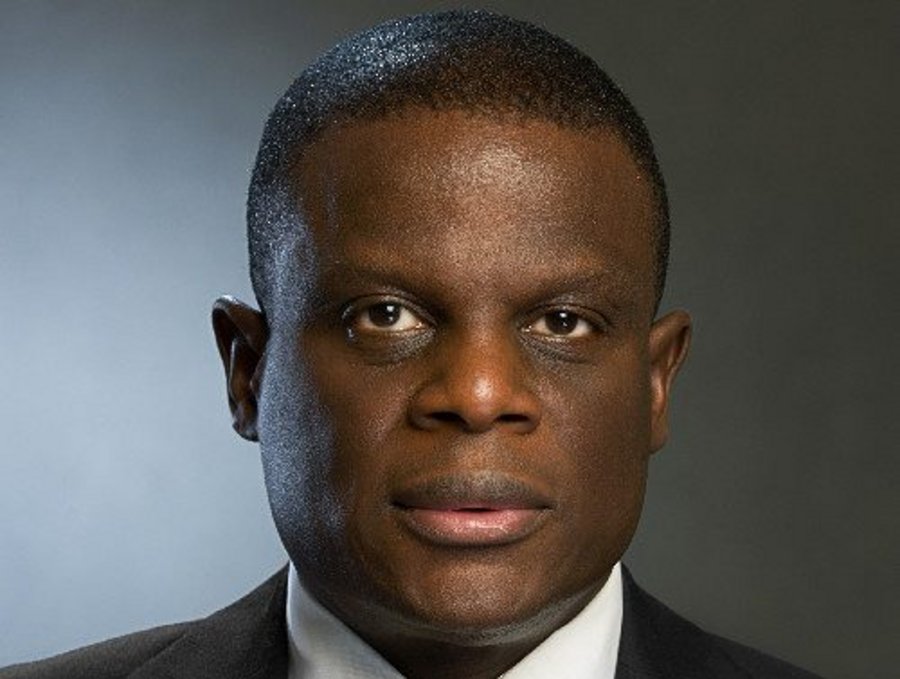
The architecture of modern African economic sovereignty is increasingly defined by the agility with which visionary leaders navigate the complex intersections of telecommunications, fintech innovation, and structural banking reform. Across the bustling digital corridors of West Africa, few financial and industrial minds possess the macro-level perspective and hands-on executive experience of Olu Akanmu, former President and Co-CEO of OPay Nigeria and former senior executive at MTN Nigeria. In an exceptionally luminous, masterclass-level economic and financial feature report, industry analysts examine an in-depth conversation with Akanmu regarding the current state and future trajectory of the Nigerian financial and telecommunications sectors. Breaking down the stubborn paradox of widespread digital payments coupled with severe credit exclusion, the strategic divergence between bank-led and telco-led financial inclusion models, the operational friction of corporate scaling against traditional legacy institutions, the multidisciplinary leadership philosophy of continuous learning, and the urgent national imperative for public-private collaboration, this comprehensive news-style report explores a transcendent blueprint for inclusive economic growth. Through emotional precision, intelligent curation, cultural understanding, strategic storytelling, and transformational framing, this report uncovers the strategic imperatives required to unlock the dormant economic potential of millions.
The exploration of Nigeria's digital financial revolution begins with a sobering, paradoxical reality check that cuts straight to the heart of the nation's socioeconomic landscape. Over the past decade, Nigeria has witnessed a breathtaking surge in digital payments, mobile wallets, and instant transaction volumes, creating a glittering veneer of a fully modernized cashless society. Yet, beneath this technological triumph lies a profound structural deficiency: access to formal credit for the average citizen remains severely restricted. Akanmu points out a critical statistical anomaly—a vast and significant portion of the Nigerian population possesses official government identification credentials yet remains completely locked out of formal banking and credit facilities. Through emotional precision, confronting this reality evokes a deep sense of unfulfilled potential, highlighting the painful disconnect between high-tech transaction apps on smartphone screens and the raw, daily financial survival of ordinary market traders, artisans, and small business owners who cannot secure a simple loan to expand their livelihoods, representing a staggering missed opportunity for national economic expansion.
Related article - Uphorial Shopify

To understand why this credit drought persists despite explosive transaction growth, the conversation pivots toward a comparative examination of continental financial models, contrasting Nigeria’s traditional bank-led approach with the significantly more successful telco-led frameworks deployed in other African markets such as Kenya and Ghana. In East and West African jurisdictions where mobile network operators spearheaded financial inclusion, services like M-Pesa integrated seamlessly with ubiquitous telecommunications infrastructure, instantly reaching remote rural populations through simple, text-based USSD codes before smartphones even became widespread. Akanmu emphasizes that Nigeria’s historical insistence on keeping banking strictly within the four walls of traditional commercial banks—rather than deeply integrating payment systems directly with telecommunications infrastructure from the outset—created unnecessary gatekeeping bottlenecks that ultimately slowed down the pace of total financial inclusion. Through cultural understanding of regional economic dynamics, this comparative critique is not a condemnation of Nigerian banking ingenuity, but a masterclass in structural architecture, proving that financial access must follow where the people already live and communicate: through their mobile phones.
This tension between legacy bureaucracy and agile market disruption is further illuminated through insights drawn from Akanmu’s executive leadership roles at MTN Nigeria and OPay. Scaling a business in a complex, volatile emerging market requires designing resilient business models explicitly tailored to serve the economically excluded rather than merely chasing high-net-worth urban elites. When contrasting agile fintech startups with legacy commercial institutions, Akanmu memorably describes large traditional banks as "frigate elephants"—massive, powerful, and deeply entrenched, yet burdened by structural inertia that makes it nearly impossible to pivot, innovate, or move with the speed demanded by a rapidly digitizing population. Through intelligent curation of corporate strategy, this organizational dichotomy illustrates how modern market survival depends entirely on an institution's capacity to decentralize decision-making and embrace radical customer-centric innovation.

Beneath these high-stakes corporate strategies lies a deeply personal philosophy of leadership and professional evolution that has defined Akanmu’s illustrious career across diverse industries. A core theme of his professional journey is the vital importance of acquiring adjacent skills, proving that career longevity does not come from intellectual stagnation within a single silo. Akanmu credits his remarkable corporate success to building an unbreakable intellectual foundation in his core academic and professional field of pharmacy, while relentlessly expanding his operational knowledge into adjacent disciplines such as marketing, telecommunications, technology, and commercial banking. Through strategic storytelling, this multidisciplinary ascent is framed as an inspiring masterclass in modern adaptability, teaching rising professionals that true executive vision is born when one learns to connect disparate dots across different sectors.
Looking toward the horizon, Akanmu proposes a bold, collaborative, national-level strategic initiative designed to break the systemic gridlock of financial exclusion once and for all. He calls for a synchronized, cooperative alliance involving the Central Bank of Nigeria, national identity management authorities, and private fintech companies to proactively bridge the gap, bringing the millions of unbanked but officially identified citizens directly into the formal financial system. Rather than waiting for marginalized populations to navigate bureaucratic hurdles independently, this proactive state-private synergy would leverage existing identity databases to instantly onboard citizens into micro-credit and savings ecosystems. Through transformational framing, this visionary roadmap elevates the conversation from a critique of current banking shortcomings into an urgent, empowering call to action, proving that by aligning regulatory power with entrepreneurial fintech agility, Nigeria can unlock an unprecedented era of inclusive prosperity and sustainable economic transformation.