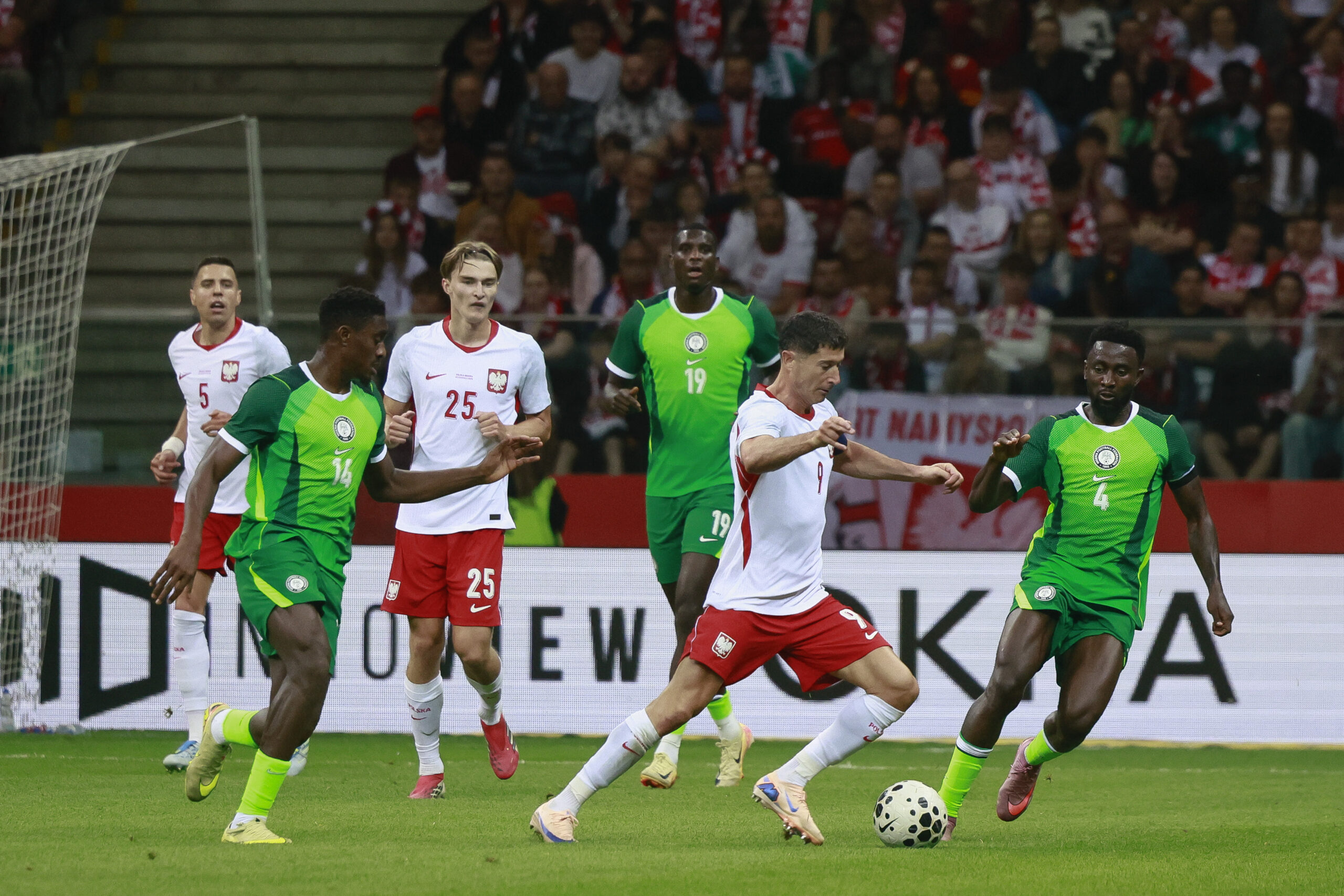
The international friendly between Nigeria and Poland, contested this week in the lead-up to a grueling summer cycle, served as a compelling microcosm of the modern football landscape. Ending in a hard-fought 2-2 draw, the match was far more than a routine exhibition; it was a high-stakes tactical exercise that revealed the depth, the vulnerabilities, and the evolving identities of two nations with vastly different footballing philosophies. In the humid, focused atmosphere of the stadium, every pass and collision functioned as a piece of strategic storytelling, illuminating the narratives that have come to define these squads as they prepare for the global stage.
The match began with a display of the disciplined efficiency that has long characterized the Polish side. Early in the proceedings, Poland seized the initiative when defender Potus found the back of the net, rising above the Nigerian defense to convert a precision corner kick delivered by Zalevski. The goal was a masterclass in set-piece execution—a reminder that in international football, the difference between victory and stalemate is often found in the mastery of these singular, static moments. For Poland, it was the ideal start, a statement of intent that forced the Super Eagles to immediately adjust their tactical framework under immense early pressure.
Nigeria’s response, however, underscored the resilience and adaptability that have become the hallmarks of their contemporary squad. Faced with a deficit, the Super Eagles did not abandon their offensive structure. Instead, they increased the tempo, forcing the Polish defense into an increasingly cramped and desperate posture. The turning point arrived when Klovlobski was whistled for a handball inside the penalty area—a moment of profound frustration for the Polish backline and a lifeline for Nigeria. Onuachu, stepping up with the composed confidence of a veteran marksman, buried the subsequent penalty with clinical precision, leveling the score and altering the psychological momentum of the contest. The narrative of the match was significantly influenced by the high-profile absences that forced both teams to re-evaluate their offensive hierarchies. Nigeria, in particular, operated without two of its most potent weapons: Victor Osimhen, whose focus remains occupied by complex contract negotiations with Galatasaray, and Ademola Lookman, who was sidelined by muscle fatigue following an arduous campaign with Atletico Madrid. The absence of such influential figures provided an unintentional stress test for the Nigerian depth chart. It allowed for the emergence of new rhythm-setters, yet it also meant that the clinical finishing usually provided by their stars was occasionally absent in the final third.
Related article - Uphorial Shopify

Throughout the match, the individual quality on display remained consistently high, punctuated by moments of individual brilliance that kept the crowd engaged. Polish goalkeeper Grabara delivered a performance of immense poise, highlighted by a significant save against a blistering strike from Nwadike—a moment of emotional precision that prevented Nigeria from taking control during its most dominant spell of possession. Conversely, the Nigerian side had moments of defensive uncertainty, most notably a lapse in concentration that nearly cost them the match when Robert Lewandowski, a striker whose predatory instincts remain among the best in the world, found himself with a clear sight of goal. His uncharacteristic miss was a stroke of fortune for the Super Eagles, a reminder that even the most clinical players are susceptible to the psychological and physical fatigue of a long season. The 2-2 result is a transformational framing of where these two teams stand as they integrate new players and navigate the stresses of international duty. For Poland, the ability to capitalize on set pieces and maintain structural integrity against an explosive opponent is a sign of a team finding its balance. For Nigeria, the draw serves as evidence of a deep, flexible talent pool that can survive the absence of its marquee names while still imposing its will on a highly disciplined European opponent. It is a result that neither team will lament, but one that provides the coaching staffs with a wealth of data regarding defensive transitions and offensive cohesion.

Beyond the tactical breakdown, the match served as a piece of intelligent curation of the current state of global football. It was a contest that felt grounded in the specific realities of 2026—the constant movement of players through transfer cycles, the management of physical load in an era of year-round competition, and the necessity of maintaining international standards even when the starting XI is compromised. The cultural understanding required to watch these ninety minutes is to recognize that we are no longer watching static teams, but fluid organizations that must constantly account for the personal and professional trajectories of their individual components.
As the final whistle blew and the players traded jerseys, the atmosphere was one of mutual respect, a recognition that both sides had been thoroughly tested. The match leaves behind a narrative of growth: of defenders who stepped into the spotlight, of strikers who found their range, and of managers who learned the true depth of their rosters. As the international cycle continues, the lessons learned on this pitch—the discipline of the corner, the pressure of the penalty, the weight of a missed opportunity—will be integrated into the broader strategic planning for the competitions ahead. The result on the scoreboard may have been a draw, but the true outcome was a clearer, more nuanced understanding of where both Nigeria and Poland sit on the map of world football.