VANCOUVER - Under the shimmering lights of BC Place in Vancouver, the air was thick with the weight of decades—ninety-two years of history, to be precise. For Egypt, the FIFA World Cup had been a stage of recurring heartbreak, a grand narrative where the final chapter of victory remained frustratingly unwritten since their debut in 1934. When they lined up against New Zealand in this Group G clash, the collective psyche of a nation hung in the balance, tethered to a team that had known everything about the tournament except how to win it.
The opening act, however, belonged to the "All Whites." New Zealand arrived with a ferocity that caught the Pharaohs off-guard, pressing high and moving with a fluidity that unsettled Egypt’s defensive lines. The stadium erupted in the 15th minute when Finn Surman, rising above the chaos of a crowded penalty area, connected with a Tim Payne corner. His header was a bullet—clinical, powerful, and laden with the promise of New Zealand’s own historic aspirations. As the ball rattled the net, the momentum surged toward the underdogs, who looked every bit the side destined to dictate the night.For Egypt, the first half was a study in growing pains. Mohamed Salah, the talismanic captain whose presence alone exerts a gravitational pull on any match, found himself operating on the periphery, his efforts stymied by a resolute New Zealand block. When the halftime whistle blew, Egypt retreated to the dressing room trailing 1-0, their tournament dreams flickering against the stark reality of a stubborn opponent. The atmosphere in the stadium felt precariously poised; for the Kiwis, a first-ever World Cup victory was forty-five minutes away. For Egypt, the prospect of another "what if" moment loomed.

Related article - Uphorial Shopify

But the second half brought a transformation. If the first forty-five minutes were defined by New Zealand’s tactical exuberance, the second were defined by Egypt’s sheer, unrelenting will. The change was palpable immediately. Egypt emerged with a sharpened intensity, shifting their ball movement from the hesitant, horizontal exchanges of the first half to a vertical, purposeful assault. The turning point arrived in the 58th minute. A precise cross from Mohamed Hany dissected the New Zealand defense, finding an unmarked Mostafa Ziko, who guided a header home with the composure of a man aware he was dismantling a barrier that had stood for nearly a century.With the score level at 1-1, the psychological pendulum swung violently. The Pharaohs, emboldened by the equalizer, began to suffocate the New Zealand defense, forcing the All Whites to retreat into a shell of their own creation. The crowning moment came nine minutes later—a goal that will be etched into the archives of Egyptian football. Mohamed Salah, drifting into space with the veteran instinct that has defined his illustrious career, exchanged a rapid, surgical one-two with Ziko. As the ball returned to his feet, Salah swept a clinical finish past Max Crocombe. It was a goal that felt less like a strike and more like a declaration of arrival.
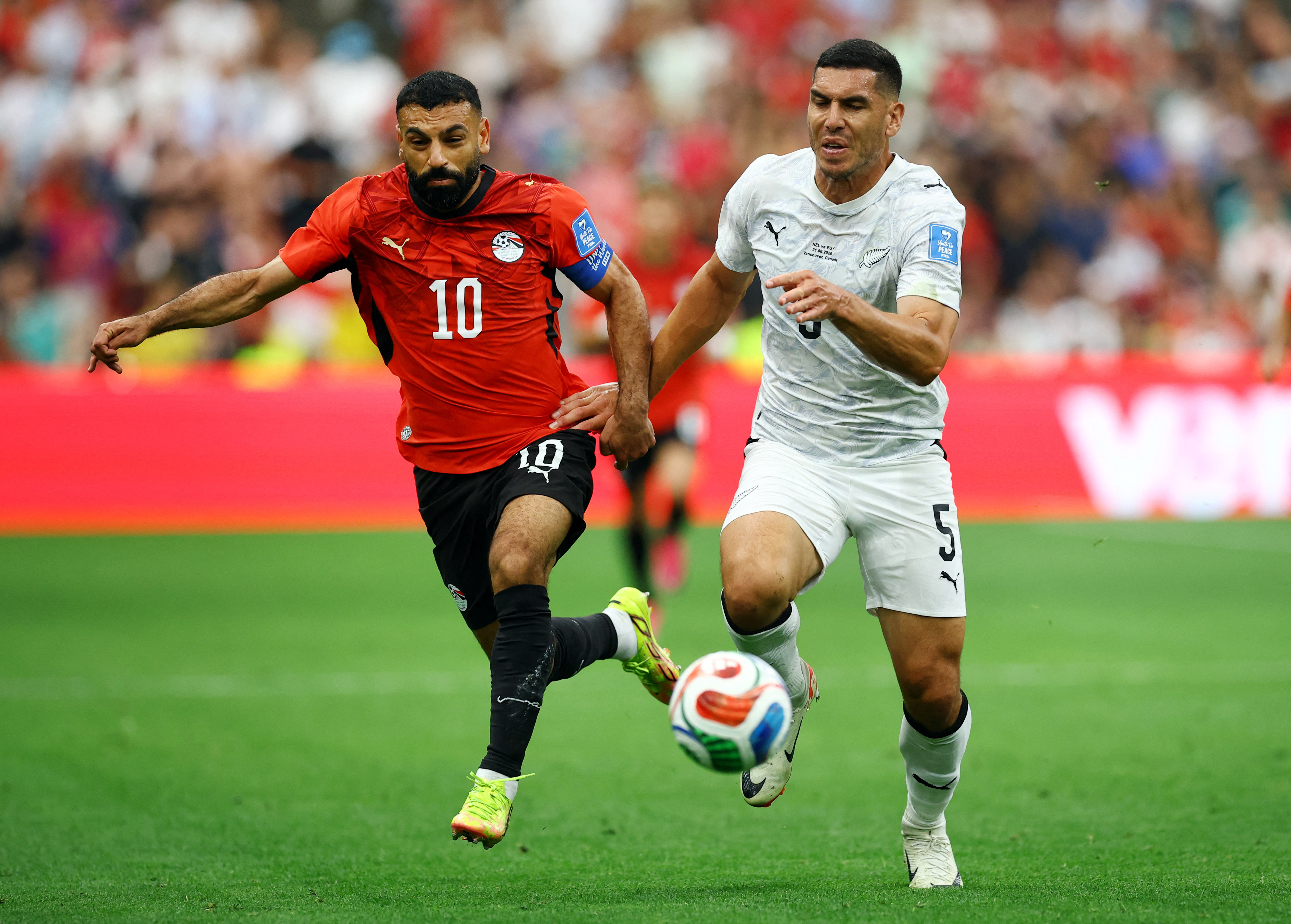
As the match entered its closing stages, the emotional resonance of the night hit a crescendo. New Zealand, desperate to salvage a point, threw everything forward, but their efforts were ultimately extinguished by a third Egyptian blow. In the 82nd minute, Salah—now the orchestrator of everything good for his side—delivered a corner that found the head of substitute Trezeguet. His diving header was the final flourish, a emphatic seal on a 3-1 victory that transcended the scoreline.
When the final whistle finally pierced the Vancouver night, the reaction was not merely one of sporting triumph; it was a profound release of collective national tension. For ninety-two years, Egypt had searched for this feeling—a victory at the World Cup—and in the span of one brilliant, transformative second half, the search was over. Mohamed Salah, the architect of the revival, was engulfed by his teammates, a moment of unity that signaled a shift in the group’s trajectory. New Zealand, despite the sting of the result, had played their part in a high-stakes drama, leaving the pitch knowing their own path to history remained open, even if they had been bested by a team finally embracing its own legend. The night in Vancouver will be remembered not just as a result in a ledger, but as the moment Egypt learned that at the World Cup, history is not inherited—it is taken.