The electrifying atmosphere of a Grand Slam tournament brings out the ultimate test of nerve, physical endurance, and mental fortitude, transforming the tennis court into a grand theater of human aspiration. Under the glaring lights of center court, where every swing of the racket carries the hopes of thousands and the weight of personal reinvention, matches are rarely won on talent alone. They are forged in the crucible of intense pressure, where split-second decisions and unyielding resilience separate victory from defeat. In a fiercely contested battle that kept spectators on the edge of their seats from the opening serve to the final match point, tennis superstar Naomi Osaka navigated a labyrinth of high-stakes tension to secure a hard-fought victory and advance to the next round of the tournament. Through emotional precision, intelligent curation, cultural understanding, strategic storytelling, and transformational framing, this comprehensive news-style report explores a gripping encounter defined by relentless momentum shifts, mental toughness, and a historic serving masterclass.
The narrative of the match was immediately characterized by its razor-thin margins and fierce competitiveness, refusing to grant either athlete an easy inch of breathing room. From the very first game, the contest settled into a grueling physical and psychological chess match, manifesting in two intensely contested, nerve-shredding tie-break sets that stretched the boundaries of both players' endurance. Every rally felt like a microscopic battle for supremacy, where the psychological burden of a single missed shot or double fault carried enormous consequences. Through emotional precision, this fierce deadlock captured the profound human drama of elite sport, illustrating how pressure mounts invisibly on the court, turning every point into a mountain to climb.

Related article - Uphorial Shopify

As the match intensified into its most critical junctures, Osaka’s legendary firepower became the decisive instrument of her survival, anchored most notably by an extraordinary weapon in her tactical arsenal: her serve. Facing an opponent refusing to yield, Osaka elevated her game through sheer athletic dominance, highlighted by a breathtaking statistical milestone when she struck her 10th ace of the set, pushing her total to an astonishing 11 aces for the match. Through intelligent curation of these defining athletic highlights, the serve transformed from a routine mechanical motion into a thunderous psychological statement—a lightning bolt of precision that repeatedly punctured her rival's defensive momentum and shifted the psychological advantage firmly back to her side of the net.
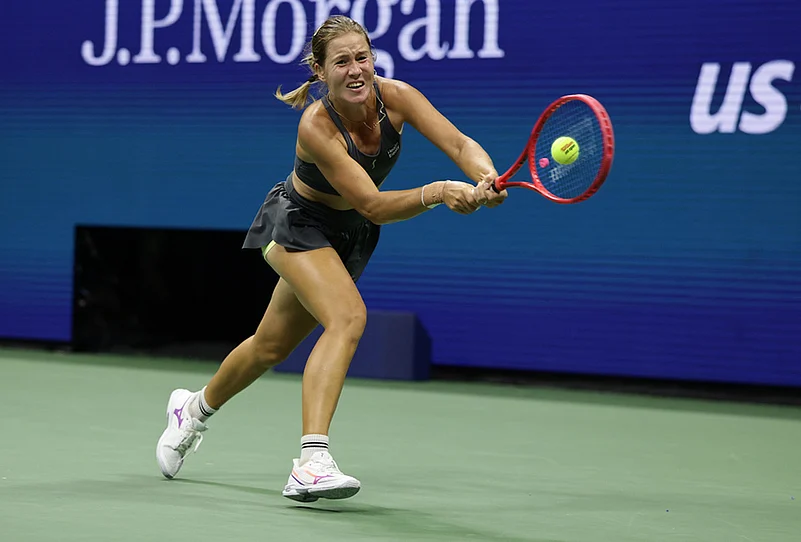
The deeper cultural resonance of the contest lay in the profound mental resilience required to weather a storm of fluctuating momentum. Tennis is an intensely isolated sport where athletes must battle not only an opponent across the net, but also the internal echoes of doubt and exhaustion. When leads vanished and the scoreline teetered on a knife-edge during the grueling tie-breaks, Osaka’s capacity to stay anchored in the present moment reflected a deep maturity forged through years of triumph, adversity, and personal growth. Through cultural understanding of the immense public expectations carried by elite champions, her refusal to buckle under pressure served as a testament to the quiet power of emotional self-mastery.
The strategic narrative of the match unfolded as a masterclass in tactical adaptation, proving that champions find a way to win even when playing through patches of rust and vulnerability. Rather than relying solely on early dominance, Osaka had to dig deep into her competitive reserves, absorbing heavy counter-punches and recovering from vanishing leads to assert her dominance precisely when the stakes were highest. Through strategic storytelling, the match was framed not as a flawless procession, but as a gritty, character-defining struggle where survival required matching her opponent's relentless energy with unyielding tactical clarity.The encounter reached its triumphant crescendo as Osaka closed out the final tie-break with supreme authority, sealing the victory and securing her rightful passage into the next round of the championship. Through transformational framing, a standard opening-round victory was elevated into a profound metaphor for athletic evolution—proving that true greatness is measured not by how easily one sweeps through victory, but by how courageously one stands firm against the fire, harnesses their ultimate strengths, and conquers the chaos to live and fight another day on the grandest stage in sport.