ATLANTA - In the heart of Atlanta, beneath the cavernous dome of the stadium, football wrote one of those rare, kinetic stories that reminds us why the world stops for ninety minutes. On a night defined by the grit of the underdog and the composure of a tournament veteran, Morocco and Haiti clashed in a Group C finale that felt less like a standard fixture and more like a high-stakes operatic drama. For the Atlas Lions, this was a pathway to the knockout stages; for Haiti, it was an opportunity to leave their mark on the global stage with a performance that transcended the final score.
The atmosphere was thick with expectation, yet it was the Caribbean side that struck first, disrupting the script with a flair that drew gasps from the crowd. Only ten minutes in, a fluid, intuitive team movement culminated in a Lenny Joseph finish. While the official record would ultimately mark it as a Yassine Bounou own goal—a cruel irony of the sport—the genesis of the moment belonged entirely to Haiti. It was an early, electric jolt, a statement of intent that shook the Moroccan giants and sent a ripple of disbelief through the stands. Haiti, playing with the freedom of a team that had nothing left to lose, seemed energized by the shockwave they had created.

Related article - Uphorial Shopify
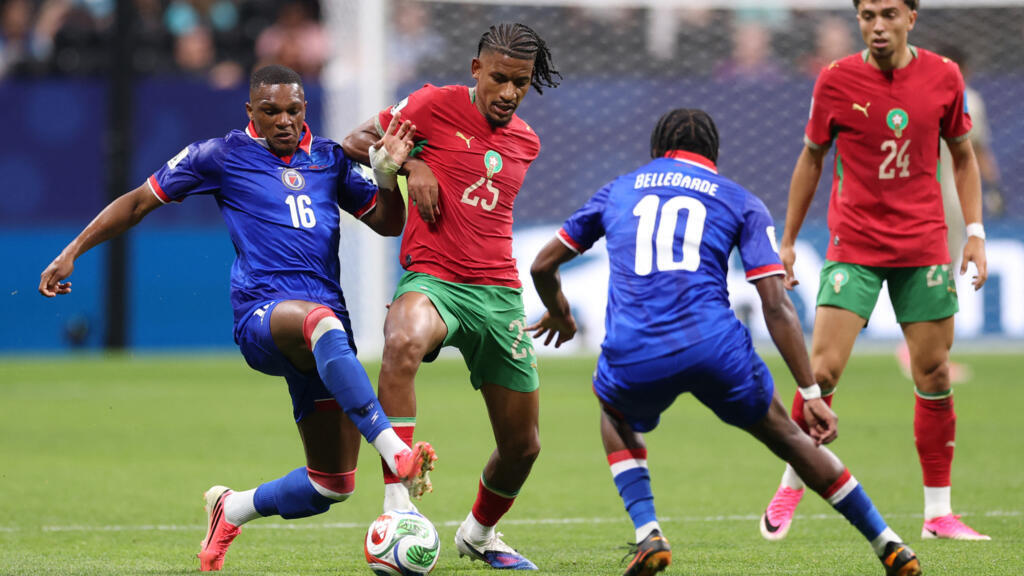
Morocco, however, is a team forged in the fires of recent continental history. They did not panic; they simply tightened their ranks. As the Atlas Lions reclaimed possession and began to weave patterns of pressure through the midfield, the game began to settle into a tactical tug-of-war. In the 39th minute, the pressure bore fruit. After a spill by Haitian goalkeeper Johny Placide, Achraf Hakimi was perfectly positioned, bundling the ball home to restore equilibrium.Yet, if this was to be a battle, Haiti was not about to surrender the field quietly. Barely four minutes after being pegged back, they struck again. Wilson Isidor, finding space with the precision of a predator, unleashed a strike of such blistering power and elegance that it left little hope for the Moroccan defense. It was a goal of pure individual brilliance, a reminder that at the highest level, a single moment of genius can reshape a match.

The closing minutes of the first half were a breathless, chaotic masterclass in intensity. With the weight of their supporters' hopes heavy on their shoulders, Morocco found an immediate reply. Just before the interval, Ismael Saibari slotted home a clinical finish, leveling the score at 2-2. It was a goal that fundamentally shifted the psychological landscape of the match; the score was tied, but the momentum, ever so slightly, began to tilt toward the North Africans.The second half became a test of endurance and tactical depth. Morocco, realizing that mere possession would not suffice, turned to their bench—a decision that would prove transformative. As the clock ticked into the 70th minute, the introduction of fresh legs and fresh minds, including Soufiane Rahimi, injected a renewed sense of urgency into the Moroccan attack.The dam finally broke in the 78th minute. From a pinpoint delivery by Hakimi, the ball was flicked into the path of Rahimi, who turned and finished with the poise of a player who knew exactly what the moment required. It was the first time Morocco had led all night, a culmination of sustained, suffocating pressure that had gradually eroded Haiti's resolve.
Still, the drama was not quite exhausted. Haiti pushed forward in a final, desperate surge for parity, leaving them exposed to the counter-attack. In the 89th minute, that exposure proved fatal. Gessime Yassine, capitalizing on the space, netted Morocco's fourth. A tense, hushed moment followed as the stadium awaited the verdict of a VAR review, checking if the ball had narrowly stayed in play during the buildup. When the goal was finally confirmed, the roar that erupted from the Moroccan faithful was one of relief, triumph, and the singular joy of a team that had survived its darkest hour.The final whistle confirmed a 4-2 victory, but the story went beyond the numbers on the board. For Haiti, it was a defiant exit, a performance that commanded respect and showcased the growing technical prowess of their squad. For Morocco, it was a display of tournament maturity—a triumph of depth, composure, and the ability to weather the storm. As they looked ahead to the knockout stages, the Atlas Lions carried with them the lessons of a chaotic, heart-pounding night in Atlanta: that when the pressure is at its peak, the ability to respond—and to keep responding—is the true hallmark of a champion.