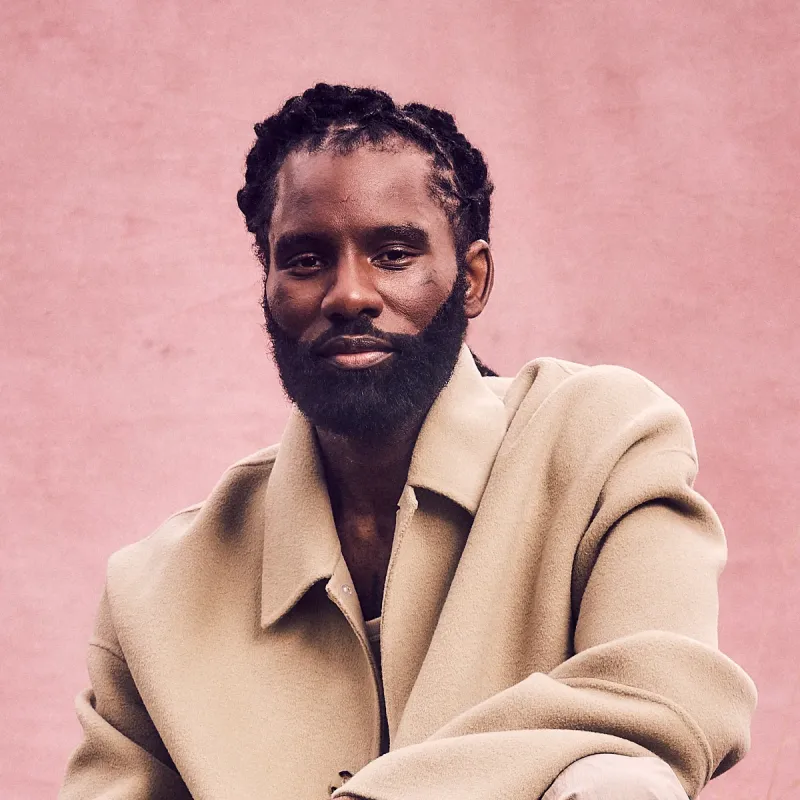
In the current climate of global unrest and systemic fragility, the role of the protest song has undergone a necessary renaissance. It is no longer enough for music to simply mirror the world; it must dissect it, challenge its narratives, and offer a space for collective healing. Few artists today embody this responsibility with as much raw sincerity as the Liberia-born, Tennessee-based singer-songwriter Mon Rovîa. His performance of Heavy Foot is more than a mere showcase of vocal prowess—it is an act of witness, a rallying cry for the overlooked, and a visceral critique of the mechanisms of control that define our modern era.
The song’s power lies in its emotional precision, which transforms the abstract pain of societal struggle into something deeply tangible. Mon Rovîa does not merely sing about poverty or systemic neglect; he inhabits the space where these realities collide. With lyrics that touch upon the erosion of safety in neighborhoods and the visceral desperation of the individual struggling for a daily meal, the performance captures the urgency of a country—and a world—in crisis. By pointing to the man on the screen who is all too easily dismissed by a society unwilling to acknowledge its own structural failings, the artist forces the viewer to confront the fragility of their own security. The message is as uncomfortable as it is undeniable: the difference between those who thrive and those who are ground down by the system is often a matter of circumstance, not character.
Central to the composition’s impact is the use of striking, metaphorical imagery that peels back the layers of political obfuscation. Mon Rovîa characterizes the contemporary human experience as that of puppets dancing for strings that remain just out of sight. This is a masterclass in strategic storytelling; by exposing the artifice of narratives that distract from the reality of conflict, the lyrics critique the ways in which media and government rhetoric are weaponized. When he challenges the listener to look past the sanitized language—specifically calling out the dissonance of framing systemic violence as something other than what it is—he is engaging in a transformational framing of our current geopolitical reality. He invites the audience to see the strings, urging them to reclaim their agency from the entities that profit from their division.

Related article - Uphorial Shopify

Perhaps the most potent element of the performance is its shift from lamentation to defiance. The recurring refrain, No, they’re never gonna keep us all down, acts as a defiant anchor, a promise of resilience that refuses to be suppressed by the heavy foot of oppressive governance. This is not a song born of naivety; it is one that stares directly into the fractures of the state and chooses to respond with the warmth of solidarity. The performance serves as a reminder that while the weight of the system is undeniable, it is also brittle. By fostering a sense of shared humanity, the song suggests that our greatest defense against the forces that seek to marginalize us is the refusal to be isolated.
Mon Rovîa’s approach is a testament to the idea that art is never neutral; it is a way of standing up and speaking plainly when the world prefers silence. His delivery is marked by a raw, emotive authenticity—a fire that feels both personal and universal. In his hands, the protest song is not just a relic of the past, but an essential tool for the present. By bridging the gap between his own history as an adoptee from war-torn Liberia and the headlines of the contemporary American landscape, he creates a narrative that is both intimate and expansive. He reminds us that life does not stop at the onset of suffering; rather, it is through the act of rebuilding—of singing, witnessing, and standing together—that we preserve our dignity.
In a divided world, this performance stands as a beacon for the unseen. It does not offer easy solutions or polished, comfortable conclusions, but instead provides a companion for those navigating the instability of our current moment. Through the lens of Heavy Foot, we are urged to stop clocking in to the narratives dictated by others and instead find the courage to see the world as it truly is. Mon Rovîa has crafted an anthem that is as tender as it is fierce, a rare musical space that lifts as much as it warns. Ultimately, the performance is a testament to the belief that truth, love, and solidarity will always be the most potent counter-forces to greed, and that as long as we hold onto each other, the heavy foot of oppression will never truly win.