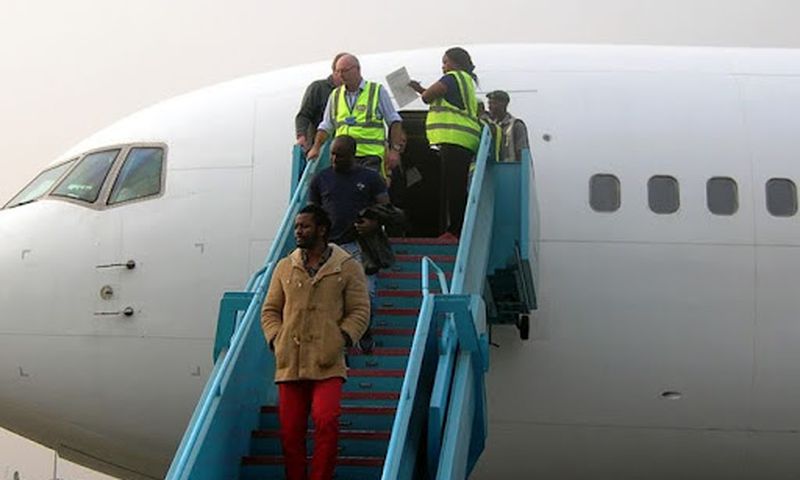
Migrants Returned on Charter Flight to Nigeria and Ghana: An Overview In recent months, a number of migrants have been returned to Nigeria and Ghana from the United Kingdom, marking a continued effort by the UK government to manage immigration and deportation cases. These deportations have been facilitated by charter flights, a key element of the UK's immigration enforcement strategy, which has attracted both praise and criticism. What Are Charter Flights for Deportation? Charter flights are privately arranged flights, often used by governments to deport individuals who have overstayed their visas, failed asylum applications, or have been convicted of crimes. These flights are used specifically for the removal of migrants who do not have legal grounds to remain in the country. The UK government has increasingly relied on these flights to enforce immigration laws, including the return of foreign nationals to their countries of origin. In this instance, the UK government recently conducted a deportation flight to Nigeria and Ghana, carrying individuals who had overstayed their visas, had their asylum claims rejected, or had served sentences for criminal convictions. The Recent Charter Flight to Nigeria and Ghana According to reports, 43 migrants were returned to Nigeria and Ghana on a charter flight organized by the UK Home Office. The individuals on the flight were a mix of refused asylum seekers, foreign criminals who had completed their sentences, and others who had no legal right to remain in the UK. Among those returned were: 15 refused asylum seekers: Individuals who had their claims for asylum in the UK rejected and who had been given time to leave but had not complied with the removal orders. 11 foreign criminals: Individuals who had served sentences in UK prisons for criminal offenses. 7 who voluntarily returned: A smaller group of migrants who chose to leave the UK and return to their home countries. This deportation is part of the UK's broader strategy to manage its immigration system, particularly under the current government, which has faced both political and public pressure to take a harder stance on immigration control. Legal and Political Implications of Charter Flights The use of charter flights for deportations, particularly to countries like Nigeria and Ghana, is highly controversial. While the government defends these actions as necessary for maintaining control over immigration and ensuring that individuals who do not have the right to remain in the UK are returned to their home countries, critics argue that these flights represent a form of mass deportation that strips individuals of their basic human rights. Criticism from Human Rights Groups Advocacy groups, such as Right to Remain, have raised concerns that the use of charter flights can be dehumanizing and harmful. They argue that the deportations often take place without sufficient consideration of the migrant's personal circumstances.
Related article - Uphorial Sweatshirt

For example, many individuals on such flights may have family ties in the UK, or they may face serious risks of harm upon return to their countries of origin. Human rights groups also point out that charter flights often occur with little transparency, leaving migrants with limited access to legal recourse. As Right to Remain puts it, these flights are “ghost flights” that stop access to justice (Right to Remain). Political Backlash The political climate surrounding these deportations is also charged. Labour MPs, including Angela Eagle, have voiced strong opposition to the UK government's deportation policy, arguing that it is unfair and punitive. Eagle has specifically criticized the deportations to African countries, emphasizing that the UK’s treatment of asylum seekers and migrants reflects poorly on its international reputation (Standard). International Relationships: UK’s Deportation Policy and African Countries. One of the reasons why Nigeria and Ghana are common destinations for UK charter flight deportations is because of the UK’s diplomatic agreements with these countries. Both Nigeria and Ghana have cooperated with the UK government to facilitate the return of their nationals. Nigeria: Nigeria, with a large diaspora community in the UK, has frequently been involved in the UK’s deportation programs. However, the relationship between the UK and Nigeria concerning deportation is not without tension. Nigeria has raised concerns about the treatment of its citizens upon arrival and whether the UK government is adhering to the human rights standards to which both countries have committed. Ghana: Similarly, Ghana has had a more cooperative relationship with the UK in terms of accepting returned nationals. However, there have been instances where Ghanaian authorities have pushed back on deportations, citing the humanitarian considerations of their citizens. For instance, some deportees may face difficulties reintegrating into Ghana due to issues like a lack of identification or previous political persecution. Despite these diplomatic agreements, many deported individuals report that they are not adequately supported upon arrival in their home countries, which raises concerns about the ethical implications of these deportations. The Broader Context: Immigration Policy in the UK The return of migrants on charter flights to countries like Nigeria and Ghana fits into a broader pattern of the UK’s immigration policies under the Conservative government. The UK has increasingly focused on tightening its immigration system, particularly in response to public concerns over illegal immigration and the number of asylum seekers. This approach has been a central theme of the UK's "hostile environment" strategy, which aims to make life difficult for migrants who are not legally entitled to remain in the UK. Critics argue that this strategy disproportionately affects vulnerable migrants and fails to address the root causes of migration, such as poverty, war, and climate change.Furthermore, there are concerns that this approach could lead to further social division and undermine trust in the UK’s immigration system. Conclusion: The deportation of 43 migrants to Nigeria and Ghana on a charter flight underscores the complexity of the UK's immigration policies. While the government asserts that such flights are a necessary part of maintaining the integrity of the immigration system, these deportations raise important questions about human rights, fairness, and the broader ethical implications of immigration enforcement. As the debate continues, the practice of charter flight deportations will likely remain a contentious issue both domestically and internationally.
Uphorial.