It began like a headline, a simple announcement: The Mayor of London crowns Lagos as Africa’s cultural capital. But this isn’t just about ceremony or spotlight. This is a deeper narrative, one about identity, evolution, and power. A tale of two global cities, one seasoned, the other surging. In this moment, Lagos isn’t just being celebrated; it is being acknowledged. It is being seen.
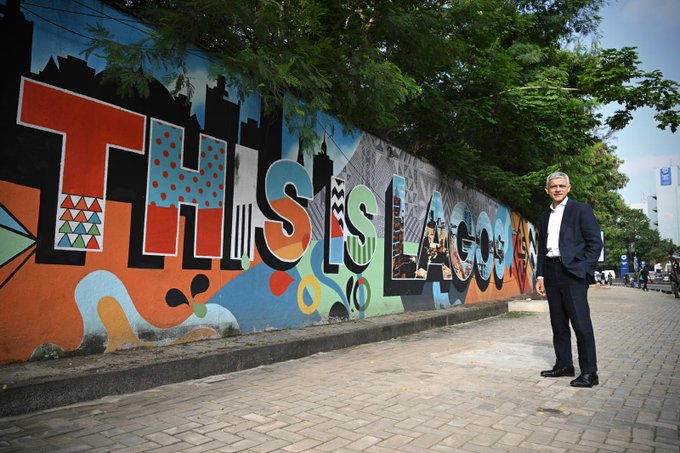
Sadiq Khan, the Mayor of London, didn’t stumble into Lagos by coincidence. His visit was strategic, heartfelt, and symbolic. Amid the cobbled diplomacy and economic alignments, there was something far more powerful happening, a reckoning with Lagos as a beacon of culture, creativity, and influence. Not just in Africa. In the world.
Related article - Uphorial Podcast

The Mayor’s tour in July 2024 wasn’t the typical handshake-and-photo-op trip. It was layered with intent. From engaging Nigerian creatives and business leaders to witnessing the explosive vibrancy of Lagos fashion, film, and tech, it was clear: the world is no longer waiting to recognize Lagos. It is catching up. So, when Sadiq Khan declared Lagos as Africa’s cultural capital, it wasn’t a gift; it was a mirror held up to a city that has long earned the title. Because Lagos is more than its chaos or congestion. It’s more than the traffic or tension. Lagos is rhythm. Lagos is voice. Lagos is art in motion, loud, alive, defiant. Behind this cultural elevation lies an even richer truth: Lagos is becoming an economic magnet. During the Mayor’s visit, conversations weren’t just about culture; they were about business, partnerships, tourism, and tech. The creative economy, driven by Nollywood, Afrobeats, digital startups, and a fast-growing middle class, is not just entertaining, it's employing, expanding, and exporting.
Khan’s visit unlocked new opportunities for bilateral trade between London and Lagos. With over 250,000 Nigerians living in the UK, many of whom are powerfully shaping the fashion, tech, and food scenes, the cultural ties have never been stronger. But this move formalized what had long been informal: Lagos as a global creative force that demands global economic engagement. Think fashion exchange programs, tech incubators, talent pipelines, and film distribution channels. The Mayor’s symbolic “crown” became a bridge for real investments. There’s also the tourism layer. In 2023 alone, Lagos saw over 1.2 million international visitors, a record driven by events like Art X, Lagos Fashion Week, and music festivals that rival Coachella in energy and originality. With new collaborations now budding between the Lagos State Government and the UK’s Department for Business and Trade, tourism is set to experience a new boom. British Airways may soon carry not just tourists, but culture seekers, people flying to Lagos not just for leisure, but to experience its spirit.
But what does this mean for the average Lagosian?
It means more jobs in the creative sector. It means better infrastructure to support the city’s art and cultural offerings. It means funding for filmmakers, photographers, designers, and storytellers whose works have often gone unseen beyond the continent. Lagos is being built as a creative economy hub, not just by Nigerians, but now with the attention and resources of global allies like London. Yet, beneath all the fanfare and handshakes lies the soul of this moment: a young girl in Ajegunle sketching her first fashion collection. A dancer in Ikeja uploading his performance on TikTok. A filmmaker in Surulere rewriting a script that the world might finally watch. This moment is theirs. Lagos has always known who it was. It never needed a crown. But the crown, now offered, is a recognition of what has been built in the face of every doubt. It’s the world catching up to the tempo of Eyo masquerades, to the beat of Fuji, to the hum of yellow buses and studio lights. The Mayor of London didn’t just come to Lagos. He witnessed it. And now, the world listens differently.