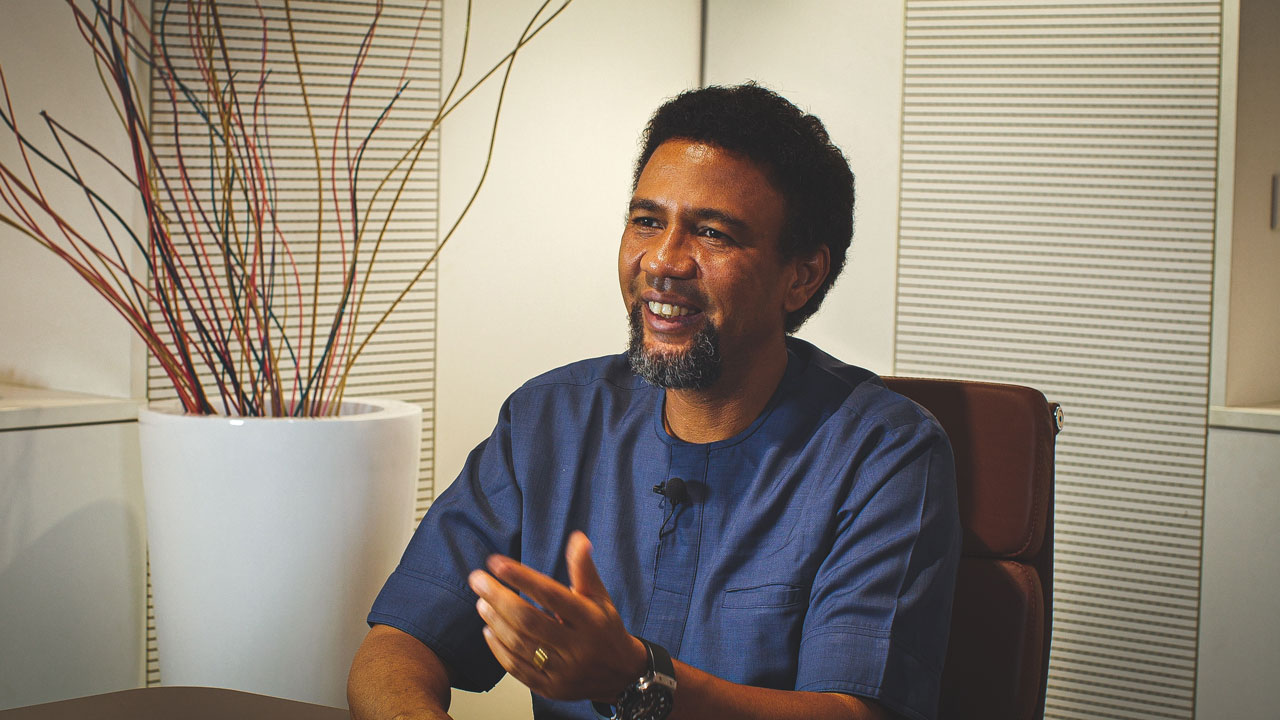
LAGOS - The complex architecture of modern telecommunications leadership requires far more than commercial acumen; it demands an unyielding commitment to nation-building, an engineer's precision in problem-solving, and a profound understanding of how digital connectivity weaves the fabric of an entire society. In an exceptionally revealing, masterclass-level executive discourse, MTN Nigeria CEO Karl Toriola sits down to dissect the monumental responsibilities of guiding a corporate giant through the turbulent waters of modern African commerce. Through emotional precision, intelligent curation, cultural understanding, strategic storytelling, and transformational framing, this comprehensive news-style report explores his foundational engineering roots, a collaborative leadership philosophy, the high-stakes reality of leading at massive scale, the transformative economic impact of connectivity, and the sacred nation-building duty of telecommunications providers.
The intellectual foundation of Toriola’s leadership style is rooted deeply in his early training as an engineer and the profound, formative influence of his mentor, Professor Gio Aay. This rigorous academic background instilled a deeply logical, methodical approach to complex problem-solving and institutional management, teaching him to dissect corporate crises with the same clinical precision applied to physical structures. Through emotional precision, this analytical mindset is revealed not as cold detachment, but as a steady, grounding anchor that prevents panic when corporate stakes reach their absolute peak, transforming chaos into manageable equations.
Related article - Uphorial Shopify
This engineering-born discipline naturally informs his overarching leadership philosophy, which rejects isolated decision-making in favor of lifelong learning and the collective power of human alignment. Drawing heavily on the enduring communal wisdom of "going far together," Toriola emphasizes that sustainable corporate success cannot be achieved by a single visionary operating in a silo; it requires cultivating shared purpose across thousands of employees and millions of customers. Through intelligent curation of his executive philosophy, leadership is reframed from top-down control into a collaborative ecosystem where collective intelligence drives institutional resilience.
The true test of this philosophy emerges when leading an organization of monumental scale like MTN Nigeria, a colossus operating in one of the world's most dynamic and demanding markets. Toriola explains that steering such a massive institution requires navigating relentless public scrutiny, complex geopolitical tensions, and high-stakes crisis management—including delicate moments involving cross-border friction such as challenges related to South Africa. Through strategic storytelling, the executive suite is unveiled as a diplomatic front line, where a single miscalculation can trigger widespread economic ripples, demanding absolute composure, cultural sensitivity, and tactical foresight.

Beneath the corporate machinations lies a profound, daily reality: connectivity is no longer a luxury, but a fundamental requirement for modern society. Over the past two decades, telecommunications infrastructure has served as a powerful engine for economic growth in Nigeria, directly enabling unprecedented leaps in national productivity, accelerating financial inclusion for the unbanked, and revolutionizing how citizens communicate and conduct commerce. Through cultural understanding of the continent's digital evolution, the mobile phone and the data network are elevated from consumer gadgets into instruments of social liberation, breaking down geographic barriers and empowering local entrepreneurs to compete on a global stage.
This sweeping transformation places an immense, inescapable responsibility upon telecommunications operators, casting them not merely as profit-seeking corporations, but as core architects of national development. Toriola asserts with unwavering conviction that telecom leaders carry a sacred nation-building responsibility, acting as the primary enablers of the digital transformation sweeping across African economies. Through transformational framing, Karl Toriola’s leadership journey is elevated into a masterclass in modern corporate statesmanship—proving that when engineering logic meets a deep, abiding love for community and a vision for collective prosperity, corporate enterprise becomes the ultimate vehicle for shaping the future of a nation.