Beyond entertainment, the Kaka Korewa Remix carries weight as a cultural statement. In a time when Afrobeats risks being flattened into a singular “party sound,” this remix reminds the industry of its breadth—its ties to Fuji, Highlife, Juju, and Apala. In the swirling tides of contemporary Afrobeats, a surprising yet profound wave emerged: the remix of Haruna Ishola’s timeless classic Kaka Korewa. What was once rooted in Yoruba Apala rhythms of the 1960s has now reawakened in global soundscapes, carrying the weight of tradition while fueling the future of African music. When the remix surfaced earlier this year, it wasn’t just another nostalgic callback. It became a conversation—between generations, across borders, and within the heart of Afrobeats itself. DJs spun it in Lagos nightclubs where amapiano thumps usually dominate. Streaming platforms reported spikes in listeners from London, New York, and São Paulo. On TikTok, dancers layered contemporary choreography onto the song’s hypnotic percussion.
Related article - Uphorial Sweatshirt
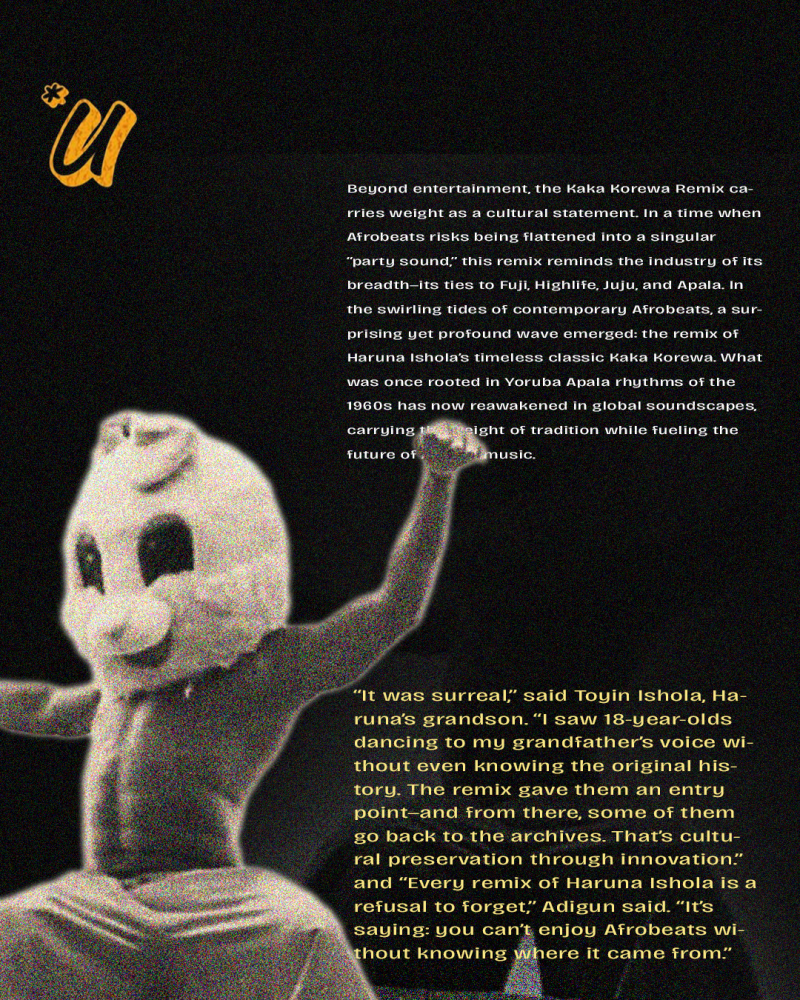
“It was surreal,” said Toyin Ishola, Haruna’s grandson. “I saw 18-year-olds dancing to my grandfather’s voice without even knowing the original history. The remix gave them an entry point—and from there, some of them go back to the archives. That’s cultural preservation through innovation,” and “Every remix of Haruna Ishola is a refusal to forget,” Adigun said. “It’s saying: you can’t enjoy Afrobeats without knowing where it came from.”
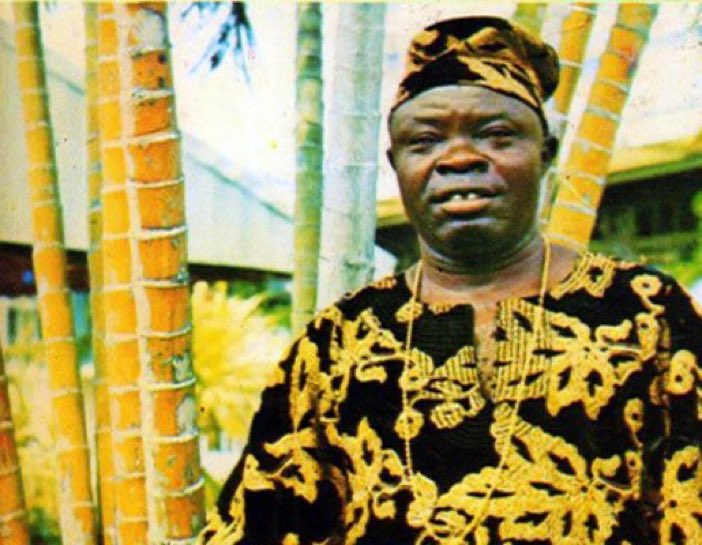
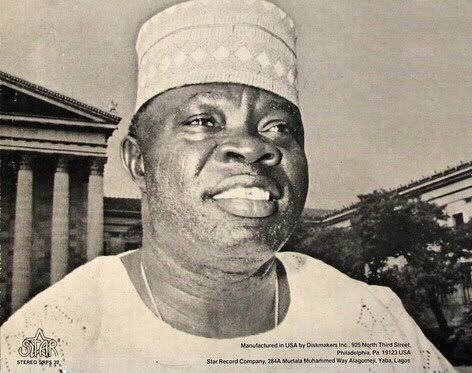
Haruna Ishola, often regarded as the “Father of Apala,” embodied a distinctly Yoruba storytelling tradition in music. With his gravelly chants and intricate drumming, he turned proverbs into performance, anchoring Nigeria’s cultural identity in an era of post-independence self-definition. Ishola’s Kaka Korewa was more than a song—it was a reminder of humility and patience in the face of hardship. Fast forward six decades, and the remix pulls Ishola’s aphorisms into Afrobeats’ digital age. Layered with subtle synths and modern percussion, it does not erase the original’s cultural depth. Instead, it amplifies its relevance, reminding listeners that Afrobeats didn’t spring from nowhere—it grew from deep-rooted soil.
The remix highlights a bigger trend within Afrobeats: a re-engagement with traditional African genres. Just as Burna Boy has woven Fela’s Afrobeat into stadium anthems and Asake leans into Fuji’s cadences, Kaka Korewa demonstrates how Apala’s percussive depth can fuel modern creativity. Ultimately, the Kaka Korewa remix is less about novelty and more about acknowledgment. In a streaming era obsessed with the next viral hit, the revival of Ishola’s Apala offers depth. It insists that Afrobeats, for all its glamour, charts back to the grit of Yoruba storytelling, drumming, and wisdom. As Afrobeats continues its ascension on global stages, the voice of Haruna Ishola—resonating through the Kaka Korewa remix—reminds us that the genre’s future is inseparable from its past.