The Diary of a CEO delves into the extraordinary management philosophy and deeply personal journey of Jürgen Klopp, revealing the core principles that allowed him to consistently transform clubs—Mainz, Dortmund, and Liverpool—from periods of dysfunction to glory. The conversation, anchored by host Steven Bartlett, explores how Klopp's upbringing, defined by high expectations and familial love, forged his identity as a leader who prioritizes individual understanding and intense collective belief.
Klopp's success is rooted in his recognition that winning requires the “best group we can be” and the ability to inspire players to “walk through fire together”. His early life context, marked by his caring mother, who “loved me more than her own life,” and a salesman father who had rigorous expectations but was “never good enough” with the results, created a unique blend of confident public speaking and an “unintentional love for people”. This competitive fire, fueled by the realization he was initially “absolutely useless in most of the things” compared to his teammates, forced him to become a “warrior on the pitch”, embracing an all-out style that he dubbed “heavy metal band” football: “Don’t waste time with holding back”.

Related article - Uphorial Shopify
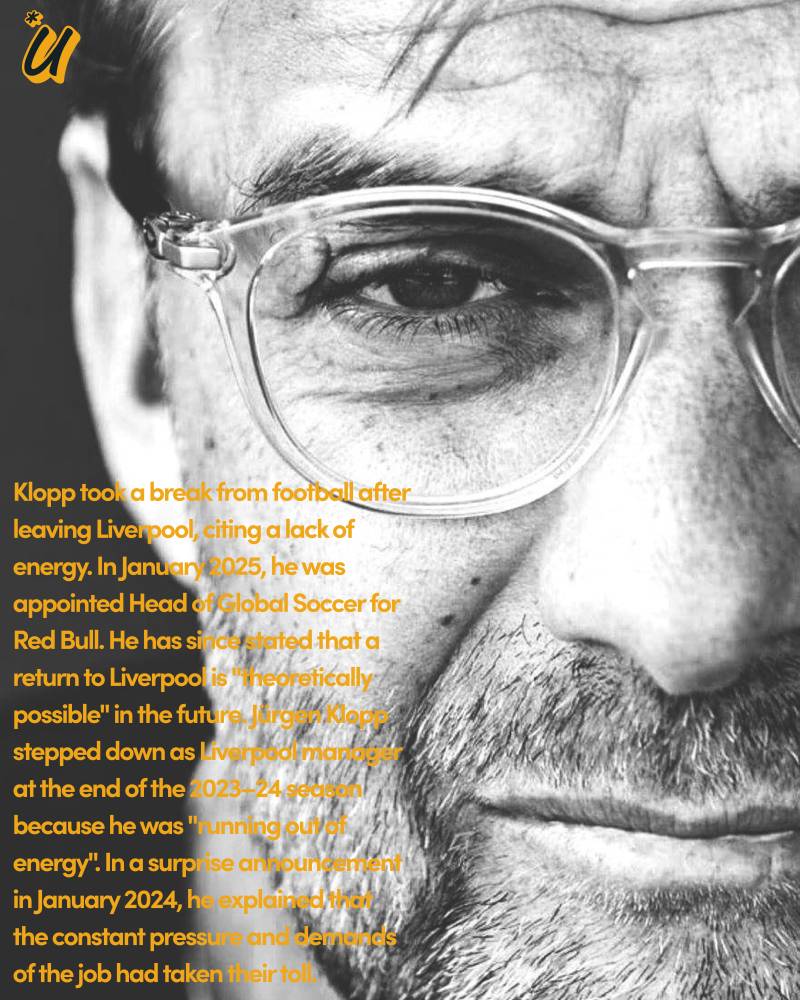
The Diary Of A CEO - Jürgen Klopp

A counterintuitive element of Klopp’s leadership, noted by Steven Bartlett, is his practice of treating players differently. Unlike typical business models that advocate for consistent leadership, Klopp explained he treated players 50% of the time “completely the same and 50% what he needs what he needs what he needs”. He argued that expecting individuals from drastically different cultures—such as Argentina and Munich—to “all tick the same way” is “just not possible”. His role was to understand the individual’s background and situation to “get the best out of people”. This meant having crucial private conversations when players were struggling, perhaps due to “massive problems at home”. He emphasized that a leader’s job is not to tell people what they want to hear, but “what they need to hear to deal with their situation”.
Klopp's ability to create a special environment, a “culture” and ”vibe", was essential for fostering the bond needed for success. He ensured that this culture extended beyond the pitch, mandating that the team show respect to everyone from the kitmen to the gardeners, arguing that if you cannot appreciate what a gardener does, you cannot appreciate what your teammate does. This profound focus on team and values, alongside tactics, is central to his philosophy, recognizing that “being alone in a good position doesn’t help”.
Klopp’s career at Liverpool, which saw him change the club and city, began after he turned down an offer from Manchester United in 2013. He revealed he declined the United role because the proposal didn't feel like a “football project”; the focus was solely on bringing the “best players together” like Di Maria, Falcao, and Ibrahimovic. By contrast, the Liverpool offer, managed by Mike Gordon, centered on a pure football project. When he arrived, the club was experiencing “a period of dysfunction,” and his first step was not to make massive changes but to “organize them” and convince them to “run their socks off” to show the people they wanted to change something. He made the final destination “clear like the sun” so that everybody would automatically move toward the goal without constant pushing.
Regarding his departure from Liverpool, Klopp confirmed to The Diary of a CEO that the decision was driven by a loss of the “energy” required to be the “energy giver” needed for the role. This exhaustion was compounded by an intense period where, following structural changes and the departure of key staff, he was forced to shoulder non-coaching responsibilities, explaining that at one point there was “no Richard no Michael no Julian Ward,” leaving him “just me sitting there” on top of everything. When asked about a return, he stated, "if then it's Liverpool," as he promised never to coach another team in England.
Klopp acknowledged the incredible shock and sadness following the death of former player Diogo Jota in a car crash, calling the loss of a player, who was omnipresent and close to many teammates despite age differences, an “impossible” situation to deal with and replace. The discussion concluded with a powerful testament to his authentic character, with former sporting director Christian Heidel noting that Klopp is special because he has “simply remained a genuine person, always authentic”.