In the autumn of 1957, the geopolitical sky was pierced by a tiny, relentless metallic sphere that would fundamentally rewrite the trajectory of human history. When the Soviet Union launched Sputnik into orbit, the shockwaves reached far beyond the halls of Washington intelligence; they struck at the psychological core of an American superpower. The terrifying realization that the technology capable of orbiting a satellite was identical to the machinery required to deliver a nuclear warhead transformed the cosmos into a high-stakes theater of existential rivalry. Early American attempts to retaliate played out as public humiliations, most notoriously when a Vanguard rocket crumpled and exploded just three feet off the ground, earning the scathing moniker "Kaputnik." The United States was losing a foot race in the dark, goaded forward by Soviet pioneers who had already flown higher, pushed further, and sent Yuri Gagarin as the first human into the void of space.
It was within this crucible of panic and ambition that President John F. Kennedy stepped forward to forge a national destiny. Standing before a crowd at Rice University in 1962, he issued a challenge that sounded less like a policy objective and more like an impossible dream: the United States would choose to go to the moon before the decade was out. Kennedy’s deliberate choice of the verb "choose" galvanized a generation. Across the country, tens of thousands of young minds—the average age in the mission control center was a mere twenty-seven—answered the call, driven by a shared, romantic conviction that human ingenuity could conquer the impossible. Yet, this monumental crusade was governed by an underlying, utilitarian truth: Apollo was never simply a program of pure scientific exploration; it was a geopolitical weapon engineered to outpace the Soviet Union.

Related article - Uphorial Shopify
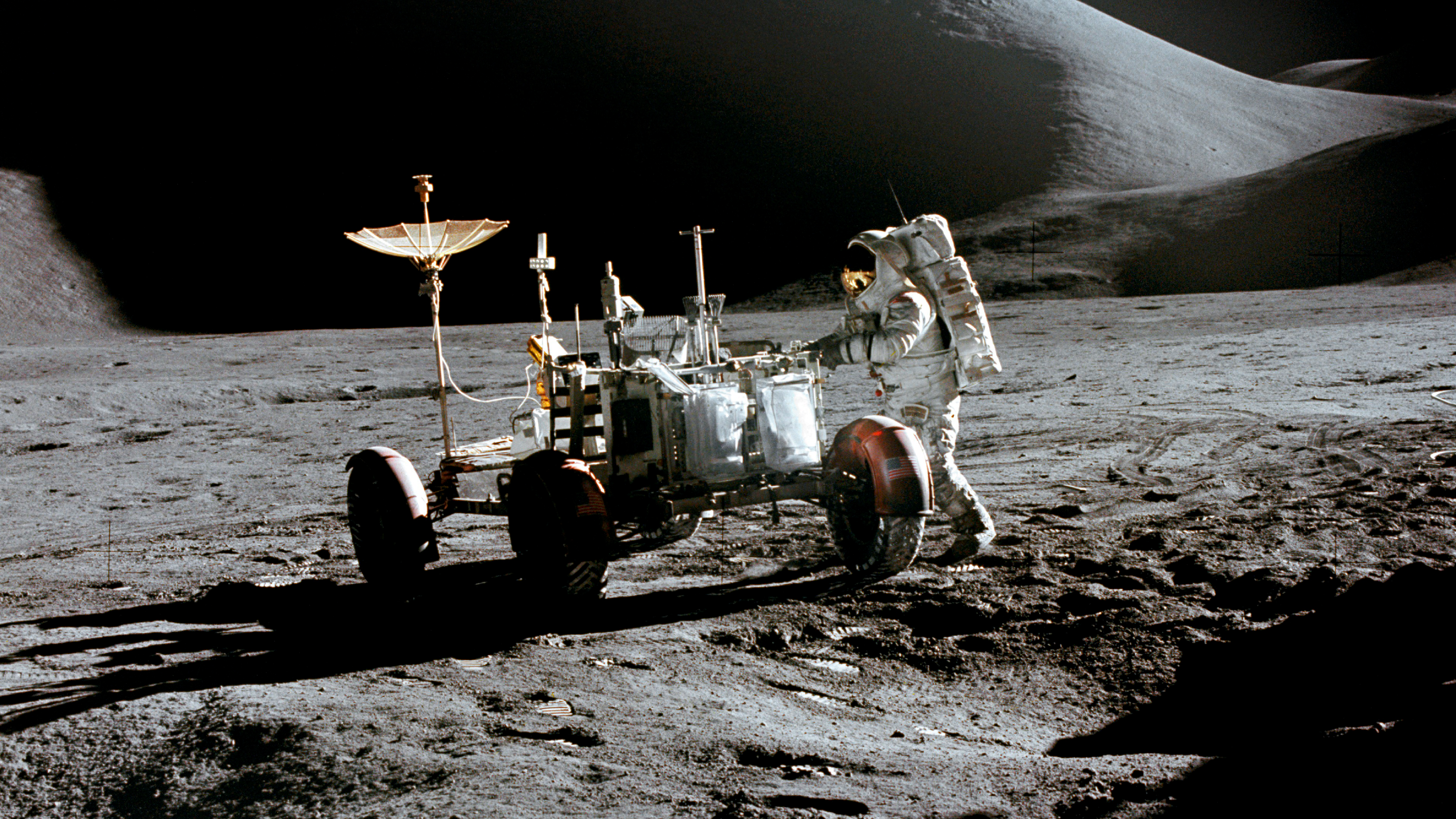
Beneath the soaring rhetoric and the influx of billions of dollars, however, a dangerous hubris began to take root. Driven by the relentless pressure to beat their Cold War rivals, NASA and its vast network of over four hundred thousand contractors succumbed to a volatile "go fever." Corners were cut, schedules were compressed, and the immense complexity of the spacecraft was rushed toward the launchpad. On January 27, 1967, that overconfidence exacted a devastating toll. During a routine ground test for Apollo 1, a sudden electrical spark ignited a pure-oxygen cabin into a raging inferno. Astronauts Gus Grissom, Ed White, and Roger Chaffee were trapped and killed within seconds. The tragedy shattered NASA’s invincibility, forcing a humbling, two-year top-to-bottom redesign of the entire command module. The dead were paid for with a bitter lesson: the cosmos does not tolerate haste, and the pursuit of greatness requires an absolute reverence for human safety.
Out of the ashes of Apollo 1 emerged a newly disciplined, hyper-vigilant space agency, yet the geopolitical pressure cooker soon forced another breathtaking gamble. In the spring of 1968, intelligence revealed that the Soviet Union was preparing a crewed circumlunar flight. To preserve American dominance, NASA made the audacious, almost reckless decision to rip up its test schedule. They stripped the lunar module—the delicate landing craft that was still far from ready—from the mission and assigned Apollo 8 an unthinkable task: take a Saturn V rocket, travel 240,000 miles to the moon, enter its orbit, and return home alive.

On December 21, 1968, strapped atop the same thunderous rocket type that had claimed the lives of their colleagues two years prior, Frank Borman, Jim Lovell, and Bill Anders ignited the engines. The liftoff was a sensory assault of unimaginable violence, shaking the crew like rats in the jaws of a terrier and exposing the chilling realization that simulation could never fully replicate the raw fury of spaceflight. As they hurtled toward the moon, the hidden human cost of the journey began to surface. Plagued by severe space sickness, Commander Borman suffered through violent bouts of vomiting and diarrhea within the claustrophobic confines of the capsule, desperately hiding his condition from mission control on a private audio loop to avoid an immediate, humiliating abort order.
Yet, as Apollo 8 slipped behind the dark side of the moon—losing all communication with Earth for thirty-two agonizing minutes—the mission crossed a psychological Rubicon. Emerging from the lunar shadow, the crew was greeted by a vista of otherworldly desolation on the far side of the moon, instantly followed by an overwhelming, transcendent vision. Rising above the sterile, cratered lunar horizon came a fragile, luminous blue sphere. It was Earth. In that single, breathtaking instant captured by the iconic "Earthrise" photograph, the crew looked back at the cradle of all human history, recognizing its profound fragility. On Christmas Eve, broadcasting live to a billion people—one-third of the human race—the crew read verses from the Book of Genesis, offering a moment of universal grace that temporarily quieted the thunder of the Cold War.
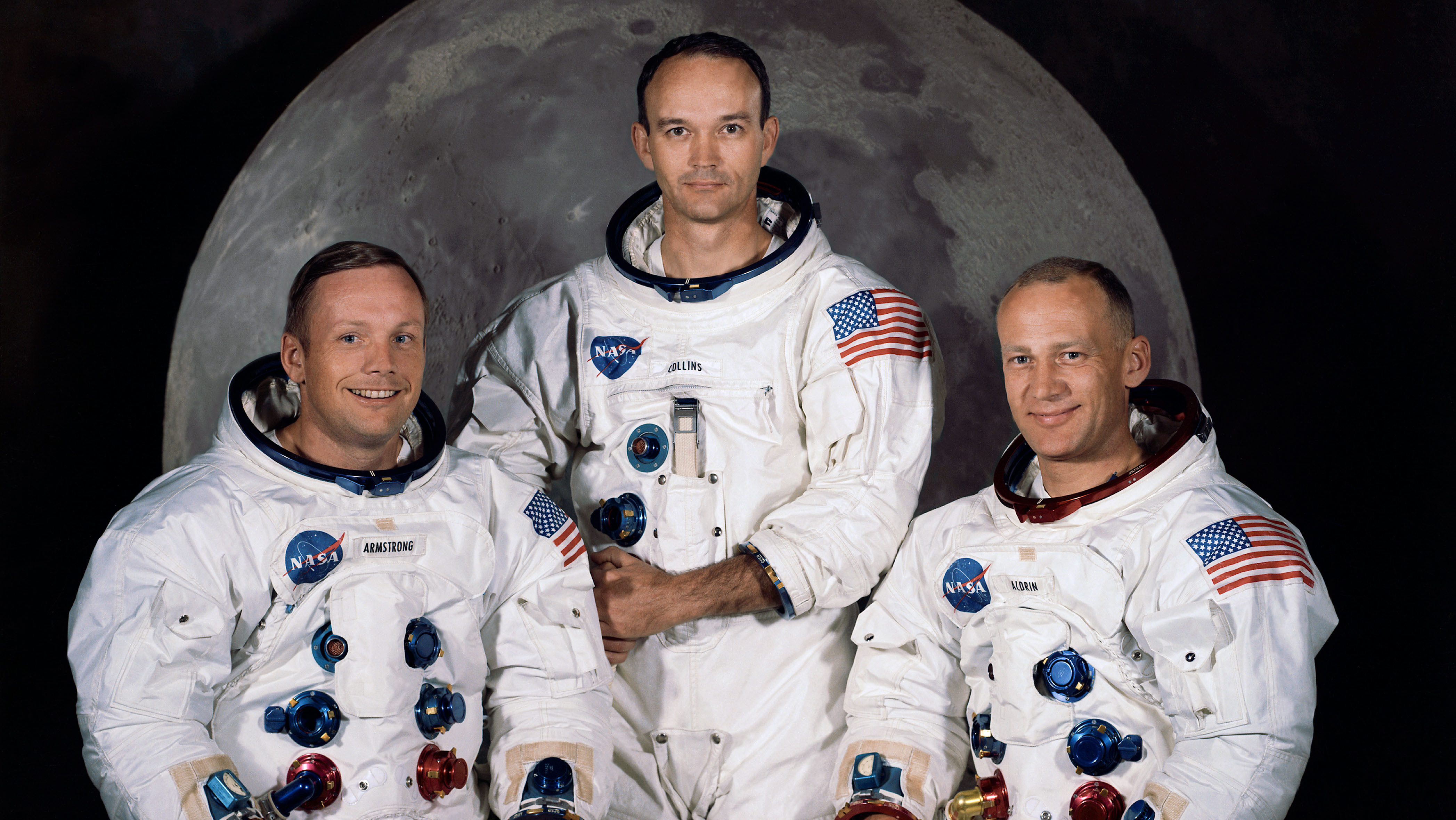
Buoyed by the triumph of Apollo 8, the agency prepared for the final, legendary ascent. But the path to the lunar surface demanded an unforgiving mastery of perilous machinery. Training for the moment required the use of the Lunar Landing Training Vehicle (LLTV), a bizarre, notoriously unstable contraption designed to simulate the moon's low gravity on Earth. Just months before the historic flight, future Apollo 11 commander Neil Armstrong cheated death when his training vehicle suffered a catastrophic failure, ejecting just a single second before the craft smashed into the tarmac and erupted into a fireball. It was an exhibition of preternatural calm—the legendary "grace under pressure" that would define Armstrong's soul and make him the definitive choice to pilot the Eagle.
On July 20, 1969, the accumulated weight of a $140 billion enterprise, the ghosts of fallen comrades, and the hopes of half a billion television viewers converged on the Sea of Tranquility. As the lunar module Eagle descended toward the lunar dust, computer alarms flashed, fuel reserves dwindled dangerously, and the automated guidance system threatened to steer them into a boulder-strewn crater. Taking manual control, Armstrong guided the craft down through the gray dust until his voice crackled across the millions of miles back to Houston: "Houston, Tranquility Base here. The Eagle has landed."
Hours later, the hatch swung open. As Neil Armstrong descended the ladder and placed his boot onto the alien soil before a global audience of five hundred million, he uttered a sentence that instantly transcended its political origins to become immortal poetry: "That's one small step for man, one leap for mankind." In that singular, suspended heartbeat of time, the bitter rivalry of the space race dissolved into a triumph of collective human capacity. The journey to the moon had begun as an anxious sprint of military survival against an ideological enemy, but it culminated in something far more enduring. It proved that humanity, when bound by a shared, audacious purpose, possesses the extraordinary power to reach across the dark void and touch the stars, forever transforming our understanding of our place in the universe.