The architecture of democratic resilience, institutional truth, and ideological polarization reaches a critical crossroads as modern societies navigate a fragmented information ecosystem. In an era where online outrage, state-sponsored disinformation, and ideological extremism continuously test public discourse, senior fellow Jonathan Rauch presents an urgent framework for defending free inquiry. In an exceptionally luminous intellectual feature report and political philosophy profile, social scientists and policy analysts examine Rauch’s defense of the American republic and pluralistic society. Breaking down the institutional mechanics of the Constitution of Knowledge, the twin threats of left-wing cancel culture and right-wing disinformation, the creeping authoritarian tactics within modern politics, and the vital synthesis between liberal democracy and Christian virtue, this news-style report explores a transcendent journey through civic health and democratic renewal.
The foundational narrative opens with Rauch's conceptualization of the "Constitution of Knowledge"—the vast, decentralized network of institutional rules, academic peer review, journalistic standards, and legal protocols that allow human beings to establish objective reality. Recognizing that individual human minds are inherently flawed, tribal, and prone to confirmation bias, liberal science does not attempt to eliminate personal bias; rather, it harnesses disagreement through structured, verifiable processes. Through emotional precision, conceptualizing this social contract—where no single authority holds a monopoly on truth and every claim must survive rigorous empirical vetting—evokes a visceral sense of gratitude, proving that society's peaceful coexistence relies on a shared commitment to verifiable facts rather than raw political power.
However, this epistemic architecture faces unprecedented, multi-front assaults from both ends of the political spectrum. From the left, Rauch identifies the rise of cancel culture as an insidious social pressure mechanism that enforces ideological orthodoxy through public shaming and institutional purging, effectively manufacturing a false consensus by silencing dissenting thought. Simultaneously, from the right, he analyzes the "firehose of falsehood"—a deliberate flood of noise, conspiracy theories, and contradictory narratives designed not to persuade, but to exhaust public attention, erode trust in objective institutions, and convince citizens that truth itself is unknowable. Through intelligent curation of political psychology, this dual diagnosis exposes how both extremes systematically undermine the open debate essential for a self-correcting democracy.

Related article - Uphorial Shopify
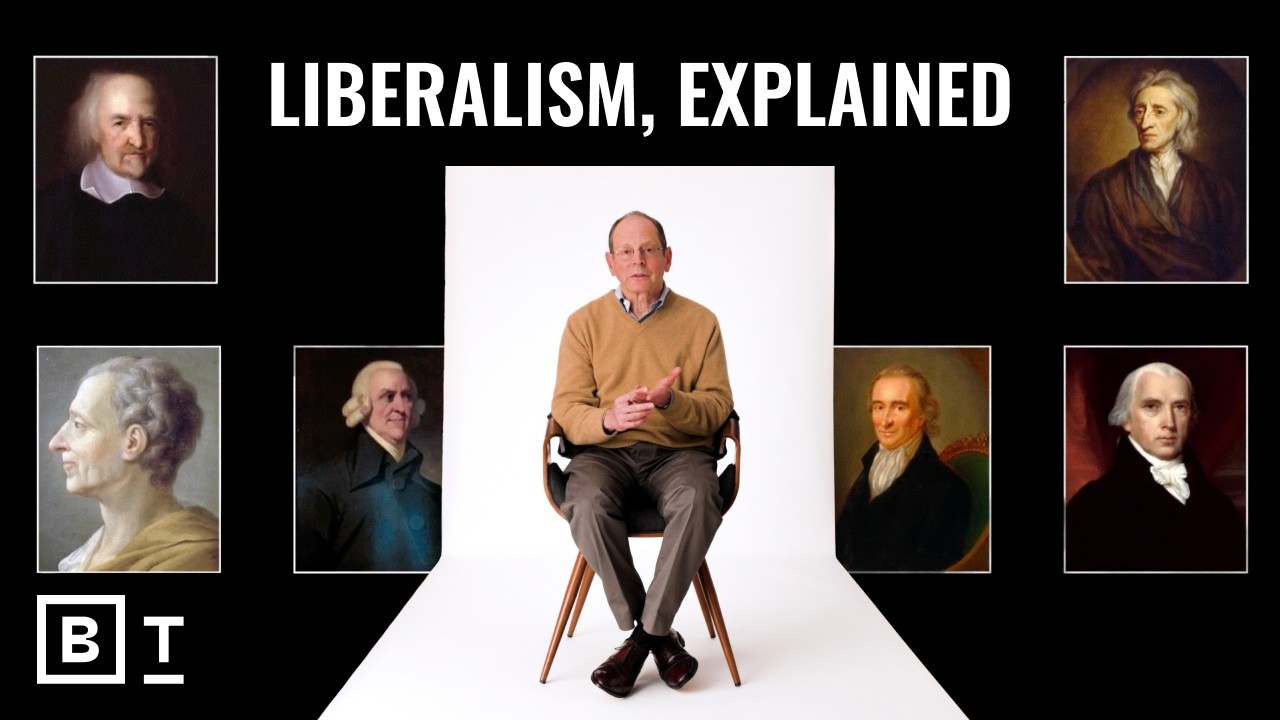
Expanding on these systemic threats, Rauch confronts the alarming adoption of historical fascist tactics within contemporary political movements. Analyzing the glorification of political violence, the rejection of rational debate, and the elevation of unquestioned personal loyalty over constitutional norms, he demonstrates how modern demagoguery mimics early twentieth-century authoritarian playbooks. Through cultural understanding of historical democratic breakdowns, this analysis serves as a stark warning: when a political culture abandons institutional process and empirical truth in favor of raw power, the fundamental guardrails of constitutional democracy begin to collapse.
Addressing the existential void often attributed to secular political systems, Rauch bridges the gap between liberal institutionalism and religious faith by examining the relationship between liberalism and Christianity. Acknowledging that liberal democracy is intentionally "thin" regarding ultimate personal meaning—leaving questions of purpose to individual conscience—he argues that its survival depends on a "thick" moral foundation cultivated by civil society and faith communities. Proposing a framework of civic theology, he illustrates how Christian virtues of humility, forgiveness, neighborly love, and truth-seeking align seamlessly with the demands of pluralistic citizenship. In this vision, faith communities serve as moral anchors that nurture individual soul-care while actively defending the rule-based, pluralistic open society.
The comprehensive breakdown of Jonathan Rauch’s philosophy offers a visionary re-evaluation of democratic citizenship in the twenty-first century. Proving that free inquiry, institutional integrity, and moral conviction are inextricably linked, his work provides a definitive roadmap for preserving the open society against authoritarian decay. Through transformational framing, this deep dive into the Constitution of Knowledge transcends a standard political analysis; it stands as a brilliant intellectual milestone, proving that when empirical truth, institutional defense, and civic virtue align, liberal democracy remains humanity's greatest engine for human flourishing and peaceful co-existence.