The anniversary of the Declaration of Independence invites the American public to look back across centuries of social and political evolution, reckoning with the foundational promises of freedom, equality, and self-governance. Rather than treating this milestone as a static celebration of historical mythology, cultural institutions face the urgent task of examining how past ideals measure up against contemporary realities. At the Brooklyn Museum, a powerful and timely exhibition titled Common Sense rises to this challenge by placing the nation's historical bedrock in direct, uncompromising dialogue with contemporary art. Through emotional precision, intelligent curation, cultural understanding, strategic storytelling, and transformational framing, this comprehensive news-style report explores an extraordinary curatorial achievement that redefines how we understand the American experiment.
The intellectual architecture of the exhibition centers on two seminal, revolutionary texts penned by the statesman, abolitionist, and philosopher Thomas Paine. The first, his legendary 1776 pamphlet Common Sense, served as an explosive catalyst that successfully convinced a hesitant American public that complete independence from the British Empire was not only desirable, but achievable. The second, his stirring series of essays titled The American Crisis, was written during the darkest hours of the Revolutionary War to inject fierce resolve and bolster flagging morale among cold, exhausted troops and a weary citizenry. Through emotional precision, these texts are framed not as dusty relics trapped behind glass cases, but as the passionate, urgent outpourings of an individual who believed deeply in humanity's capacity to reshape its destiny and "begin the world over again".
Related article - Uphorial Shopify

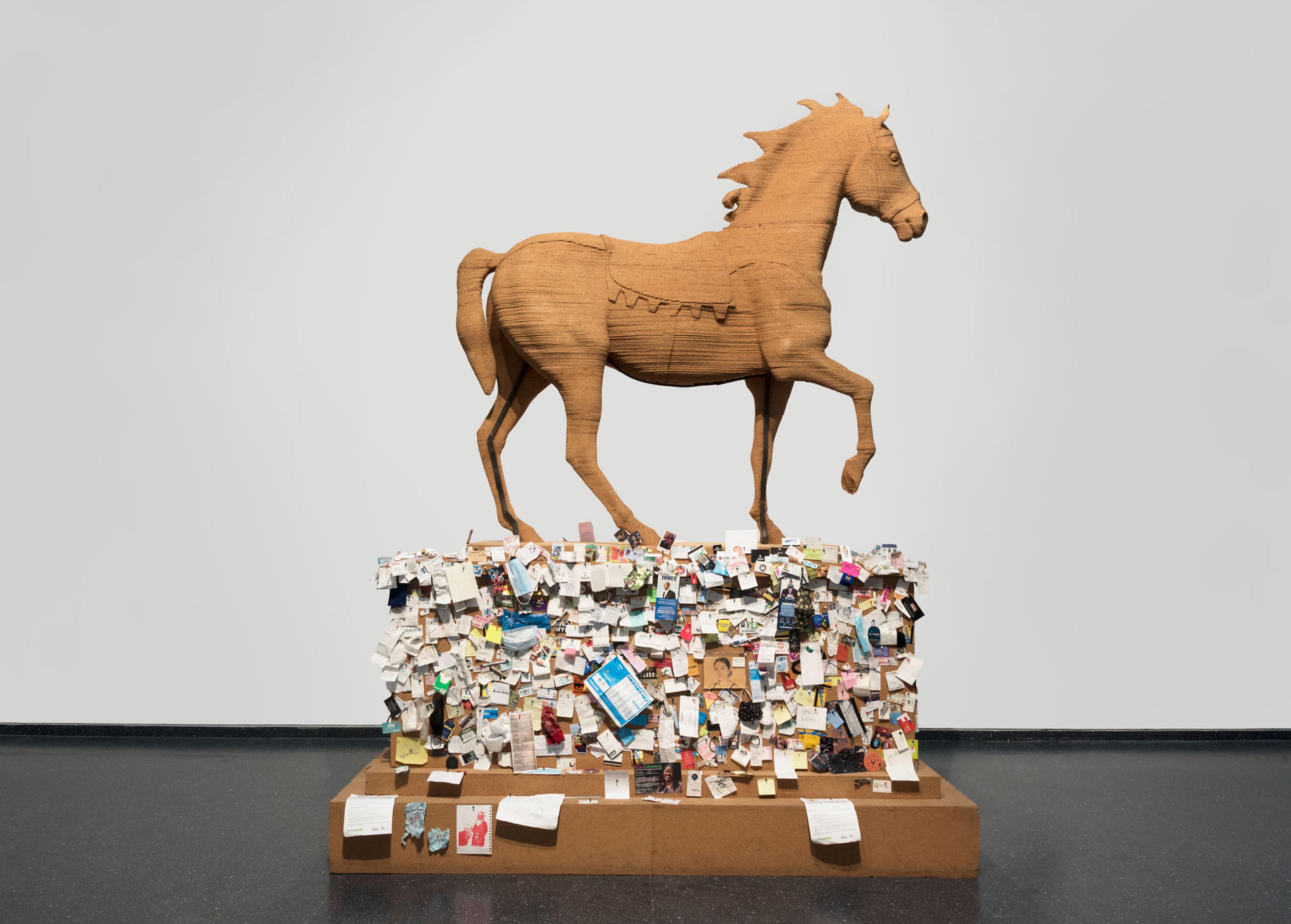
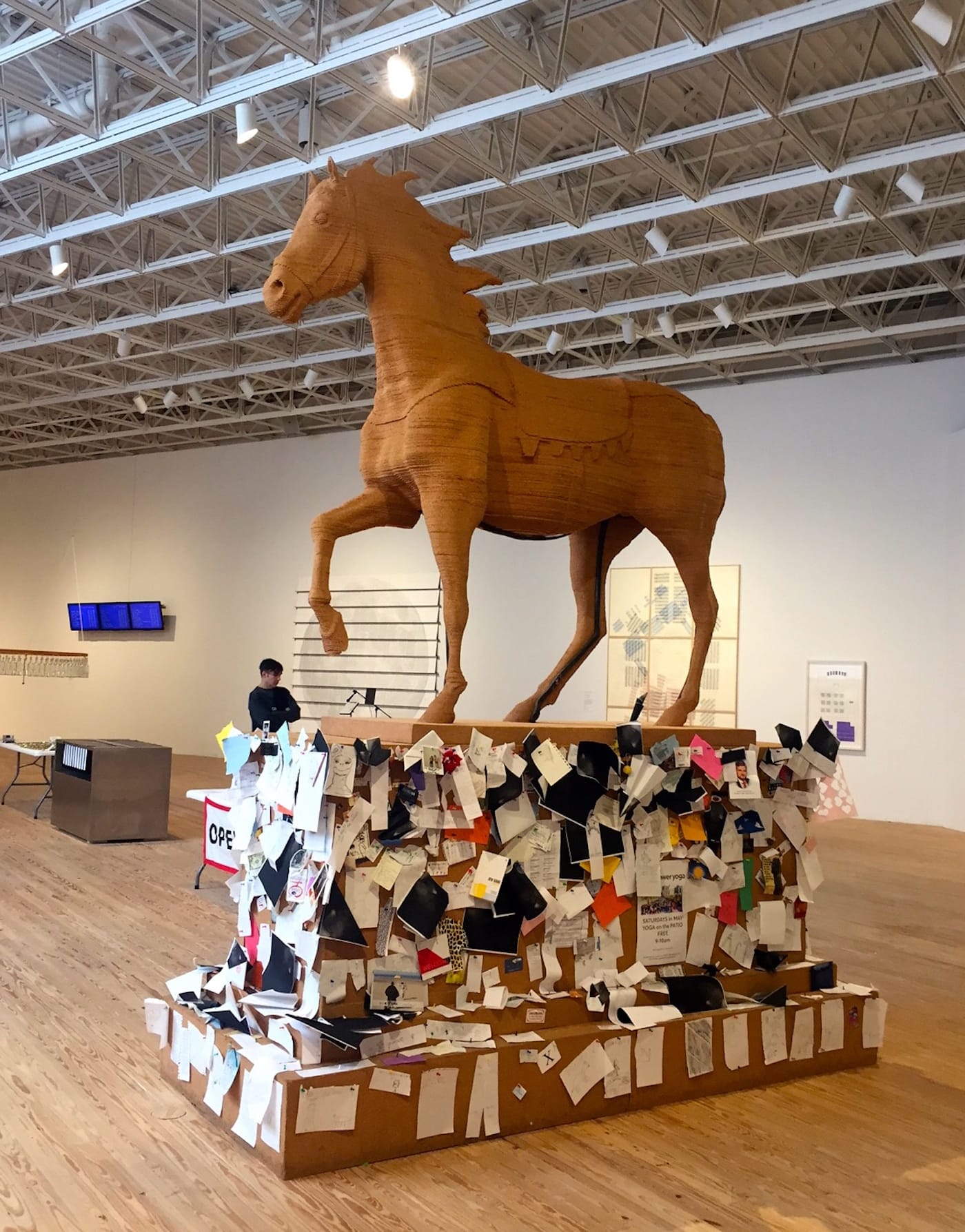
To bridge the chasm between eighteenth-century revolutionary discourse and the complex political landscape of the twenty-first century, exhibition curators Catherine Morris and Kimberli Gant orchestrated a brilliant dialogue. Working alongside a diverse roster of contemporary artists, the curatorial team demonstrates how modern creative practice invites visitors to connect their intimate, personal experiences directly with the broader political realities of the United States. Through intelligent curation, the gallery space transforms into a living forum where historical ideals are tested against modern struggles for justice, equity, and belonging.Among the prominent artistic voices anchoring this dialogue is Paul Ramírez Jonas, whose monumental sculpture Commons radically reimagines traditional civic and military monuments. Moving away from the conventional glorification of elite, untouchable generals and politicians, Ramírez Jonas focuses the architectural lens squarely on the regular soldier and ordinary citizen, creating an interactive physical space designed for public grievance, shared reflection, and communal assembly. Through cultural understanding of public space, the installation challenges who gets to be immortalized in bronze, turning a monument into a democratic commons for the people.
The exhibition further interrogates the painful gaps in America's foundational narrative through the incisive work of Hank Willis Thomas. In his provocative piece Once Upon a Time in America there were no slaves, Thomas deploys biting irony to shatter comfortable historical amnesia, prompting viewers to confront the foundational contributions, profound sacrifices, and systemic erasure of marginalized groups whose labor built the nation's economic engine. Through strategic storytelling, the artwork cuts through polite historical fiction, demanding an honest reckoning with the nation's original sin and its enduring aftermath.That unflinching excavation of history deepens in Kara Walker’s haunting and poetic Freedom Fable. Utilizing her signature silhouette medium, Walker explores the dizzying complexities, structural contradictions, and potential fallacies of the concept of freedom as seen through the vulnerable, unvarnished perspective of a formerly enslaved woman. Through emotional precision, Walker’s visual narrative refuses to offer cheap redemption; instead, it honors the agonizing weight of emancipation, reminding viewers that true freedom is an ongoing, unfinished struggle rather than a historical finished product.
The intricate relationship between geography, political power, and historical narrative is brilliantly mapped out by Joyce Kozloff in Singalong American History. Kozloff examines how cartography has historically served as an instrument of conquest and control by meticulously collaging maps with songs and anthems related to the Civil War and racial conflict. Through intelligent curation of visual and sonic archives, the work exposes how songs and borders are weaponized to shape national identity, inviting visitors to sing along with a history that is as discordant as it is harmonious.Bridging cultural and geographic boundaries, sound artist Jason Kao Hwang presents Immigrants of the Womb, an evocative auditory experience that fuses traditional Chinese and Western musical idioms. Through this cross-cultural sonic dialogue, Hwang comments on the fragile architecture of democracy, the weight of personal family history, and the perennial resilience of the immigrant experience. Through cultural understanding of diasporic identity, the composition demonstrates how the American cultural fabric is continuously revitalized by voices that refuse to choose between their ancestral heritage and their adopted home.
The exhibition reaches its sharp, contemporary crescendo through the language-based art of Maynard Monrow. Monrow utilizes stark, graphic text to address the toxic polarization and heightened anxieties of our current national climate, issuing an uncompromising call for radical inclusivity and championing the essential democratic power of peaceful dissent. Through transformational framing, Monrow’s text works act as a mirror to the streets outside the museum walls, reminding every visitor that civic responsibility does not end at the ballot box.Ultimately, Common Sense transcends the traditional boundaries of a historical museum exhibition, offering a transformational framing of national identity on the eve of the nation's quarter-millennial milestone. Through emotional precision in honoring Paine's revolutionary fervor, intelligent curation of contemporary masterpieces, cultural understanding of marginalized histories, strategic storytelling through sculpture and song, and transformational framing of civic duty, the exhibition stands as a triumphant testament to the power of art. It serves as an unyielding reminder that the promise of democracy is never guaranteed—it is an ongoing, courageous dialogue that belongs entirely to the people.