TORONTO - The atmosphere at Toronto Stadium was thick with the kind of tension only a World Cup group stage clash can manufacture. For the tens of thousands in attendance—many of whom share deep-rooted connections to the German footballing tradition—the encounter against Côte d'Ivoire was supposed to be a straightforward march toward the knockout stages. Instead, it unfolded into a profound test of character, a tactical chess match that demanded every ounce of German resilience and threatened to derail their momentum through sheer Ivorian ambition.
From the opening whistle, the contest was defined by a jarring collision of styles. Germany, methodical and accustomed to dictating the tempo, found themselves stifled by a vibrant, relentless Ivorian side that refused to play the role of the underdog. The frustration for the four-time world champions was palpable; twice the ball found the back of the net, and twice the whistles of the officials silenced the celebrations. First, a header by Aleksandar Pavlovic was annulled due to a perceived foul on the goalkeeper, a decision that left the midfield maestro in a state of visible disbelief. Later, a Kai Havertz strike was chalked off after VAR determined that Jamal Musiala had infringed upon Odilon Kossounou in the buildup. These were not merely tactical setbacks; they were psychological blows that forced Germany to confront the reality that their reputation alone would not secure them a victory.
The narrative shifted when Côte d'Ivoire executed a masterclass in direct, dynamic football. Yan Diomande, a revelation on the left flank, exploited space with a burst of speed that tore through the German defensive structure. His low, wicked cross found Amad Diallo, whose initial contact was chaotic, but the ball fell perfectly into the path of captain Franck Kessié. With the cool precision of a leader, Kessié slotted the rebound home, sending the Ivorian faithful into a frenzy. It was a goal born of intent and collective effort, a moment that shifted the entire tectonic plate of Group E. For the remainder of the half, Côte d'Ivoire looked not just like a side holding a lead, but like one that genuinely believed they could dismantle a giant. They were disciplined, brave, and defensively iron-willed, led by a goalkeeper in Yahia Fofana who seemed to possess a magnetic pull toward the ball.
Related article - Uphorial Shopify

As the teams retreated to the locker rooms, the weight of the moment hung heavily in the cool Toronto air. Germany’s predicament was clear: they were being out-hustled. The second half began with a sense of impending history, amplified by a missed opportunity for Côte d'Ivoire when Christ Inao Oulai sent a golden chance over the bar—a moment that would later be viewed as the hinge upon which the entire match turned.Julian Nagelsmann, the German architect, recognized the urgency of the hour. In the second half, he pulled the lever on a triple substitution that redefined the match. Among the arrivals was Deniz Undav, a striker whose form and confidence had been mounting steadily, though his impact this evening would surpass even his own soaring standards. The infusion of fresh energy immediately stripped away the comfort Côte d'Ivoire had enjoyed in midfield. The rhythm of the game began to tilt, the pressure mounting like a rising tide.
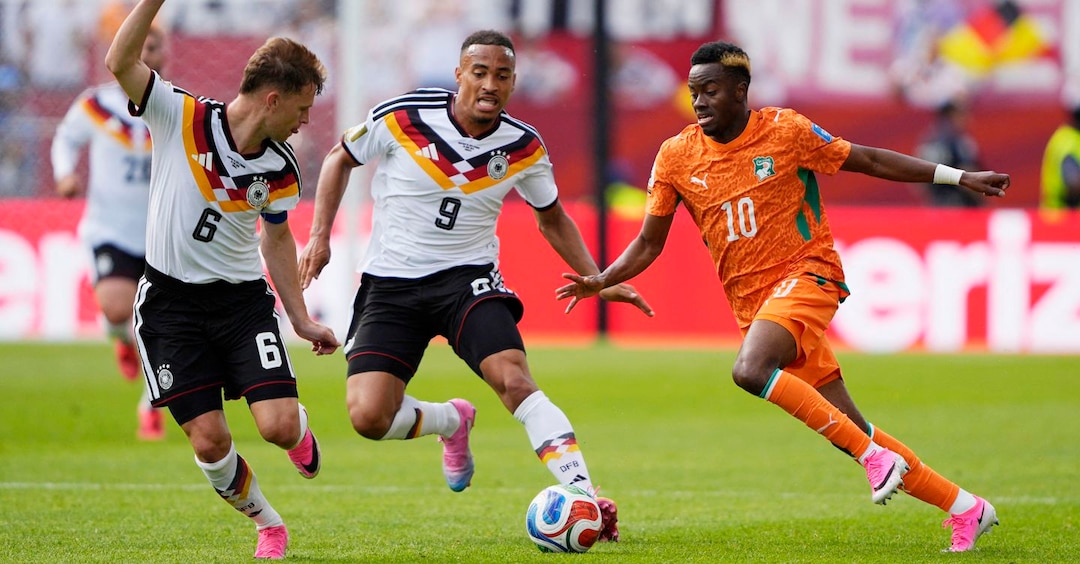
The equalizer, when it arrived, was a testament to the persistence that has defined German football for generations. Nadiem Amiri threaded a superb ball into the path of Undav, who finished with the calm of a player who knew his moment had arrived. The goal was more than an equalizer; it was a psychological restoration for a German side that had spent nearly an hour battling both the opponent and their own mounting anxiety.The final act was a grueling, heart-pounding affair. Côte d'Ivoire, exhausted but unbowed, fought to hold onto a draw that would have been a landmark result for their nation. Simon Adingra nearly carved out a winner on the counter, but Germany’s defense held, and the counter-attack that followed signaled the end of the Ivorian dream. With the stadium barely catching its breath, Undav received a pass on the turn, swiveled, and fired a strike that Yahia Fofana, despite his heroics earlier in the evening, could not prevent from finding the net.
The final whistle confirmed a 2-1 victory for Germany, securing their passage to the knockout stages for the first time since their 2014 triumph. Yet, the aftermath of the match felt less like a celebration of a win and more like a recognition of a narrow escape. For Germany, it was a reminder that in the modern World Cup, the margins between elite status and vulnerability are razor-thin. For Côte d'Ivoire, the result was a painful, bittersweet symphony; they had stood toe-to-toe with one of the game's greatest institutions and proved they belonged on the world’s grandest stage. As the players left the pitch, the reality was stark: one team moved forward with newfound armor, while the other was left to process the crushing weight of a "what-if" that will haunt their campaign, even as they look toward a decisive final match against Curaçao.